Choosing the right Dc Planetary Gear Motor in 2026 requires more than comparing price lists. Global buyers need dependable torque, controlled speed, compact design, and stable supply. A motor that performs well in a laboratory may struggle inside a dusty conveyor, medical actuator, or automated packaging line. Real purchasing is messier.
This guide examines the practical factors behind reliable planetary gear motor selection. It considers voltage options, rated torque, reduction ratios, gearbox efficiency, backlash, noise, thermal limits, and expected service life. It also explains how experienced buyers review drawings, sample data, protection ratings, and production records before approving a supplier. A useful comparison should include test conditions, not only attractive specifications.
Small details matter. A 24 V motor may draw excessive current during startup. A stainless-steel housing can resist corrosion, but it may not solve poor sealing. Ceramic bearings sound impressive, yet they may add unnecessary cost for a light-duty application. These points deserve careful review.
Supplier credibility matters equally. Buyers should request traceable quality documents, inspection procedures, batch information, and realistic delivery commitments. Independent testing can confirm speed stability, temperature rise, vibration, and acoustic performance. Claims should be verified.
This introduction also recognizes uncertainty. Catalog values can differ from field results. Installation alignment, load cycles, lubrication, and ambient temperature often change performance. Therefore, the best Dc Planetary Gear Motor is not universally the most powerful model. It is the model that matches the application, supply expectations, compliance requirements, and long-term operating risks. That judgment takes engineering experience, honest comparison, and room for revision.
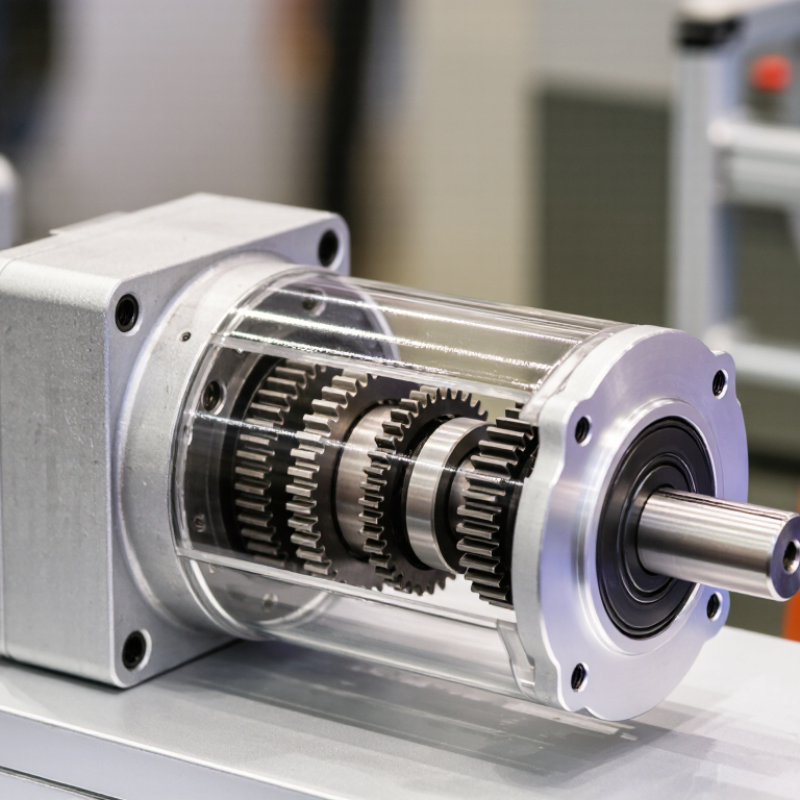
A DC planetary gear motor combines a direct-current motor with a compact planetary gearbox. The motor produces rotational speed and electrical power. The gearbox reduces speed while increasing usable torque. Inside, a sun gear drives several planet gears around it. These gears rotate inside an outer ring gear. This arrangement spreads force across multiple contact points.
In practical testing, this design handles higher torque in less space than many simple gear systems. It also offers stable rotation for conveyors, actuators, pumps, and small robotic mechanisms. The gearbox ratio determines output speed and torque. A higher ratio usually delivers more torque, but it reduces speed. Mechanical efficiency, backlash, noise, and heat still require careful checking. No gearbox is perfect.
Choose the motor by matching voltage, continuous load, starting load, duty cycle, and mounting dimensions. Short-term peak torque can mislead buyers. Continuous torque matters more in demanding equipment. Check shaft tolerances and connector details before ordering. Environmental conditions matter too. Dust, moisture, temperature, and vibration may change performance significantly. Certification documents and test records improve purchasing confidence across different markets. Yet catalog data may not reflect real installation conditions. Prototype testing remains worthwhile.
How DC Planetary Gear Motors Work
A DC planetary gear motor combines an electric motor with a compact gear train. The motor spins a central sun gear at high speed. Several planet gears rotate around it while engaging with an outer ring gear. This arrangement shares the load across multiple contact points. It reduces output speed and increases torque without requiring a long gearbox. In practical testing, the output shaft should start smoothly under load. Sudden vibration may indicate poor alignment, excessive friction, or an unsuitable gear ratio. Small details matter.
Tips: Check rated voltage, stall torque, gearbox ratio, and duty cycle before selecting a motor. Measure shaft load during real operation, not only in free air. Keep wiring short and secure. Heat tells a story.
Planetary stages can be combined for greater reduction, but efficiency usually decreases as stages increase. This trade-off is easy to overlook. A motor may deliver impressive starting torque yet overheat during repeated cycles. I have seen compact assemblies fail because designers ignored side loads on the output shaft. Bearings, mounting rigidity, lubrication, and ambient temperature all influence service life. The published figures are useful, but actual performance depends on the machine around the motor. Leave a safety margin. Perfect calculations rarely survive the workshop floor.
2026 Best DC Planetary Gear Motor for Global Buyers?
Key Specifications for Global Buyers to Compare
Global buyers should compare motor specifications under identical test conditions. Rated voltage alone cannot predict real performance. Check no-load speed, rated torque, peak torque, and stall current together. A 24-volt motor may need a controller that handles several times its normal current. That detail is often missed.
Gear ratio shapes both speed and output force. For conveyor equipment, a lower output speed may improve control and reduce mechanical shock. For compact actuators, torque density and gearbox length matter more. Confirm gearbox efficiency, allowable radial load, axial load, and backlash. Even a small backlash can affect positioning accuracy. Measure the output shaft directly when precision matters.
Do not rely on one catalog table. In practical testing, temperature changes can reduce torque and shorten brush life. Ask for duty-cycle data, insulation rating, operating temperature, noise levels, and protection details. Encoder resolution should match the controller, not merely look impressive. I have also seen stall-current values omitted from otherwise detailed documents. That gap matters. Request dimensional drawings, connector definitions, tolerance data, and test reports before ordering samples. Test the motor with the actual load, cable length, and controller. Results may differ from laboratory figures. That is normal, but unexplained differences deserve investigation.
Typical engineering reference values for brushed DC planetary gear motors at different reduction ratios. Actual performance varies with motor size, load, duty cycle, temperature, and gearbox design.
As the reduction ratio increases, output speed generally decreases while available torque increases. Gearbox efficiency commonly declines at higher ratios because of additional gear stages and friction. Buyers should also verify rated voltage, continuous torque, peak torque, duty cycle, backlash, noise, ingress protection, shaft configuration, and operating temperature before selecting a motor.
For global buyers, the 2026 “best” DC planetary gear motor depends on the industry, not a single specification. A planetary gearbox delivers high torque in a compact housing, making it suitable for robotic joints, automated conveyors, medical positioning equipment, and electric mobility systems. The International Federation of Robotics reported 541,302 industrial robots installed worldwide in 2023. That figure highlights the need for repeatable motion, low backlash, and dependable duty-cycle performance.
Factory automation usually prioritizes continuous operation, thermal stability, and encoder compatibility. Select a motor after checking rated torque, peak torque, output speed, reduction ratio, and expected starts per hour. For mobile equipment, weight, shock resistance, battery voltage, and efficiency become more important. The International Energy Agency reported that global electric car sales exceeded 14 million in 2023, with electric vehicles reaching about 18% of new car sales. This growth supports demand for compact drive systems, but vehicle applications require stricter vibration, sealing, and lifetime testing.
Medical equipment needs quiet operation and controlled positioning. A low-noise motor may matter more than maximum torque. Warehouse systems often require IP protection, brake options, and easy replacement. Check the details. A motor rated for 100 watts may not deliver stable performance under frequent acceleration. I have also seen selection spreadsheets overlook ambient temperature and cable bending. That mistake can shorten service life. Buyers should request test curves, efficiency data, noise measurements, and traceable quality records before approving samples. Industry reports offer useful direction, but real load testing remains the more reliable decision.
The specifications below are representative engineering selection ranges for low-voltage brushed or brushless DC planetary gear motors. Final sizing should be verified against the actual load profile, duty cycle, ambient conditions, gearbox efficiency, and safety requirements.
| Industry / Application | Typical Load Requirement | Recommended Motor Architecture | Common Rated Voltage | Typical Output Torque | Typical Output Speed | Common Gear Ratio | Duty and Control Requirements | Protection and Environmental Criteria | Key Selection Criteria |
|---|---|---|---|---|---|---|---|---|---|
| Mobile Robotics and Automated Guided Vehicles | High starting torque, frequent acceleration and braking, reversible traction loads | Brushless DC motor with planetary gearbox and encoder | 24 VDC or 48 VDC | 2–30 N·m continuous; 40–80 N·m peak | 50–500 rpm | 20:1–100:1 | Continuous or intermittent duty; closed-loop speed and position control; regenerative braking may be required | Minimum IP54 for indoor use; higher ingress protection for dust, moisture, or washdown areas | Check wheel diameter, vehicle mass, gradient, acceleration time, peak current, encoder resolution, and thermal capacity |
| Conveyor and Material Handling Equipment | Steady transport loads with moderate starting torque and long operating periods | Brushed or brushless DC motor with planetary gearbox | 12 VDC, 24 VDC, or 48 VDC | 3–40 N·m | 30–300 rpm | 15:1–80:1 | Intermittent or continuous duty; speed regulation is usually more important than positioning | IP44–IP65 depending on dust, oil, and cleaning exposure | Calculate belt force, pulley radius, conveyor incline, start-stop frequency, efficiency, and allowable noise level |
| Medical and Laboratory Equipment | Low-noise, precise, repeatable motion with controlled acceleration | Brushless DC or coreless brushed motor with low-backlash planetary gearbox and encoder | 12 VDC or 24 VDC | 0.1–8 N·m | 5–250 rpm | 10:1–150:1 | Intermittent duty; accurate speed and position control; low vibration and low audible noise are preferred | Use cleanable surfaces and suitable materials; confirm applicable medical-device and electrical-safety requirements | Evaluate backlash, repeatability, acoustic noise, sterilization or cleaning exposure, encoder feedback, and lifetime |
| Automated Valves, Dampers, and Actuators | High torque at low speed, holding force, and reliable end-position control | Brushed DC motor with high-ratio planetary gearbox, limit switches, or encoder | 12 VDC, 24 VDC, or 48 VDC | 5–100 N·m | 1–60 rpm | 50:1–300:1 | Short intermittent cycles; stall protection and end-of-travel detection are important | IP65 or higher for outdoor or damp installations; corrosion-resistant housing may be needed | Confirm valve breakaway torque, seating torque, cycle time, self-locking needs, manual override, and fail-safe behavior |
| Packaging and Printing Machinery | Fast indexing, repeated reversals, accurate registration, and moderate-to-high dynamic loads | Brushless DC servo motor with low-backlash planetary gearbox and encoder | 24 VDC or 48 VDC | 0.5–20 N·m | 100–1,000 rpm | 5:1–50:1 | High-cycle intermittent duty; closed-loop control; rapid acceleration and deceleration | IP40–IP65 depending on the production environment; consider dust, ink, and washdown exposure | Prioritize backlash, reflected inertia, positioning accuracy, peak torque, cycle rate, and heat dissipation |
| Solar Tracking and Outdoor Energy Equipment | Low-speed movement, high holding torque, wind-induced loads, and long standby periods | Brushless or brushed DC motor with high-ratio planetary gearbox and position feedback | 12 VDC, 24 VDC, or 48 VDC | 10–150 N·m | 0.2–20 rpm | 100:1–500:1 | Low-duty intermittent operation; overcurrent protection and position calibration are recommended | Typically IP65–IP67; verify UV resistance, temperature range, condensation control, and corrosion protection | Size for wind load, panel area, structural friction, self-locking or brake requirements, and standby current |
| Agricultural and Food-Processing Equipment | Variable loads, contamination exposure, repeated starts, and occasional high resistance | Sealed brushed or brushless DC motor with planetary gearbox | 12 VDC, 24 VDC, or 48 VDC | 5–80 N·m | 10–250 rpm | 20:1–200:1 | Intermittent or cyclic duty; current limiting and overload protection are advisable | IP65–IP67 for wet or dusty conditions; select food-contact-compatible materials where applicable | Assess washdown chemicals, ingress protection, corrosion resistance, shock loads, duty cycle, and serviceability |
| HVAC, Smart Building, and Access Systems | Quiet, reliable adjustment of dampers, louvers, blinds, locks, or small fans | Compact brushed or brushless DC planetary gear motor with position sensing | 12 VDC or 24 VDC | 0.3–15 N·m | 5–180 rpm | 15:1–150:1 | Low-to-moderate intermittent duty; quiet operation and accurate end-position control | IP40–IP55 for indoor systems; higher protection for exterior dampers or exposed installations | Consider acoustic noise, standby power, backlash, end-stop accuracy, mounting space, and integration with control electronics |
| Laboratory Automation and Sample Handling | Precise indexing, low friction, repeatable positioning, and compact dimensions | Brushless DC servo motor with precision planetary gearbox and encoder | 12 VDC or 24 VDC | 0.05–5 N·m | 10–600 rpm | 10:1–100:1 | Intermittent high-cycle duty; closed-loop position control and smooth motion profiles | Clean indoor environment; verify chemical compatibility, particle generation, and temperature stability | Compare backlash, repeatability, rotor inertia, encoder feedback, noise, vibration, and expected cycle life |
For global buyers, sourcing a reliable DC planetary gear motor in 2026 starts with the application, not the catalog. Define voltage, continuous torque, peak torque, output speed, duty cycle, noise limits, and installation space. A motor that looks powerful may overheat inside a compact enclosure. Ask suppliers for tested curves at your actual voltage and load. Request winding temperature, gearbox efficiency, backlash, and stall-current data. Numbers without test conditions are weak evidence.
Evaluate the supplier’s engineering process. Request drawings, material specifications, inspection records, and sample test reports. Check whether gears are hardened, bearings match the radial load, and seals suit dust or moisture exposure. A practical trial should run repeated forward and reverse cycles, not only a short bench test. Measure current, temperature, speed, and noise after thermal stability. Keep the test fixture simple and repeatable. That matters.
For international purchasing, confirm production capacity, lead times, packaging, spare parts, and communication procedures in writing. Clarify tolerances and what happens when samples differ from production units. Independent inspection can verify dimensions and electrical performance before shipment. Still, inspection cannot replace field testing. I have seen clean samples fail after frequent starts because the gearbox was undersized. This is where sourcing decisions need humility. Leave safety margin, document every assumption, and question attractive specifications without evidence.
+44 (0)1373 831 373