Choosing the right Hybrid Uv Printer in 2026 requires more than comparing product photos or advertised speed. Global buyers must examine print width, curing technology, material compatibility, maintenance access, and after-sales support. A machine may handle rigid boards, flexible film, and textured panels, yet perform differently in humid warehouses or dusty production rooms.
This guide introduces the main Hybrid Uv Printer types for international purchasing decisions. It considers flatbed-roll-to-roll models, compact units, high-output industrial systems, and configurations designed for specialized applications. Practical details matter, such as bed alignment, ink adhesion on acrylic, lamp replacement intervals, and the time required for daily cleaning. Small weaknesses become expensive over time.
Real conditions differ.
Specifications still need verification. Buyers should request sample prints, test white ink coverage, confirm supported file formats, and review warranty terms before ordering. Regional electrical standards, ventilation requirements, shipping conditions, and local service availability can also affect the final cost. Experienced users often judge a printer by consistency after several production hours, not by its first impressive sample.
The 2026 market includes capable equipment at several price levels, but no single model suits every business. A sign shop may value fast changeovers, while an industrial buyer may prioritize automation and stable color output. Some recommendations may remain uncertain because supplier claims, software updates, and consumable prices can change. That uncertainty deserves attention. This overview offers a practical framework for comparing printer types, checking real operating needs, and making a more reliable global purchase decision.
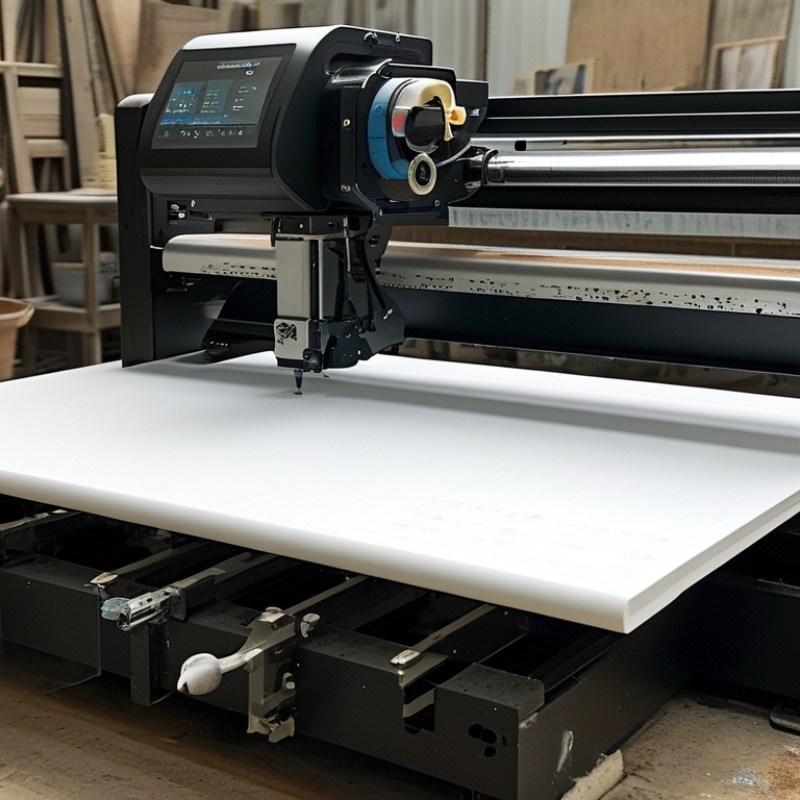
A hybrid UV printer combines flatbed and roll-to-roll printing in one production system. It handles rigid sheets, flexible media, and selected textured materials.
During operation, a vacuum table holds boards firmly in place. Pinch rollers guide films, banners, or coated fabrics through the print path. The printheads release tiny droplets of UV-curable ink onto the surface.
UV lamps cure the ink almost immediately. The result is a dry, durable image with sharp edges and strong color density. Some configurations also support white ink or clear coating for layered effects.
A practical workflow begins with substrate testing. Operators should check thickness, surface energy, flexibility, and heat sensitivity before large production runs. A sample may look excellent but still fail during bending or outdoor exposure.
That detail matters.
Hybrid systems save floor space, but they require careful setup. Changing from rigid boards to rolls can take time. Poor media alignment may create banding, skewed graphics, or wasted material.
Global buyers should examine table size, roll capacity, printhead maintenance, curing control, power requirements, and technical support. Ink compatibility also deserves attention. Lower running costs are not always better if cleaning becomes frequent.
There is no universally perfect Hybrid Printer. Production volume, substrate mix, operator skill, and service access determine the sensible choice. Even experienced teams sometimes underestimate training time.
Key hybrid UV printer types available to global buyers include flatbed, roll-to-roll, and conveyor hybrid systems. A flatbed hybrid printer handles boards, acrylic sheets, foam panels, and other rigid materials. Its vacuum table helps keep large sheets steady during printing. Roll-to-roll hybrids support vinyl, banners, films, and flexible textiles. They suit sign production and short-run interior graphics. Conveyor hybrids offer faster sheet movement for repeated jobs and higher daily output. However, speed can reduce precision when media feeding is not carefully adjusted.
The best choice depends on material size, production volume, and operator skill. Buyers should check maximum print width, media thickness, ink channel options, and UV LED curing performance. White ink and varnish can improve layered effects, but they also require regular circulation and cleaning. A practical factory test should include dark acrylic, corrugated board, adhesive film, and textured media.
Reliable purchasing also requires attention to local voltage, safety certification, ventilation guidance, software compatibility, and service response times. Spare printheads and curing components should be available in the destination region. A lower purchase price may create higher downtime costs later.
Buyers should request written maintenance schedules and operator training before payment. Even experienced teams may underestimate ink waste during early calibration. This is an area worth challenging, because advertised productivity often reflects ideal conditions rather than everyday production.
Hybrid UV printers differ less by their labels than by the materials they can control.
A flatbed hybrid handles rigid boards, acrylic sheets, glass, and aluminum panels. Its vacuum table keeps a 3 mm board stable during printing. A roll-to-roll hybrid adds pinch rollers for vinyl, fabric, wallpaper, and flexible film. This configuration suits sign production and short-run interior graphics. It is faster to change materials, but registration can suffer when thin media stretches.
Ink and curing design matter just as much.
LED UV curing reduces heat exposure on foam board and heat-sensitive films. Traditional mercury lamps can provide stronger curing, yet they consume more energy and require greater ventilation. White ink supports dark substrates and transparent films. Varnish adds selective gloss, especially on textured packaging or display panels. A 2024 Grand View Research report valued the global UV-curable coatings market at approximately USD 6 billion in 2023. It also forecast double-digit growth through 2030. That trend reflects wider demand for fast, durable surface finishing.
Application changes the buying decision.
Packaging users may prioritize white ink density and precise varnish control. Sign shops often need wider media compatibility and quick drying. According to Smithers’ digital print forecasts, packaging remains a major growth area through 2029, with steady annual expansion. However, wider is not always better. I would test scuff resistance, adhesion, and color stability on the actual substrate. Laboratory samples can look excellent. Real production conditions may disagree.
When comparing hybrid UV printer models, start with the materials you actually use. A flatbed and roll-to-roll combination should handle rigid boards, vinyl, film, and flexible banners without constant repositioning. Check the maximum media thickness, table size, roll weight, and loading method. A wide carriage is not always better. It may increase energy use and complicate daily alignment.
Print quality depends on more than advertised resolution. Inspect the printhead configuration, dot placement, grayscale control, and white-ink circulation system. White ink can settle during idle periods. Reliable circulation reduces manual cleaning and uneven coverage. Ask for real samples with small text, skin tones, solid blocks, and curved edges. A showroom image may hide banding. Look closely.
Curing performance also deserves practical testing. LED lamps should cure dense ink layers without overheating thin films or warped boards. Compare curing width, lamp lifespan, replacement access, and power requirements. The RIP software should offer accurate color management, nesting, variable-data control, and predictable spot-color handling. Maintenance access is easy to overlook. Operators need clear paths to clean caps, wipers, filters, and ink lines. Service response, training, spare-part availability, electrical compatibility, and regional safety certification matter for global buyers. I would question any model promising effortless operation. Printers still need disciplined maintenance, even when automation is strong.
| Hybrid UV Printer Type | Typical Print Width | Rigid Media Capacity | Typical Production Speed* | Typical Media Thickness | Common Ink Configuration | Best-Suited Applications | Features That Matter Most | Main Advantages | Typical Trade-Offs |
|---|---|---|---|---|---|---|---|---|---|
| Compact Hybrid UV Printer | 1.3–1.6 m | Flat media up to approximately 50–80 kg, depending on the vacuum table and frame | 10–25 m²/h | Up to approximately 50–100 mm with suitable clearance and media handling | CMYK; optional white and clear ink | Short-run signage, boards, posters, décor panels, small packaging prototypes and personalized products | Accurate media registration, adjustable vacuum zones, compact footprint, reliable white-ink circulation and easy roll-to-sheet switching | Lower space and installation requirements; suitable for mixed jobs and lower-volume production | Lower throughput and smaller working area than production-class systems |
| Mid-Format Roll-to-Roll and Flatbed Hybrid | 1.6–2.0 m | Flat sheets and boards commonly up to approximately 100–150 kg | 20–45 m²/h | Up to approximately 50–100 mm, depending on the table design | CMYK; CMYK plus white; optional light colors or clear ink | Retail graphics, interior signage, exhibition graphics, wall coverings, acrylic panels and foam board | Stable pinch-roller pressure, independent vacuum zones, automatic media-height detection, bidirectional calibration and dependable roll tension control | Good balance between flexibility, productivity and operating cost | Requires more floor space and stronger media-handling discipline than compact models |
| Wide-Format Hybrid UV Printer | 2.5–3.2 m | Large boards and panels commonly up to approximately 150–250 kg, subject to table construction | 35–70 m²/h | Up to approximately 50–100 mm | CMYK; optional white, clear and light cyan/light magenta channels | Large outdoor signs, construction graphics, display panels, retail rollouts and high-volume décor production | High-flow vacuum, robust gantry, precise multi-zone registration, automated carriage height, strong roll-to-roll drive and efficient UV curing | Handles wide substrates and reduces the need for tiling large-format work | Higher power, ventilation, handling and installation requirements |
| Industrial Conveyor Hybrid UV Printer | 2.5–3.2 m, with extended feed and delivery sections | Rigid sheets loaded by operators, tables or automated material-handling equipment | 60–120 m²/h in production modes | Commonly up to approximately 50–100 mm; special systems may support more | CMYK plus white; optional clear, light colors or additional process channels | Continuous signage, board printing, point-of-purchase displays, packaging mock-ups and industrial graphics | Conveyor accuracy, automated loading support, multi-pass productivity, printhead redundancy, fast curing and integrated workflow controls | High output and efficient handling of repeated jobs or large batches | Higher acquisition, maintenance, training and material-handling costs |
| Rigid-First Hybrid UV Printer | 1.6–3.2 m | Optimized for boards, sheets, panels and other rigid substrates | 20–80 m²/h, depending on print mode and ink configuration | Approximately 50–100 mm on many standard configurations | CMYK plus optional white and clear ink | Aluminium composite panels, PVC, acrylic, glass, wood, coated metal and decorative boards | Flatness compensation, strong vacuum hold-down, registration pins, adjustable table height, anti-collision protection and dependable ink adhesion | Consistent rigid-media alignment and strong performance on thick or uneven boards | Roll-media workflow may be slower or less optimized than on roll-first designs |
| Roll-First Hybrid UV Printer | 1.6–3.2 m | Rigid sheets supported by a flatbed or auxiliary table | 25–90 m²/h, depending on roll media and print mode | Approximately 20–50 mm on many configurations | CMYK; optional white and clear ink | Self-adhesive vinyl, banner, backlit film, wallpaper, canvas, flexible décor media and occasional boards | Accurate take-up control, media-tension adjustment, edge detection, wrinkle prevention, roll-core compatibility and stable UV curing on flexible media | Efficient for continuous roll jobs while retaining basic rigid-media capability | Less suitable for very heavy, warped or extremely thick rigid substrates |
| White-and-Clear Ink Hybrid UV Printer | 1.6–3.2 m | Depends on the flatbed structure; commonly supports standard boards and panels | 15–60 m²/h when white or clear layers are used | Approximately 50–100 mm on many professional models | CMYK plus white; optional clear, primer or light colors | Transparent media, window graphics, textured décor, premium signage, layered effects and spot-varnish applications | White-ink recirculation, low-settling ink paths, accurate multi-layer registration, clear-ink control, grayscale capability and easy nozzle maintenance | Creates opaque, reverse-print, raised-look and decorative finishing effects | White and clear layers normally reduce effective throughput and increase ink-management requirements |
| Heavy-Duty Industrial Flatbed/Roll Hybrid | 2.5–3.2 m or larger | Often engineered for large, heavy sheets; capacity varies widely by table and loading method | 50–120 m²/h in high-volume production modes | Approximately 50–100 mm or more on specialized configurations | CMYK plus white; optional clear, primer or extended-gamut colors | Industrial signage, architectural panels, large-format displays, high-volume board production and contract printing | Heavy-load table design, automated calibration, durable printheads, service access, ink filtration, high-capacity vacuum and long-duty-cycle reliability | Strong uptime potential and efficient production of large or heavy substrates | Requires qualified operators, stronger infrastructure and a clearly planned maintenance program |
| *Typical production-speed ranges are indicative comparisons, not guaranteed output. Actual productivity depends on resolution, pass count, white or clear ink layers, substrate absorption, image coverage, operator loading time, curing settings and regional electrical requirements. | |||||||||
Choosing the right hybrid UV printer starts with your market, not the machine’s advertised resolution. A printer for rigid signage needs different strengths from one serving flexible films, boards, and short-run packaging. Flatbed configurations suit sheets and panels. Roll-to-roll hybrids handle banners, vinyl, and fabric more efficiently. Some systems support both workflows, but switching modes may reduce production speed.
In production trials, substrate range often matters more than headline speed. Test your actual materials, including textured boards, thin films, and coated surfaces. Check ink adhesion, curing consistency, color repeatability, and edge sharpness. Ask for sample prints from difficult files. A clean showroom sample proves little. It is worth measuring drying time and media waste during a full shift.
I once overvalued resolution and underestimated service access. That mistake can become expensive. Review nozzle checks, automatic calibration, printhead maintenance, and operator training. Confirm voltage compatibility, ventilation requirements, spare-part availability, and local technical support. For markets with frequent outdoor use, verify weather resistance through documented testing rather than sales language. For indoor applications, examine odor, surface finish, and low-volume efficiency. A larger bed is not always better. It may occupy valuable floor space and encourage inefficient batch planning. The safest choice usually comes from comparing total operating cost, workflow fit, and realistic monthly demand.
+44 (0)1373 831 373