Choosing the best Step Up Transformer in 2026 starts with the equipment it must serve, not a product ranking. A step-up transformer raises voltage from its input to a higher output. Its capacity, however, must still match the connected load. Check the source voltage, required output voltage, frequency, and total load in watts or volt-amperes. Leave practical headroom for startup surges when motors or compressors are involved.
Details matter. A compact transformer for occasional indoor use may not suit continuous operation in a warm workshop. Compare rated capacity, duty cycle, voltage regulation, cooling method, enclosure, and protection features. Read the manufacturer’s datasheet, and confirm that the intended supply and connected equipment are compatible. The label alone is not enough. Neither is a low price. For installation or uncertain wiring, get guidance from a qualified professional.
This guide examines how different transformer designs fit home, commercial, and industrial applications. It also explains which specifications deserve attention and how to compare products without relying on broad marketing claims. A larger rating is not automatically better; it can add cost and may not solve a mismatch in voltage, frequency, or load behavior. That point is easy to overlook. Product availability and specifications can change during 2026, so verify current documentation before buying. The right choice is the one that meets the actual electrical requirements, environmental conditions, and expected operating schedule—with a little room for uncertainty.
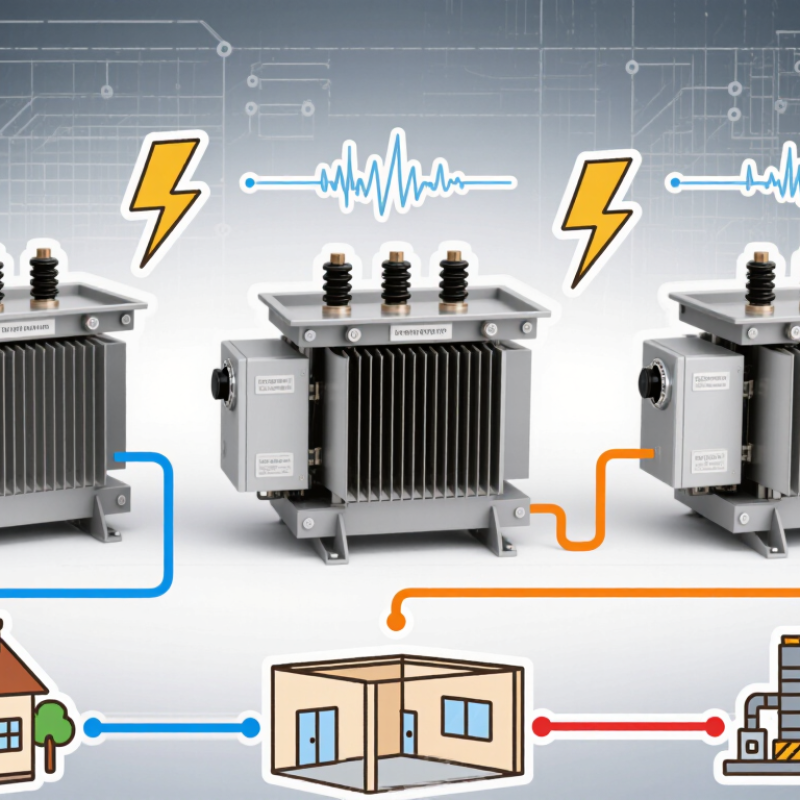
What Is the Best Step Up Transformer in 2026?
A step-up transformer raises voltage through a higher number of turns in its secondary winding. Its ideal relationship is V₂/V₁ = N₂/N₁, where voltage and winding turns share the same ratio. For example, a 100-turn primary and 400-turn secondary produce a 4:1 ratio. At 120 volts input, the ideal output is 480 volts. The equation is simple. Real equipment is not.
Under load, winding resistance, magnetic losses, and temperature affect the output. Current also falls as voltage rises, assuming similar power and ideal conditions. So a transformer should not be chosen by ratio alone. Check load demand, frequency, insulation rating, cooling, and expected voltage regulation. IEC 60076 provides widely used requirements for power transformers, but correct sizing still depends on the installation.
Grid expansion makes this practical knowledge increasingly relevant. The International Energy Agency’s 2023 report, Electricity Grids and Secure Energy Transitions, estimates that over 80 million kilometres of grids must be added or refurbished by 2040. That is roughly the length of the existing global grid. For a real installation, verify the nameplate ratings and measure voltage under load. A ratio that looks right on paper may not deliver the voltage your equipment needs.
A step-up transformer should match the load, not just the desired output voltage. Size it in kVA using peak demand and expected growth; for three-phase equipment, kVA = 1.732 × volts × amps ÷ 1,000. For example, a 480-volt load drawing 100 amps needs about 83 kVA before allowance for growth or unusual starting currents. Avoid oversized guesses. They can add cost and no-load losses.
Phase must match the supply and load: single-phase and three-phase units are not interchangeable. Check both primary and secondary voltages, connection type, and available tap settings. Easy to miss. Frequency matters, too: choose a unit rated for the actual 50 or 60 Hz supply, and ask the manufacturer to confirm any mismatch. IEC 60076 provides an international framework for power-transformer ratings and requirements.
The IEA’s 2023 report, Electricity Grids and Secure Energy Transitions, says annual grid investment needs to exceed $600 billion by 2030, up from about $300 billion. That signals expanding grid demand, not a sizing rule for an individual transformer.
I still double-check the nameplate against the site supply; a neat kVA calculation cannot catch every wiring or operating detail.
Choosing the best step-up transformer in 2026 means comparing real operating losses, not just the efficiency figure on a quotation. DOE 10 CFR Part 431 sets efficiency requirements and test procedures for covered distribution transformers. Not every step-up unit falls into the same equipment category, so confirm its rating, voltage class, and intended use before comparing compliance data. Details matter.
Ask for the tested no-load and load losses, reported under the applicable procedure. No-load loss occurs whenever the transformer is energized, even when it supplies little power. Load loss rises as current increases, making it more significant during heavy operation. A unit serving a solar inverter through long, high-output periods may therefore perform differently from one that spends much of the day lightly loaded.
Compare losses at your expected operating profile, including typical load, annual energized hours, and local electricity cost. A compliant transformer meets the applicable floor; that alone does not make it the lowest-cost choice over its service life. I would also check that the quoted figures use comparable test conditions. This is easy to overlook. Small differences in assumptions can distort a close comparison, and the “best” unit depends on how it will actually run.
Illustrative example for a 100 kVA transformer. The bars show calculated total losses at different loads; the line shows calculated efficiency at unity power factor.
How to read it: Losses rise with load because load-related losses increase approximately with the square of load. The 50% load point is relevant to DOE efficiency evaluations for covered distribution transformers under 10 CFR Part 431; applicable minimums depend on transformer type and rating.
Illustrative assumptions—not product measurements or DOE minimum-efficiency values: 150 W no-load loss and 1,000 W load loss at rated load. Total loss = no-load loss + load² × rated-load loss. Efficiency is calculated at unity power factor. Not every step-up transformer is covered by the distribution-transformer standards.
For a step-up transformer, IEC 60076 and IEEE C57.12.00 provide important design and testing references, but they do not make every installation safe by themselves. IEC 60076 covers power-transformer requirements, including insulation, temperature rise, and routine and type tests. IEEE C57.12.00 sets general requirements for liquid-immersed distribution, power, and regulating transformers. The applicable standard depends on the transformer’s design and the project specification. Check the current edition and any local requirements before finalizing a purchase.
Look closely at the nameplate ratings, insulation levels, cooling method, impedance, and tap range. These details affect how the unit handles voltage changes and operating heat. Ask for documented test results, including dielectric tests, and confirm that protection, grounding, clearances, and enclosure arrangements suit the site. Details matter. A transformer that meets a product standard can still be poorly matched to its load or installation. I would not choose one by voltage ratio alone; that is an easy shortcut, but it misses practical risks. Even a careful specification can leave questions, so have a qualified engineer review the duty cycle, fault levels, and installation conditions before commissioning.
| Selection or safety factor | What to verify for a step-up transformer | IEC 60076 relevance | IEEE C57.12.00 relevance | Practical decision guidance |
|---|---|---|---|---|
| Transformer type and application | Confirm whether the unit is liquid-immersed or dry-type, and define its source, load, installation environment, and operating duty. | The IEC 60076 series covers power-transformer requirements; IEC 60076-11 addresses dry-type transformers. | Addresses general requirements for liquid-immersed distribution, power, and regulating transformers. | Choose standards that match the transformer’s construction and intended use. IEEE C57.12.00 is not the dry-type counterpart to IEC 60076-11. |
| Voltage ratio and system compatibility | Specify primary and secondary rated voltages, frequency, phase, winding connections, tap range, and the system’s grounding arrangement. | IEC 60076-1 provides general requirements and rating-related provisions. | Provides general requirements for covered liquid-immersed transformers; confirm the project’s applicable specifications and adopted edition. | There is no universally best voltage ratio. Match the transformer to the source and receiving-system voltage, frequency, and connection scheme. |
| Rated power and loading | Base the rating on continuous load, expected overloads, ambient conditions, duty cycle, and future capacity needs. | IEC 60076-1 covers general requirements; IEC 60076-7 gives a loading guide for oil-immersed power transformers. | Use the standard’s general requirements together with the project’s rating and loading specifications. | Do not select from kVA or MVA alone. Check temperature limits and the planned loading profile. |
| Temperature rise and cooling | Specify the cooling method and verify temperature-rise limits against the insulation system, site conditions, and expected load. | IEC 60076-2 addresses temperature rise for liquid-immersed transformers; IEC 60076-11 covers dry-type transformers. | Includes general requirements for liquid-immersed units; confirm the specified cooling and temperature-rise requirements in the applicable documentation. | Account for ambient temperature, altitude, ventilation, and enclosure conditions when comparing designs. |
| Insulation and dielectric withstand | Define insulation levels for each winding and terminal, based on system voltage, grounding, and expected overvoltages. | IEC 60076-3 addresses insulation levels, dielectric tests, and external clearances in air. | Apply the relevant requirements in the adopted edition and specify the required dielectric tests for the project. | Confirm that insulation coordination is suitable for the actual network; do not infer it from nominal voltage alone. |
| Short-circuit withstand | Check that the transformer can withstand the mechanical and thermal effects of specified external short-circuit currents. | IEC 60076-5 addresses the ability to withstand short circuit. | Use the applicable general requirements and test provisions for the specified transformer; state system fault levels and protection assumptions. | Coordinate transformer design with the system fault study and protective-device clearing times. |
| Factory tests and documentation | Specify routine and any required type or special tests, test reports, nameplate data, and acceptance criteria. | IEC 60076 parts define applicable requirements and tests; the relevant parts depend on transformer type and project scope. | IEEE C57.12.00 sets general requirements; IEEE C57.12.90 is the associated test code for liquid-immersed distribution, power, and regulating transformers. | List the governing standard, edition, required tests, and acceptance criteria in the purchase specification. |
| Noise and site environment | Set any sound limits and identify indoor or outdoor location, altitude, ambient temperature, moisture, contamination, and fire constraints. | IEC 60076-10 addresses determination of sound levels. Other environmental requirements may be covered by additional standards or local rules. | Check the project specification and applicable requirements for the selected liquid-immersed unit. | Verify site-specific limits separately; transformer product standards do not replace local installation, fire, or electrical-safety rules. |
| Which option is “best” in 2026? | Compare compliant designs by system fit, losses, temperature performance, fault duty, installation constraints, maintainability, and lifecycle cost. | Use the relevant IEC 60076 parts for the design and transformer type. | Use IEEE C57.12.00 when its liquid-immersed scope matches the project, alongside applicable test and installation requirements. | There is no single best step-up transformer for every project. The best choice is the design that meets the required ratings, duty, safety rules, and site conditions under the specified standard and edition. |
What Is the Best Step Up Transformer in 2026?
The best unit is the one that matches your actual load and installation—not simply the highest kVA rating. List the equipment’s input voltage, required output voltage, phase, and continuous power draw. Motors, pumps, and compressors can pull a sharp surge when starting, so check their starting current too. A transformer sized only for steady operation may trip or overheat under that brief demand. Small detail. Big difference.
Cooling and location matter just as much. Check the manufacturer’s temperature and ventilation requirements, then compare them with the room’s real conditions. A warm utility closet with a blocked vent is not a neutral environment. Dry-type units need adequate airflow; oil-filled designs have different service and containment needs. Confirm the enclosure suits dust and moisture exposure, and allow for specified clearances. A tidy load spreadsheet can still miss a hot room or a future machine. That deserves a second look.
Tips: Verify the nameplate and duty cycle. Include starting surges and likely load growth. Before buying, confirm floor capacity, access for moving the unit, cable routing, grounding, and overcurrent protection with a qualified electrical professional. Don’t guess on clearances.
+44 (0)1373 831 373