How to Choose the Best Pickleball Paddle and Ball
Choosing the best Pickleball Paddle Ball setup starts with how you actually play: soft drops at the kitchen line, quick volleys, or deep serves from the baseline. The sport’s growth makes this choice increasingly relevant. SFIA’s 2025 Topline Participation Report estimates that 19.8 million Americans played pickleball in 2024, up sharply from 13.6 million in 2023. More players mean more gear choices—and more marketing claims to sort through.
Start with feel, not promises. USA Pickleball equipment standards set measurable limits for approved paddles, but a compliant paddle may still feel too heavy, too stiff, or awkward in your hand. Pick up several if you can. Notice the grip, balance, and how easily you can reset after a fast volley. For balls, consider where you play: indoor and outdoor models differ in construction and flight, so the same ball may not behave the same way on both courts. Small details matter. A little.
Coach Mark Renneson, founder of Third Shot Sports, teaches pickleball and equipment fundamentals. A useful summary of that coaching perspective is to prioritize control and comfort over chasing extra power. This is a paraphrase, not a direct quotation. It is worth saying plainly, because an exact quote should not be invented. The right paddle and ball cannot fix every rushed shot, and personal preference can change with practice. Still, a thoughtful match can make rallies feel steadier and give beginners more confidence. This guide explains what to compare, what the standards mean, and where a hands-on test beats a spec sheet.
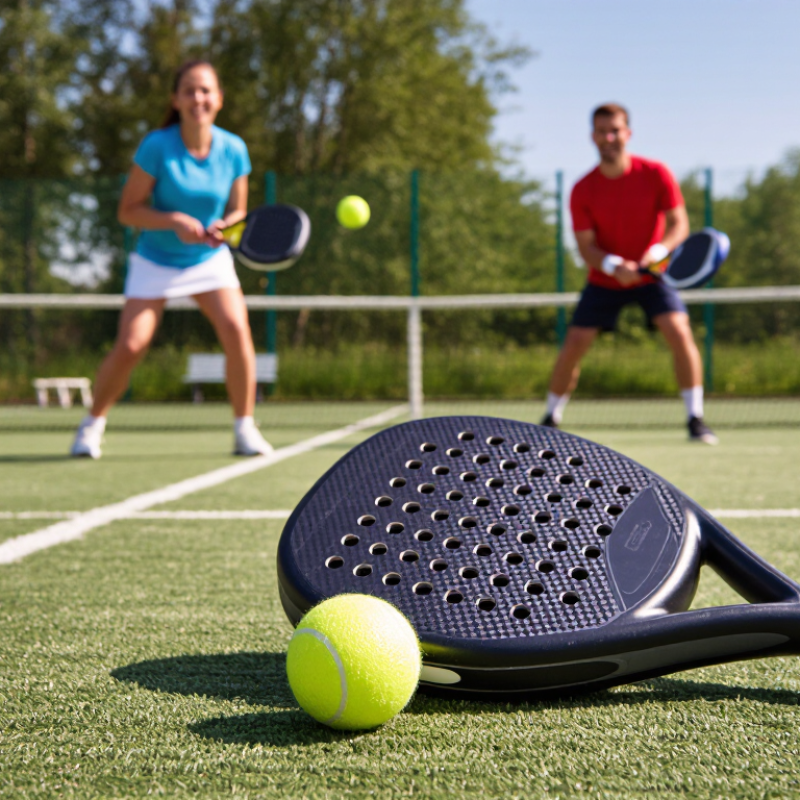
Identify Your Playing Style and Court Conditions
Your playing style should guide your paddle choice. If you rely on soft dinks and controlled placement, consider a paddle that feels steady and comfortable during gentle shots. Players who often drive the ball may prefer a firmer feel, but extra power can make touch shots less predictable. Paddle weight matters, too: a heavier paddle may feel stable, while a lighter one can be easier to maneuver at the net. Try several options if possible. A few practice rallies reveal more than a quick store swing.
Tips: Check that the grip feels secure without squeezing hard. If your wrist or forearm feels strained, reassess the paddle’s weight and handle size. Small discomfort can add up.
Court conditions affect ball choice. Outdoor courts often bring wind, rough surfaces, and faster wear, so use a ball made for outdoor play. Indoor balls are generally suited to smoother floors and calmer air. Their hole patterns and construction can differ, which changes how they travel. Check the court’s posted rules before playing, since facilities may specify a ball type. A ball that performs well on one court may feel jumpy on another. That is worth testing, not guessing.
How to Choose the Best Pickleball Paddle and Ball - Identify Your Playing Style and Court Conditions
| Playing Style | Paddle Features to Consider | Ball Choice | Court Conditions and Practical Notes |
|---|---|---|---|
| Control-focused Prioritizes placement, dinks, and soft resets. | A midweight paddle, roughly 7.3–8.4 oz, is a balanced starting point. A wider face can offer a larger sweet spot; a polymer core is commonly chosen for a softer feel. | Use an indoor ball for indoor play or an outdoor ball for outdoor play. Choose a ball with a consistent bounce and a feel that suits your preferred pace. | On a slower court, a control-oriented setup can help with patient rallies. Try the paddle in play before deciding: feel and balance vary even at similar weights. |
| Power-focused Looks to drive the ball and finish points with pace. | A firmer-feeling face or a slightly heavier paddle may provide a more solid response, but added weight can increase arm fatigue. Check that the paddle remains comfortable during repeated swings. | Outdoor balls are generally designed with a harder construction for outdoor surfaces and windier conditions. They often play faster and feel firmer than indoor balls. | On a fast court, prioritize control and safe placement as well as power. Avoid choosing a paddle that feels difficult to maneuver during quick exchanges at the kitchen line. |
| Spin-oriented Uses topspin, slice, and angled shots to shape rallies. | Consider a textured paddle face, which can help impart spin. Surface texture and permitted equipment specifications can vary; check the applicable rules for organized play. | Choose a ball appropriate to the venue. Ball condition matters: a worn or damaged ball may bounce and fly less consistently. | Wind can make spin and trajectory less predictable outdoors. Practice with the same type of ball you expect to use in matches. |
| Quick hands and net play Values fast reactions, blocks, and compact volleys. | A lighter or well-balanced paddle may feel easier to reposition quickly. A shorter handle can leave more face area, while a longer handle may suit players who use two-handed backhands. | For indoor play, an indoor ball is typically used; many indoor designs have fewer, larger holes than common outdoor designs. Follow the venue’s ball requirements. | Check grip size and handle comfort. A grip that is too large or too small can affect control and comfort, so test options where possible. |
| All-around or newer player Wants a versatile setup while developing technique. | A midweight paddle with a comfortable grip and balanced feel is a practical starting point. Compare maneuverability, sweet spot, and comfort rather than relying on one specification alone. | Start with the ball specified by the court or event. Indoor and outdoor balls are not interchangeable in every setting because their construction affects flight and bounce. | For outdoor play, account for wind and sun; for indoor play, expect conditions to be more sheltered. Try a few sessions before settling on equipment. |
| Outdoor play in breezy conditions Needs predictable flight and reliable contact. | A controllable paddle that feels stable on off-center hits can help when conditions are challenging. Paddle choice cannot eliminate the effect of wind. | An outdoor ball is generally the appropriate choice on outdoor courts. Its design is typically firmer and more durable for outdoor surfaces, though exact hole patterns vary by model. | Wind can alter the ball’s path, especially on high shots. Use lower, more controlled trajectories and check local or event rules for the required ball. |
| Equipment checks for organized play Needs a paddle and ball suitable for an event. | For USA Pickleball-sanctioned play, check the current equipment rules and approved-equipment lists. Paddle dimensions are subject to limits; the combined length and width may not exceed 24 inches, and length may not exceed 17 inches. | Use the ball designated by the tournament or facility. Approved equipment requirements can change, so verify the current rules before competition. | When in doubt, confirm requirements with the event organizer. Recreational facilities may set their own indoor and outdoor ball preferences. |