How to Choose the Best Wafer Roll Machine for Your Business?
Choosing the right Wafer Roll Machine can be a daunting task. Industry expert James Lin, a leading figure in the confectionery machinery sector, once said, “Investing in the right equipment is crucial for quality production.” His words resonate deeply in a market that is evolving rapidly.
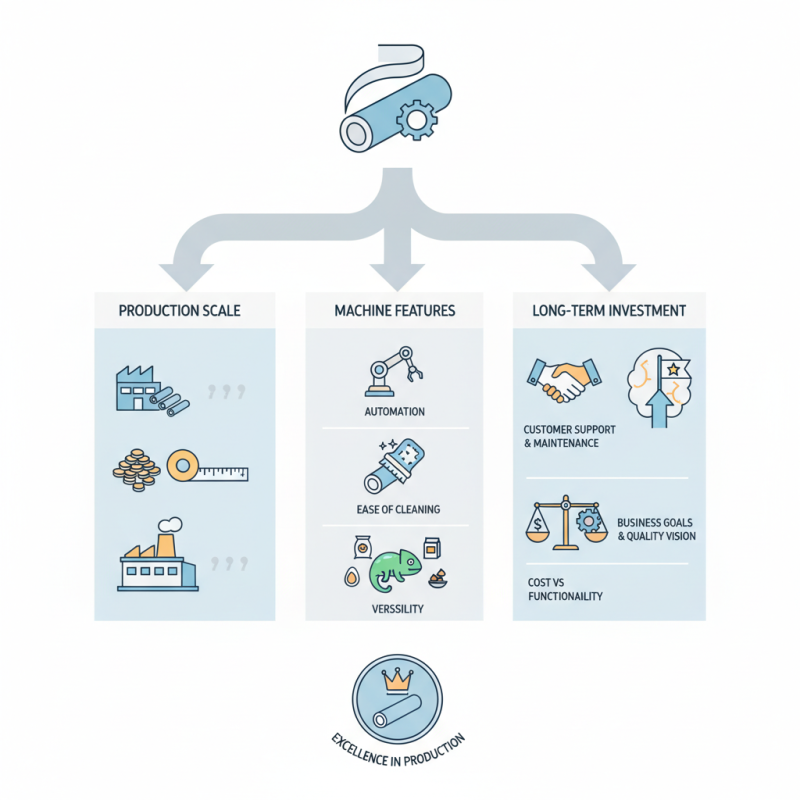
When selecting a Wafer Roll Machine, consider your production scale. Small businesses might need a different model than larger factories. Look for features that enhance efficiency, such as automation and ease of cleaning. The machine’s versatility is also key. Can it adapt to different recipes or ingredients? These factors directly influence your product's quality.
Don’t overlook customer support and maintenance services. A reliable supplier can significantly impact your machine’s longevity. Balancing cost with functionality is tricky. Sometimes, the cheapest option might lead to expensive failures later. Reflect on your business goals and choose wisely. Your choice of Wafer Roll Machine should align with your vision for excellence.
Understanding Different Types of Wafer Roll Machines Available in the Market
When selecting a wafer roll machine, it is vital to understand the types available on the market. Typically, machines can be categorized into manual, semi-automatic, and fully automatic options. According to a recent industry report, demand for automatic machines is projected to increase by 25% over the next five years. This growth is driven by the rise in production efficiency and reduced labor costs.
Manual machines, while cheaper, may limit your production volume. They require more hands-on work, which can slow down operations. Semi-automatic machines offer a good middle ground, allowing some automation while maintaining flexibility. Many small to medium-sized businesses prefer these models for their cost-effectiveness.
However, fully automatic machines are best suited for larger operations. They can produce thousands of wafers per hour. A report by the Food Processing Industry Association highlights that factories using these machines can achieve a 40% increase in output. Nevertheless, these machines require significant upfront investment and may not be ideal for every business. It's crucial to balance between cost, production capacity, and business size when making your choice.
Key Features to Consider When Selecting a Wafer Roll Machine
When selecting a wafer roll machine, there are several key features to consider. The capacity of the machine is crucial. A higher capacity means more production. Make sure it meets your business demand. Size and design also matter. Depending on your workspace, ensure it fits well. A compact design can save space.
Tips: Check dimensions before purchase. Sometimes, machines look smaller in images than in reality. A precise measurement can prevent operational issues later.
Another important factor is ease of use. Look for machines with user-friendly controls. Complicated systems can slow down production. Training staff may take longer too. Consider maintenance requirements.
Tips: Some features may need frequent servicing. Research the availability of spare parts. If repairs take time, it can halt your production.
Lastly, think about versatility. A machine that can make different types of wafers may provide more opportunities. However, don't overlook the limitations. A multi-purpose machine may not perform as well as a specialized one.
How to Choose the Best Wafer Roll Machine for Your Business? - Key Features to Consider When Selecting a Wafer Roll Machine
| Feature | Importance | Recommendation |
| Production Capacity | High | Choose a machine with at least 300 pieces/hour for mid-sized businesses. |
| Energy Efficiency | Medium | Look for machines with low energy consumption ratings. |
| Ease of Use | High | Opt for machines with user-friendly interfaces and simple controls. |
| Durability | High | Select machines made with high-quality materials and proven longevity. |
| Versatility | Medium | Consider machines that can produce various wafer sizes and shapes. |
| After-Sales Support | High | Ensure the manufacturer offers reliable support and spare parts availability. |
Evaluating Production Capacity and Efficiency for Your Business Needs
Choosing the right wafer roll machine is crucial for your business. Production capacity and efficiency are significant factors. Evaluate your business needs first. Do you expect high demand or operate at a smaller scale? Consider the daily output required. A machine that produces too much may waste resources. Conversely, an under-capacity machine will limit your growth.
Efficiency also goes hand in hand with capacity. Look at the machine's speed and energy consumption. An efficient machine can save on costs in the long run. However, some machines may have features that seem appealing but are often underutilized. Reflect on the real value they bring. Will they enhance your workflow or complicate it?
Maintenance and durability play a role, too. Machines that are difficult to service can lead to prolonged downtimes. This could impact your production schedule. Aim for a balance between capacity, efficiency, and reliability. It’s better to start with a machine that meets your core needs than to overestimate your requirements. Iterate based on actual performance.
Assessing Budget and Cost-effectiveness in Wafer Roll Machine Options
When selecting a wafer roll machine, budget is crucial. The initial cost can vary significantly. Some machines might seem cheap, but hidden costs can arise. Consider maintenance, labor, and energy consumption. A low-price machine may lead to high operational expenses.
Evaluate the long-term cost-effectiveness of each option. A more expensive machine might have better efficiency. This could save you money over time. Think about production capacity as well. A machine that can produce higher volumes may justify a higher upfront investment. Do the math. Calculate the return on investment based on your business needs.
Don’t overlook the importance of quality. A cheaper machine might produce inferior wafers. This could affect your brand. Consider spare parts accessibility, too. Some machines require rare components. These can be costly and hard to find. Research thoroughly before making a decision. Balancing quality and budget is a common struggle. Reflecting on these aspects will help ensure a better investment choice.
Reviewing Supplier Reputation and Customer Support Services
When selecting a wafer roll machine, supplier reputation is crucial. Investigating a supplier's history can provide insights into reliability. Look for reviews and testimonials from previous customers. Positive feedback indicates a trustworthy supplier. However, not all feedback may tell the full story. Some might focus on great service, while others highlight issues. It's essential to weigh these perspectives carefully.
Customer support services play a vital role in your decision. After purchasing, you might encounter technical problems. A responsive support team can make a significant difference. Assess whether the supplier offers timely assistance. Check if they provide training and maintenance services. Unresolved issues can lead to downtime, which can affect your production and profits.
Sometimes, suppliers may overpromise their support capabilities. Seek clarity on service hours and response times. Understanding these factors helps in making informed choices. Keep in mind that a reputable supplier not only provides machines but also backs them up with excellent support. This relationship is vital for long-term success.