10 Essential Tips for Choosing Food Production Machinery
Choosing the right food production machinery is vital for any food business. The right equipment can boost efficiency and improve product quality. However, this task can be daunting for many.
Consider the unique needs of your production line. Identify your capacity requirements and product types. Efficiency matters, but so does quality. A machine that is too large might waste space. On the other hand, an undersized machine may hinder your output.
Research and explore options. Not all food production machinery is created equal. Quality varies by manufacturer. Take time to read reviews and ask for recommendations. Reflect on your budget as well. A high-quality machine may require a larger investment upfront but could save money over time through efficiency gains.
Understanding Production Capacity Requirements for Food Machinery
Understanding production capacity is crucial when selecting food production machinery. Capacity defines how much food can be processed in a specific timeframe. High-capacity machines may seem advantageous, but they often require more resources and maintenance. You might find yourself in a situation where the machine outpaces your supply chain. This could lead to waste or delays.
Consider your actual production needs. Assess the volume of ingredients you typically handle. If your output demand fluctuates, a flexible machine may be ideal. Relying on oversized machinery can strain finances. Additionally, it may create bottlenecks if not matched with your workflow. Strive for a balance that aligns with your production goals.
Think about energy consumption too. Larger machines often consume more power. If your output doesn’t justify the energy use, it’s worth reconsidering. Reflect on your operational efficiency. Sometimes, smaller units can be more effective, improving quality without stretching resources. Planning your space is equally important; bulky equipment needs room to operate.
10 Essential Tips for Choosing Food Production Machinery
| Tip Number |
Tip Description |
Production Capacity (Units/Hour) |
Energy Efficiency Rating |
Maintenance Frequency (Months) |
| 1 |
Assess your production needs accurately. |
500 |
A+ |
6 |
| 2 |
Consider the types of products you will manufacture. |
300 |
B |
12 |
| 3 |
Evaluate the scalability of the machinery. |
700 |
A++ |
3 |
| 4 |
Look for user-friendly operation and controls. |
400 |
A |
6 |
| 5 |
Research the availability of spare parts. |
600 |
B+ |
12 |
| 6 |
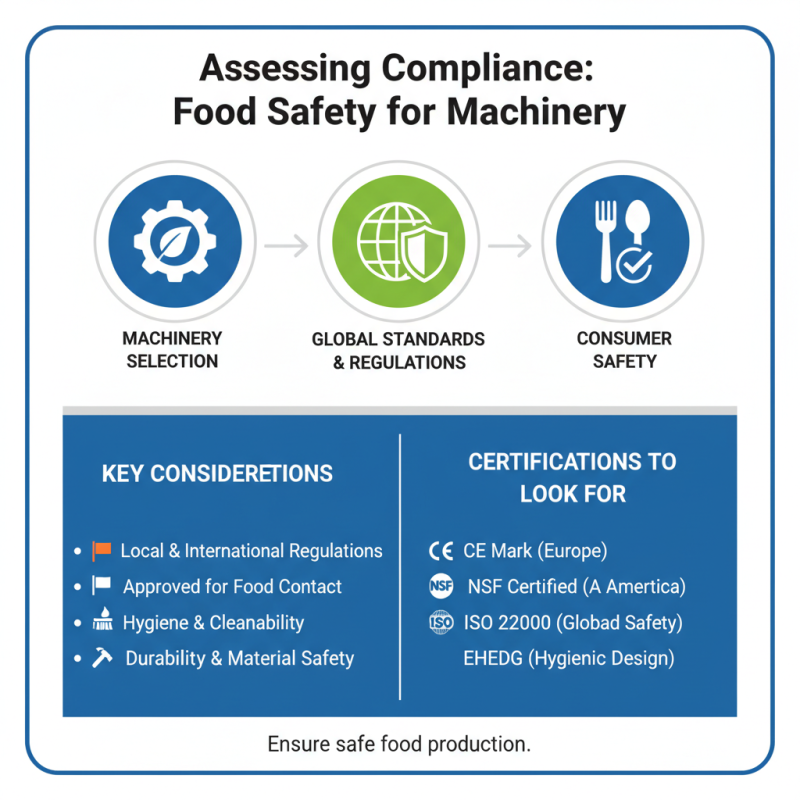
Consider safety features and compliance. |
800 |
A++ |
4 |
| 7 |
Check manufacturer reputation and reviews. |
350 |
B |
8 |
| 8 |
Evaluate total cost of ownership. |
900 |
A+ |
5 |
| 9 |
Assess the space and layout requirements. |
250 |
C |
10 |
| 10 |
Seek expert advice and consultation. |
450 |
B+ |
6 |
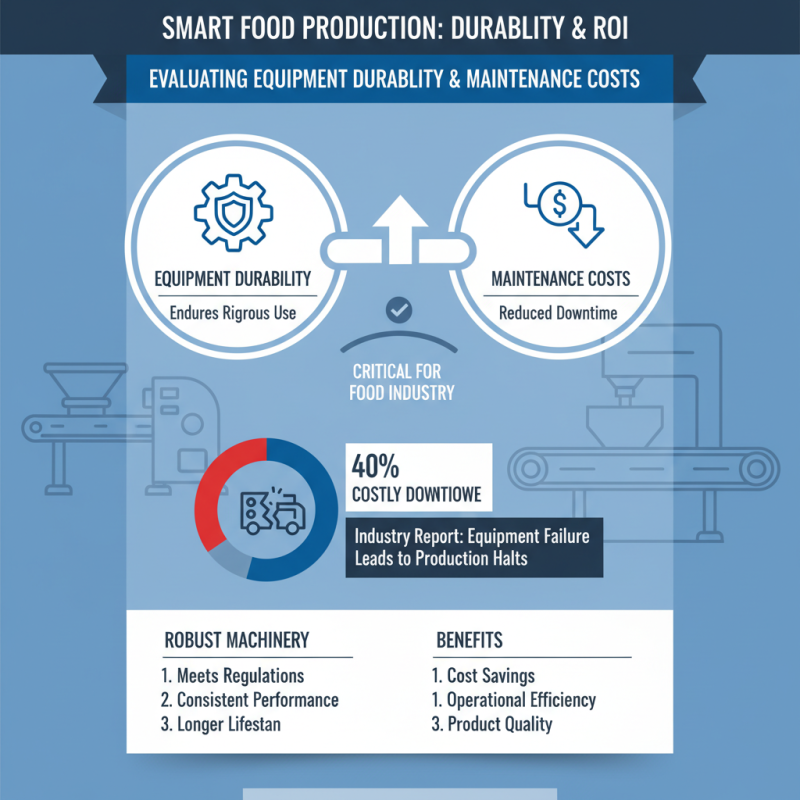
Evaluating the Importance of Equipment Durability and Maintenance Costs
When selecting food production machinery, equipment durability cannot be overlooked. The food industry faces strict regulations and high standards. Machinery must endure rigorous use and maintain performance over time. A recent industry report indicated that nearly 40% of companies faced costly downtime due to equipment failure. This underscores the need for robust machinery that can withstand demanding environments.
Maintenance costs also play a critical role in the decision-making process. According to surveys, maintenance can consume up to 15% of annual production budgets. Choosing equipment with low maintenance requirements can significantly reduce total costs. Some manufacturers may offer machinery with extended warranties, but these could mask potential issues. Regular maintenance should be an ongoing consideration, not an afterthought, as neglect can lead to failures.
Investing in durable equipment may seem expensive initially. However, the long-term savings from reduced downtime and repair costs justify this expense. Understanding the balance between upfront costs and future expenses is essential. Many operators overlook hidden costs during the procurement phase. Detailed analysis and realistic assessments of long-term needs are crucial in making well-informed decisions.
Exploring the Role of Automation in Food Production Efficiency
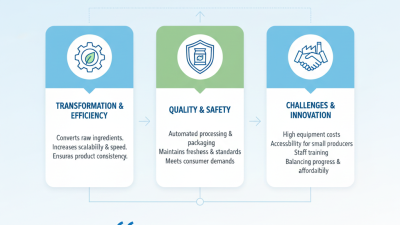
In today's food production landscape, automation plays a crucial role. It enhances efficiency and reduces labor costs. Machines can now handle tasks previously done by people. These machines sort, package, and even cook food with precision. By adopting automation, companies increase output and reduce waste.
However, there are challenges.
Many producers grapple with integrating new technology. Not all staff are trained to operate complex machinery. Furthermore, initial investments can be high. Small businesses may hesitate to adopt automation. They might worry about losing the personal touch in food production. Yet, striking a balance is essential.
Imagine a bakery where dough kneading is done by a machine. It saves time but may lack the artisan feel. The challenge lies in maintaining quality while embracing speed. Business owners should reflect on their goals. Are they prioritizing efficiency over craftsmanship? It’s a delicate dance that requires careful consideration. Automated solutions can transform operations, but the human element should not be overlooked.
Determining the Total Cost of Ownership Over the Machinery's Lifespan
When selecting food production machinery, understanding the total cost of ownership is vital. This includes not just the initial purchase price. According to a recent industry report, operational costs can account for up to 70% of the total expenses over the machine’s lifespan. Energy consumption, maintenance, and labor all contribute significantly. For instance, a machine that saves energy can offset its higher initial price within a few years.
Maintenance should not be overlooked. An average machinery downtime can lead to losses of approximately $22,000 per hour for food processors. This figure highlights the importance of investing in reliable equipment. It’s essential to factor in the costs associated with repairs and the availability of parts. In some cases, cheaper machines can end up costing more due to frequent breakdowns.
Finally, consider the potential resale value. Machinery that retains its value can significantly reduce long-term costs. Many production facilities fail to assess this aspect sufficiently. Investing time in understanding these details may lead to better financial outcomes. The choice of machinery impacts not just production efficiency, but also the overall profitability of the business.