Top Food Packaging Equipment Manufacturers Worldwide

Food packaging equipment shapes how safely, efficiently, and consistently food reaches consumers worldwide. From compact vertical form-fill-seal machines to high-speed cartoners, manufacturers now serve bakeries, beverage plants, frozen-food facilities, and prepared-meal producers. Their equipment must manage speed, hygiene, product fragility, and changing package formats.

Walter Soroka, author of Fundamentals of Packaging Technology, defines packaging as “the science, art and technology of enclosing and protecting products for distribution, storage, sale, and use.” His statement remains useful when assessing modern food packaging equipment. A machine should not merely run quickly. It should protect the product, reduce material waste, support accurate filling, and allow practical cleaning between production cycles.

This overview examines leading food packaging equipment manufacturers across major global markets. It considers their technical strengths, equipment categories, automation capabilities, service networks, and suitability for different production environments. Some companies excel in flexible packaging. Others focus on filling, sealing, labeling, inspection, or end-of-line automation. The strongest choice depends on the product, factory layout, labor model, and required output.

Real factories are less tidy than brochures suggest. A machine may perform well during a demonstration, yet struggle with sticky sauces or irregular vegetables. That difference matters. Buyers should study changeover times, spare-parts access, operator training, sanitation design, and long-term maintenance costs. No ranking is perfectly neutral. Even respected manufacturers may have weaknesses in certain applications. Careful comparison, supplier references, and site-based testing remain essential before investment decisions are made.
Top Food Packaging Equipment Manufacturers Worldwide

What Food Packaging Equipment Manufacturers Produce

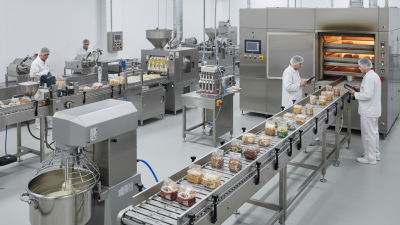
Food packaging equipment manufacturers produce complete systems, not just individual machines. Their portfolios commonly include conveyors, weighing units, fillers, capping systems, heat sealers, labeling machines, case packers, and palletizers. They also build inspection equipment using vision systems, metal detection, and checkweighing. These tools help control portion accuracy, package integrity, and traceability on fast production lines.

PMMI’s 2024 State of the Industry report placed U.S. packaging machinery shipments above 10 billion dollars in 2023. That scale reflects demand for integrated equipment, especially in prepared foods, dairy, beverages, and frozen products. Manufacturers now design servo-driven systems that change formats quickly, reducing downtime between package sizes. Some lines also use robotic pick-and-place units, digital sensors, and remote diagnostics. Practical details matter: a poorly aligned sealing jaw can create leaks, waste materials, and stop production.

Hygiene remains central. Equipment makers produce stainless-steel frames, tool-free access panels, and washdown-ready components for food processing environments. The Food and Agriculture Organization estimates that 13% of food is lost between harvest and retail, although packaging equipment is only one part of that problem. Better sealing and handling may reduce damage, but the result depends on product design and operator training. Automation is not flawless. A faster line can magnify small errors. Manufacturers must therefore balance speed, cleanability, energy use, maintenance access, and real factory conditions.

What Food Packaging Equipment Manufacturers Produce

Representative rated throughput by major equipment category, measured in packages per minute.

Food packaging equipment manufacturers commonly produce filling and dosing machines, form-fill-seal systems, tray sealers, cartoners, case packers, labeling systems, and other line equipment. The throughput figures shown are representative industry values for comparison; actual performance depends on the product, package format, materials, automation level, and operating conditions.

Key Types of Food Packaging Machinery

Food packaging machinery begins with the product, not the machine. Flexible snacks often use vertical form-fill-seal equipment, which creates bags, fills them, and seals them continuously. Liquid foods may need piston or servo fillers for controlled portions. For delicate produce, tray sealers and modified-atmosphere systems can reduce crushing and slow oxidation. Cleanability matters.

Thermoforming machines shape film around prepared meals, then seal a lidding film above each tray. Vacuum packaging removes air and can improve protection for meat, cheese, and other chilled products. Cartoning equipment places sealed packs into printed cartons, while case packers prepare larger shipping units. Checkweighers and metal detection systems provide useful control points, but they cannot replace careful inspection and documented sanitation.

In practical line evaluations, I look at changeover time, washdown access, seal consistency, and operator visibility. A machine that runs quickly may still waste materials during film adjustments. Sensors should detect empty pockets, weak seals, and missing labels before products leave the line. Traceability software can connect batch data with production events, although integration sometimes proves less simple than sales materials suggest. Staff training also affects performance. Small setup errors can create large rejection rates. The best equipment fits the food, package format, factory space, and verified safety procedures.

Leading Food Packaging Equipment Manufacturers Worldwide

Leading food packaging equipment manufacturers worldwide are responding to stricter hygiene rules, labor shortages, and rising product variety. PMMI’s 2024 Global Packaging Trends report identifies automation, sustainability, and flexible production as major investment priorities. These pressures are visible on factory floors: stainless-steel frames, servo-driven fillers, vision cameras, and quick-change sealing tools now work beside operators.

Market data supports this shift. MarketsandMarkets estimates the global food packaging equipment market could grow from about USD 18 billion in 2023 to more than USD 23 billion by 2028. Smithers also forecasts continued expansion in global packaging demand through 2029, driven by convenience foods, e-commerce, and emerging-market consumption.

Leading equipment manufacturers therefore compete on uptime, cleanability, and integration, not only machine speed. A reliable line should handle different pouch widths, detect weak seals, and record production data without slowing sanitation.

Performance claims still need careful checking. A machine rated for 200 packs per minute may achieve less with sticky fillings, frequent format changes, or imperfect film. That gap matters. Buyers should examine factory acceptance tests, maintenance response times, spare-parts availability, and validated cleaning procedures. Energy monitoring is also becoming practical, especially for heat-sealing and compressed-air systems. The best suppliers provide measurable evidence, though some published comparisons remain difficult to verify. Real operating conditions reveal more than a showroom demonstration.

How to Compare Packaging Equipment Suppliers

Comparing food packaging equipment suppliers requires more than checking purchase prices. A low quote may hide installation fees, training gaps, or difficult spare-part access. Ask each supplier for a line-by-line proposal. Check sealing speed, film compatibility, product-contact materials, changeover time, and expected output under real conditions. Request test results using your product, not a convenient sample. A machine handling dry snacks may struggle with oily foods or uneven portions. Watch the trial if possible. Note noise, cleaning access, operator movement, and rejected packs.

Supplier experience becomes clearer through evidence. Review similar installations, service response records, warranty terms, and preventive-maintenance plans. Ask who will troubleshoot the machine during an overnight production stop. That answer matters. Confirm electrical standards, safety documents, software support, and regional spare-part availability. Reliable suppliers explain limitations instead of promising perfect uptime. Be cautious with impressive capacity figures. They may exclude changeovers, cleaning, or minor stoppages. These small minutes can damage production forecasts. A stronger comparison uses total ownership cost over several years, including labor, energy, waste, downtime, and upgrades. Score suppliers against the same written criteria. Leave room for judgment; spreadsheets cannot measure every practical frustration on a factory floor.

Top Food Packaging Equipment Manufacturers Worldwide - How to Compare Packaging Equipment Suppliers

Equipment-category benchmark for evaluating food packaging equipment suppliers
Equipment Category Typical Food Applications Typical Throughput Range Common Package Formats Critical Supplier Capabilities Key Comparison Metrics Recommended Verification
Vertical Form-Fill-Seal (VFFS) Snacks, coffee, grains, powders, frozen foods, confectionery and pet food Approximately 30–150 bags per minute, depending on product, film and machine configuration Pillow bags, gusseted bags, quad-seal bags and block-bottom bags Accurate dosing integration, film tracking, sealing control, recipe management and fast changeover Actual output, weight accuracy, seal integrity, film waste, changeover time and cleanability Run the target product and film at production speed; record giveaway, rejects and sealed-bag quality
Horizontal Form-Fill-Seal (HFFS) Bars, biscuits, bakery products, fresh produce, ready meals and medical-style food packs Approximately 40–200 packs per minute, depending on product size and sealing pattern Pillow packs, three-side-seal packs, gusseted packs and modified-atmosphere packs Product handling, film registration, gas-flushing options, jaw temperature control and no-product/no-seal functions Pack appearance, seal strength, product protection, film consumption and sustained line speed Test fragile, sticky and irregular products separately and review seal-test results over a complete shift
Multihead Weighing System Snacks, nuts, confectionery, frozen foods, fresh-cut foods and mixed products Commonly 40–120 weighments per minute; product and target weight strongly affect performance Pre-made bags, VFFS bags, trays and containers Load-cell accuracy, product-contact design, combination algorithms, anti-static measures and washdown suitability Mean giveaway, standard deviation, target-weight accuracy, product damage and sanitation time Use the actual product mix, including sticky or fragile components, rather than a single uniform sample
Auger Filler Flour, spices, protein powders, instant beverages and other free-flowing or semi-free-flowing powders Typically 20–100 fills per minute, depending on fill weight, powder behavior and machine design Sachets, pouches, cans, jars and containers Dust control, agitation, screw selection, anti-bridging design and repeatable dosing Fill-weight variation, dust emissions, cleaning access, product retention and screw-change time Measure accuracy at minimum, nominal and maximum fill weights using the intended powder
Premade-Pouch Machine Sauces, snacks, pet food, frozen foods, ready meals and retortable products Approximately 25–100 pouches per minute, depending on pouch type and filling process Stand-up pouches, zipper pouches, spouted pouches and flat pouches Reliable pouch opening, zipper handling, filling accuracy, sealing control and pouch-orientation management Pouch presentation, seal quality, reject rate, changeover time and compatibility with supplied pouch materials Test several pouch suppliers and material structures because pouch stiffness and friction affect performance
Cartoning Machine Cereal, frozen foods, confectionery, bakery products and multipack food products Approximately 30–400 cartons per minute, depending on carton style and loading method Tuck-end cartons, glued cartons, sleeve cartons and wraparound cartons Carton erection, product collation, leaflet or insert handling, glue control and jam detection Carton erection rate, loading reliability, glue consumption, format flexibility and rejected-carton percentage Run the full range of carton board grades and dimensions required for the product portfolio
Case Packer Bags, cartons, bottles, trays, cans and multipacks for secondary distribution packaging Approximately 10–60 cases per minute, depending on case pattern and product handling RSC cases, wraparound cases, tray-and-lid cases and shelf-ready cases Gentle collation, robotic or mechanical loading, case forming, sealing and pattern changeover Cases per minute, product damage, case squareness, adhesive performance and changeover repeatability Check performance with the weakest case-board grade and the most difficult product configuration
Robotic Palletizer Bagged, cased and wrapped food products requiring automated warehouse pallet preparation Commonly 10–40 cases per minute; payload, stacking pattern and pallet height determine the practical rate Single-SKU, mixed-SKU, column-stack and interlocked pallet patterns End-of-arm tooling, vision or barcode integration, pallet dispensing, safety systems and recipe-based pattern changes Cases per hour, pallet stability, floor-space requirement, pattern flexibility and recovery after stoppages Validate the heaviest case, highest pallet and most complex mixed-load pattern
Inspection and Checkweighing Pack-weight verification, metal detection, foreign-body inspection, label checks and seal inspection Often matched to the upstream packaging line; practical speed depends on product spacing and inspection technology Bags, pouches, cartons, trays, cans and cases Validated detection sensitivity, reject confirmation, data logging, hygienic design and line integration Detection capability, false-reject rate, traceability, calibration process and reject-security features Conduct documented challenge tests using certified test pieces and representative product conditions
Comparison note: Throughput figures are common industry ranges rather than guaranteed outputs. Actual performance depends on product characteristics, pack dimensions, materials, filling weight, line layout, operator skill and required quality limits. Request a product trial, guaranteed acceptance criteria, total cost of ownership, spare-parts availability, service response time and documented food-safety compliance before selecting a supplier.

Emerging Trends in Food Packaging Technology

Top Food Packaging Equipment Manufacturers Worldwide

Emerging Trends in Food Packaging Technology

Food packaging technology is moving toward lighter materials, precise automation, and lower energy use. Grand View Research estimates that the global food packaging market reached about $562.3 billion in 2023. It also projects a 5.5% annual growth rate through 2030. This expansion is pushing equipment manufacturers to improve filling, sealing, inspection, and end-of-line systems.

Automation is becoming more practical. The International Federation of Robotics reported 541,302 new industrial robots installed worldwide in 2023. In food plants, robotic arms now handle delicate trays, cartons, and irregular products. Vision systems check seal quality and label position in milliseconds. Artificial intelligence can identify small defects, but it still struggles with glare, steam, and damaged surfaces. Human review remains necessary.

Sustainable packaging is shaping machine design. Equipment must process recyclable films, paper-based structures, and thinner materials without reducing line speed. This sounds simple. It is not. Changing film thickness can affect heat sealing, tension control, and product protection. Digital monitoring helps operators reduce waste and record production data. However, more sensors also create maintenance demands and cybersecurity concerns. The strongest systems will combine measurable efficiency with practical repair access, rather than promising complete automation.