10 Tips for Buying the Best Metal Snaps?

Choosing the right Metal Snaps is less about appearance and more about performance under real use. A snap may look flawless in a product photograph, yet fail after repeated opening, washing, or bending. Buyers must examine material, plating, spring strength, cap depth, socket fit, and installation method. Small details matter.

Tadao Yoshida, founder of YKK and a respected fastener industry leader, said, “No one prospers unless he renders benefit to others.” That principle fits Metal Snaps purchasing well. A reliable supplier should protect the customer’s product, not merely sell attractive hardware. Ask for material specifications, coating details, sample testing, and production records. Do not accept vague claims about durability.

A practical evaluation should begin with the end product. A baby garment needs smooth edges and dependable closure. A leather bag requires stronger posts and consistent setting pressure. Outdoor clothing may demand corrosion-resistant finishes. Testing samples under heat, moisture, pulling, and repeated use can reveal weaknesses early.

Even experienced buyers get this wrong. A lower unit price can conceal higher rejection costs. A beautiful antique finish may rub away faster than expected. Sometimes, the most expensive option is unnecessary. The correct choice depends on fabric thickness, user frequency, washing conditions, and brand expectations.

This guide presents ten useful tips for comparing Metal Snaps with greater confidence. It also recognizes an uncomfortable truth: no specification replaces testing. Suppliers can provide expertise, but the final decision should reflect actual product conditions. Small trials, careful measurements, and honest questions usually prevent expensive mistakes.
10 Tips for Buying the Best Metal Snaps?

Define the Material, Finish, and Strength of Metal Snaps

Metal snaps look small, yet their material, finish, and strength control a garment’s service life. Stainless steel resists moisture better than ordinary steel. Brass offers a warm appearance and machines smoothly. Zinc alloys can reduce weight, but brittle edges need careful inspection. Choose the base metal according to washing, humidity, skin contact, and fabric weight.

Tip: Request a material certificate, not only a color sample. Confirm the alloy, coating, nickel release result, and batch traceability. The European Chemicals Agency identifies nickel release as a continuing concern in prolonged skin-contact articles. A bright finish is not proof of durability. Check whether the supplier tested abrasion, corrosion, and repeated opening cycles.

Strength must match the fabric. A heavy jacket needs a stronger stud and reinforced attachment area. A thin blouse needs lower closing force, or the fabric may tear. ASTM B117 salt-spray testing can compare corrosion resistance, but it does not predict every washing condition. ISO 9227 also warns that laboratory corrosion results require careful interpretation. That detail is often missed.

Tip: Test finished samples, not loose snaps. Pull them from the actual fabric after washing and drying. Industry forecasts from Grand View Research place the global fasteners market above 90 billion U.S. dollars in 2023, showing the scale of this supply chain. However, market size does not guarantee quality. I have seen attractive coatings fail around the rim first. Recheck the specification when the finish changes, because a small color adjustment may alter coating thickness and grip.

10 Tips for Buying the Best Metal Snaps

Define the Material, Finish, and Strength of Metal Snaps

The chart compares representative tensile-strength ranges for common snap-fastener materials. Stainless steel generally provides the highest strength and corrosion resistance, while brass offers a balanced combination of formability, appearance, and durability. Aluminum is lightweight, and zinc alloy is economical for general-purpose applications. Actual snap performance also depends on thickness, size, spring design, plating, and installation quality.

Strength values are typical material ranges in MPa and may vary by alloy, temper, manufacturing process, and product specification. Choose a finish such as nickel, tin, or protective coating according to the required corrosion resistance and appearance.

Match Snap Size and Shape to the Intended Application

Choosing the right metal snap begins with the application, not appearance. Measure the fabric thickness, seam allowance, and opening size before comparing snap dimensions. A snap that looks attractive may still distort lightweight cloth or strain a heavy canvas panel. I once selected a compact snap for a thick work apron. It looked right. The closure pulled apart during testing.

Snap diameter affects both holding strength and visual balance. Smaller snaps suit shirts, infant garments, and delicate accessories. Larger snaps usually perform better on bags, outdoor covers, and layered upholstery. However, size alone does not guarantee reliability. The socket, stud, cap, and post must match the material thickness. If the post is too short, the snap may not fasten securely. If it is too long, it can crush the fabric.

Shape also deserves careful attention. Round snaps distribute pressure evenly and work well for general sewing projects. Low-profile shapes create a cleaner surface where the closure may rub against skin or equipment. Decorative shapes can improve appearance, but their edges should remain smooth and firmly attached. Test several samples on the actual material. Check alignment, opening force, and fabric damage after repeated use. My own testing is not always perfect, especially when fabric changes after washing. That uncertainty matters. A practical choice leaves room for real-world movement, handling, and maintenance.

Compare Fastening Mechanisms and Ease of Installation

10 Tips for Buying the Best Metal Snaps?

A snap’s fastening mechanism determines installation time, holding power, and repairability. Press-fit snaps use a cap, socket, stud, and post. They install quickly with a hand setter, but poor alignment can cause bending. Sew-on snaps need more labor, yet they suit delicate fabrics and allow easier replacement. Screw-in systems work well on thick leather or canvas. Rivet-backed snaps provide a cleaner finish, although removal can damage the material.

Compare the tools before comparing the finish. A basic hand press may install small batches, while a benchtop press improves consistency for repeated production. In practical tests, I check whether the cap sits flat after ten openings. It should. I also inspect the fabric around the post, because visible puckering often signals excessive pressure. The 2024 Grand View Research fasteners market report estimated the global fasteners market at about 94 billion U.S. dollars in 2023. That scale reflects strong demand, but it does not guarantee that every snap suits every fabric.

Installation speed needs context. A 2023 Textile Exchange materials report showed polyester remained one of the most widely used textile fibers globally, yet synthetic fabric can still tear around poorly supported snaps. Reinforcement patches help. So does a longer post, but only when fabric thickness requires it. I once favored the fastest press-fit option and overlooked field repairs. That choice was convenient, not perfect. For frequent opening, test the snap on folded material first, then compare pull resistance, tool effort, and replacement time.

10 Tips for Buying the Best Metal Snaps? – Compare Fastening Mechanisms and Ease of Installation

Tip Fastening Mechanism How It Works Typical Applications Installation Method Ease of Installation Tools Usually Required Key Buying Check
1. Match the snap to the fabric Ring-spring snap A circular spring ring inside the socket grips the stud and provides the opening resistance. Shirts, lightweight jackets, babywear, craft projects Set through pre-punched fabric holes with a cap, socket, stud, and post. Easy to moderate Snap-setting pliers or a hand setter and anvil Confirm that the post length suits the compressed fabric thickness.
2. Choose stronger closure action when needed S-spring snap An S-shaped spring inside the socket creates friction against the stud for a firm closure. Medium-weight garments, bags, covers, and utility sewing Install the four parts in the correct orientation and compress the post evenly. Moderate Dedicated setter and matching die or anvil Check that the spring is seated correctly and that the set does not over-compress the fabric.
3. Prioritize simple home installation Sew-on metal snap The socket and stud have small holes and are secured directly with thread rather than a post. Delicate fabrics, repairs, linings, and areas where tools cannot reach Position each half and stitch through all attachment holes with secure thread. Very easy Needle, thread, scissors, and a marking tool Look for smooth edges, evenly spaced holes, and a socket that matches the stud size.
4. Use screw hardware for removable panels Screw-in snap A threaded stud or base fastens into a solid substrate, while the mating snap provides the closure. Marine covers, upholstery, outdoor panels, and removable enclosures Mark locations, drill a suitable pilot hole when necessary, and tighten without stripping the thread. Moderate Screwdriver, drill, pilot bit, and measuring tool Check thread type, screw length, substrate thickness, and corrosion resistance.
5. Select a prong style for fast production Prong or toothed snap Prongs pass through the material and are folded or compressed around a washer or mating component. Medium-weight textiles, accessories, packaging, and light industrial covers Pierce the material, align the parts, and press or hammer the prongs into place. Moderate Hand press, setting die, or compatible pliers Verify that the prong length is suitable; excessive length can distort or damage fabric.
6. Compare holding strength with opening effort Standard versus heavy-duty snap Larger components and stronger springs generally increase resistance to accidental opening, but require more force to release. Standard: clothing and crafts; heavy-duty: bags, equipment covers, and outdoor gear Both use a cap, socket, stud, and post, but heavy-duty versions need more accurate setting pressure. Easy to difficult Pliers for light sets; press and dies for heavier sets Choose the lowest closing force that will reliably resist the expected load.
7. Check material compatibility Brass, stainless steel, or plated steel snap The base metal and surface finish affect corrosion resistance, strength, appearance, and potential staining. Brass: decorative use; stainless steel: moisture exposure; plated steel: general indoor use Installation is similar, but harder metals may require stronger and more precise setting tools. Easy to moderate Tool choice depends on snap construction and material thickness. For saltwater or frequent washing, favor corrosion-resistant metal and a compatible finish.
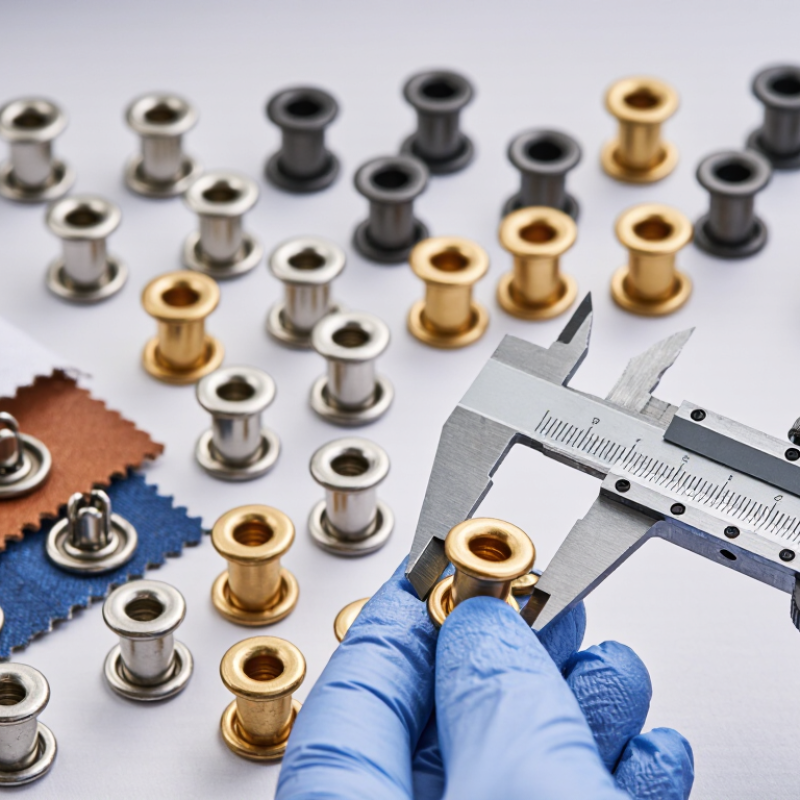
8. Measure the compressed thickness Short-post or long-post snap The post must extend far enough through the assembled layers to form a secure clinch without crushing the material. Single-layer fabric, folded hems, leather, canvas, and padded assemblies Measure all layers after folding or reinforcing, then select the matching post length. Easy, but precision is important Ruler or caliper, hole punch, and setter Avoid posts that are too short to clinch or too long to fold cleanly.
9. Inspect the setting tool alignment Hand-set versus press-set snap Hand tools use manual impact or leverage; presses apply more controlled and repeatable pressure. Hand setting: occasional repairs; press setting: repeated or production installations Center the cap, socket, stud, and die before applying force to prevent crooked setting. Moderate to easy Hammer and anvil, pliers, or a manual press with matching dies Use dies designed for the exact snap profile; mismatched dies can deform the socket.
10. Test before buying in bulk Complete compatible snap set A snap only functions correctly when the cap, socket, stud, post, washer, and installation tool are mutually compatible. Any project involving multiple layers, repeated opening, or a visible finished surface Install several samples, open and close them repeatedly, and inspect the fabric for tearing or distortion. Easy and highly recommended The intended installation tool plus a small sample of the final material Check alignment, holding force, release effort, finish quality, and corrosion after the planned care process.

Quick selection rule: Choose the mechanism, post length, metal, and setting tool as a matched system. Always test the snap on the actual number of fabric or material layers before final installation.

Check Compatibility, Durability, and Maintenance Requirements

Buying metal snaps is less about appearance than fit, strength, and daily care. Start by checking the snap’s diameter, cap shape, post length, and installation method. A snap that looks correct may fail when its post is too short for thick fabric. Measure the material after folding, not before. Good advice? Usually, but layered fabric can compress unevenly. Test one sample on scrap material before ordering many pieces. Check whether the socket and stud come as a matched set. Mismatched parts can feel loose from the first use. Also inspect the fabric’s weave and weight. Lightweight cloth may need reinforcement, such as a small backing patch.

Durability depends on metal quality, construction, and the force used during opening. Look for smooth edges, even plating, and a firm spring action. Avoid snaps with rough burrs; they can catch threads or scratch skin. For workwear, bags, or children’s garments, pull-test a sample repeatedly. A snap should resist separation without deforming the fabric around it. Still, no snap is indestructible. Overloading a closure exposes weaknesses that a quick showroom test misses. Practical experience matters here. Repeated use often reveals more than a strong first impression.

Maintenance requirements deserve equal attention. Wipe away moisture, salt, and dirt with a soft, dry cloth. Do not store damp items pressed tightly together. Lubricants may attract grit and stain fabric, so use them only when permitted. Check loose stitching and weakened fabric early. I have learned that rust-resistant does not mean rust-proof, especially in humid storage. Test cleaning methods on a hidden area, and record the installation tool used. Small records prevent repeat mistakes.

Evaluate Suppliers, Pricing, and Quality Certifications

When buying metal snaps, supplier evaluation should begin with evidence, not polished photos. Ask for material grades, dimensional drawings, plating details, and production capacity. A reliable supplier should identify the factory, inspection point, and person responsible for nonconforming parts. Request samples from a normal production run, not only a carefully selected showcase set.

Price needs context. Compare the same snap size, metal, finish, mold cost, packaging, and shipping terms. A low quote may exclude testing or hide a high minimum order. Ask for a tiered quotation and a written replacement policy.

Calculate the cost of rusted finishes, weak springs, and delayed deliveries. Cheap can become expensive.

Quality certifications deserve careful checking. Request current certificates, issuing bodies, certificate numbers, covered sites, and expiration dates. Confirm that the certification scope matches snap production, not just office management. For safety-sensitive clothing, ask for restricted-substance testing and batch-level reports when relevant. Check traceability from raw coil to packed goods. I would not accept a logo or scanned certificate alone. A sample may pass while later batches vary. That uncomfortable possibility deserves a pre-shipment inspection, clear acceptance limits, and retained samples. Leave room to question your own assumptions. Supplier trust grows through records, repeat testing, and honest answers.

Article Source: