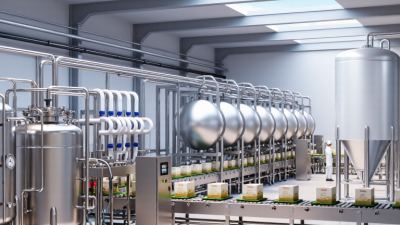
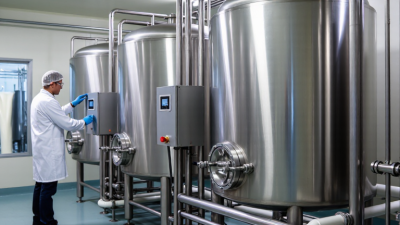
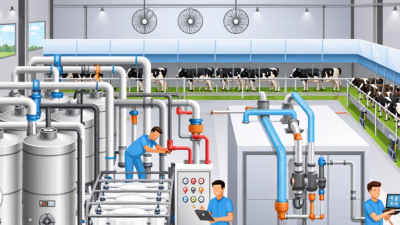
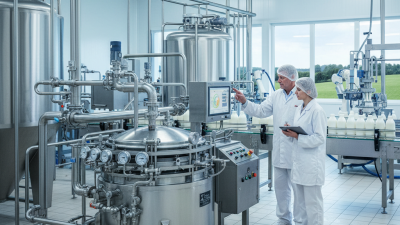
Choosing the world’s leading dairy equipment suppliers requires more than comparing company size or product catalogs. Reliable evaluation considers engineering experience, hygiene performance, automation, energy use, and after-sales support. In practice, a modern dairy plant depends on many connected systems. These include milking units, pasteurizers, separators, homogenizers, filling machines, cooling tanks, and cleaning-in-place equipment.
Small details matter. A poorly designed valve can delay production. An inefficient cooling system can increase operating costs every day. Strong suppliers usually provide tested equipment, clear maintenance guidance, operator training, and responsive technical service. Their solutions should also support traceability, food safety, and consistent product quality across changing production volumes.
This guide examines ten influential dairy equipment suppliers worldwide. The selection considers global reach, technical capability, product depth, documented industry experience, and customer support. It also looks at how each company responds to sustainability pressures, labor shortages, and stricter quality expectations. Market visibility alone is not enough. Some suppliers excel in complete processing lines, while others specialize in milking technology, packaging, or plant automation.
No ranking is perfect. Regional service quality can vary. Pricing and installation conditions may also change the final decision. Buyers should verify certifications, local references, spare-parts availability, and total ownership costs before signing a contract. That practical check is essential. The best dairy equipment supplier is not always the largest name; it is the partner that fits a plant’s products, capacity, workforce, and long-term operating goals.
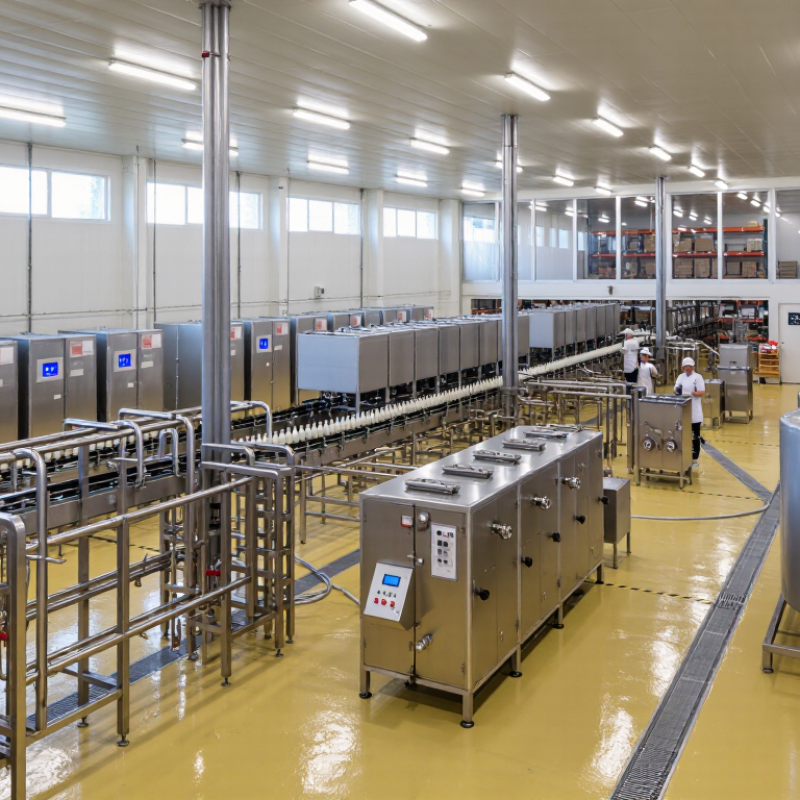
Selecting the top ten dairy equipment suppliers requires more than comparing catalogue size or advertising reach. We examine proven experience across milking, processing, cooling, cleaning, and packaging systems. Site visits, published performance data, and customer references help test whether claimed expertise works under daily pressure. A supplier serving a small cooperative and a high-volume plant should demonstrate adaptable engineering, not simply offer a broad product list. That distinction matters.
Technical capability carries significant weight. We review hygienic design, automation, energy use, water consumption, maintenance access, and compatibility with existing lines. Independent certifications and documented testing strengthen credibility, while transparent limitations protect buyers from unrealistic promises. Response time also matters. A delayed spare part can stop production before sunrise. We assess training, remote support, local technicians, warranty clarity, and lifecycle service rather than focusing only on purchase price. Total cost is often less visible.
Reliability is measured through uptime records, failure patterns, safety procedures, and feedback from operators who use the equipment every shift. We compare results across regions and facility sizes to reduce selection bias. Financial stability and supply-chain resilience are considered, especially for critical components. However, no ranking is perfect. Data may be incomplete, references may favor successful projects, and newer suppliers can be underestimated. Our scoring model combines evidence with expert judgment, then records uncertainty beside each result. We revisit the list as technology, regulations, and customer expectations change.
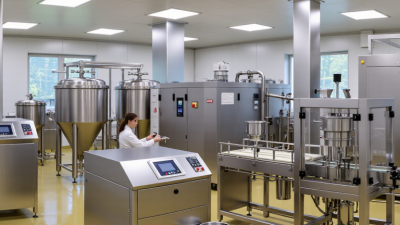
What Are the Top 10 Dairy Equipment Suppliers Worldwide?
Leading dairy equipment suppliers usually manufacture complete processing systems rather than one isolated machine. Their product ranges often begin with milking equipment, including vacuum pumps, claw assemblies, milk meters, and automated cleaning units. These systems must protect milk quality during collection. Small design errors can increase air intake, foam, or bacterial risk.
Refrigerated bulk tanks are another essential category. They rapidly cool fresh milk and maintain stable temperatures during storage. Many suppliers also produce plate heat exchangers, pasteurizers, separators, and homogenizers. These machines control temperature, fat distribution, and product texture with measurable accuracy. In real plants, sensor calibration matters as much as stainless steel quality. It is easy to overlook.
For cheese, yogurt, and butter production, manufacturers build cheese vats, curd cutters, culture tanks, yogurt fermenters, filling machines, and butter churns. They also provide clean-in-place systems, piping modules, control panels, and packaging lines. These components must work together without creating dead zones in pipelines. Hygiene depends on details, such as smooth welds and correct spray-ball coverage. A polished catalog is not enough. Buyers should examine service records, spare-part availability, testing procedures, and operator training. Energy consumption deserves equal attention, because an efficient machine can still perform poorly when maintenance is ignored.
| No. | Supplier Profile | Main Equipment Manufactured | Primary Dairy-Processing Stage | Typical Capacity Range | Typical Dairy Products Served | Common Design Standards |
|---|---|---|---|---|---|---|
| 1 | Profile A | Milk reception systems, weighing units, raw-milk storage tanks, plate heat exchangers, and balance tanks | Reception, storage, and heat transfer | 5,000–100,000 litres per hour | Fluid milk, cream, cultured milk, and cheese milk | Hygienic stainless steel, CIP-compatible construction, sanitary valves |
| 2 | Profile B | Pasteurization plants, high-temperature short-time systems, homogenizers, and milk standardization units | Pasteurization and composition control | 2,000–80,000 litres per hour | Pasteurized milk, cream, drinking yogurt, and flavored milk | Automatic temperature control, traceable process records, hygienic piping |
| 3 | Profile C | Fermentation tanks, yogurt processing lines, culture-dosing systems, and fruit-preparation mixers | Culturing and fermentation | 1,000–50,000 litres per batch | Set yogurt, stirred yogurt, drinking yogurt, and kefir | Controlled incubation, hygienic agitators, automated CIP circuits |
| 4 | Profile D | Cheese vats, curd-cutting systems, whey-draining equipment, cheese presses, and brining systems | Coagulation, curd treatment, and molding | 500–20,000 litres per vat | Fresh cheese, soft cheese, semi-hard cheese, and hard cheese | Food-grade stainless steel, programmable curd knives, controlled brine circulation |
| 5 | Profile E | Evaporators, falling-film concentrators, spray dryers, and powder-handling systems | Concentration and drying | 500–10,000 kilograms of water evaporation per hour | Milk powder, whey powder, skimmed-milk powder, and infant-formula ingredients | Closed-process design, dust control, low-temperature powder handling |
| 6 | Profile F | Butter churns, continuous butter-making machines, cream separators, and butter-working units | Cream separation and butter production | 500–10,000 kilograms of butter per hour | Butter, whipped butter, anhydrous milk fat, and ghee | Temperature-controlled processing, sanitary product contact surfaces |
| 7 | Profile G | Membrane filtration systems, ultrafiltration units, reverse-osmosis systems, and microfiltration skids | Separation and ingredient recovery | 1,000–60,000 litres per hour | Protein concentrates, lactose products, whey ingredients, and reduced-lactose milk | Food-grade membranes, automated cleaning, controlled transmembrane pressure |
| 8 | Profile H | Filling machines, cup fillers, bottle fillers, carton fillers, and aseptic packaging systems | Filling and packaging | 3,000–40,000 packages per hour | Milk, yogurt, cream, desserts, and liquid dairy beverages | Hygienic filling zones, format-change systems, batch traceability |
| 9 | Profile I | Industrial refrigeration systems, ice-water plants, glycol chillers, and cold-storage equipment | Cooling and cold-chain management | 50–5,000 kilowatts of cooling capacity | All chilled dairy products, frozen desserts, and fresh cheese | Food-plant refrigeration, temperature monitoring, energy-efficient heat recovery |
| 10 | Profile J | CIP stations, hygienic pumps, sanitary valves, process-control systems, and wastewater-treatment units | Cleaning, utilities, and plant automation | 10–500 cubic metres per hour | Supports fluid milk, yogurt, cheese, butter, and dairy powders | Automated CIP recipes, hygienic drainage, PLC-based process control |
The leading dairy equipment suppliers serve different production realities. Their strength is not only machine size. It includes hygiene design, installation support, operator training, and dependable spare parts.
One supplier profile centers on milking systems for medium and large farms. Its equipment emphasizes gentle milk transfer, automatic cleaning, and accurate yield records. Another specializes in stainless steel processing lines, including pasteurizers, separators, and balance tanks. A third focuses on cheese production, offering curd cutters, pressing units, and controlled brining rooms. The fourth supplies yogurt and fermented milk systems with precise temperature control. Small temperature errors matter here. Buyers should inspect calibration records, not just brochures.
A fifth supplier develops cooling tanks for farms facing hot climates or unstable collection schedules. A sixth builds filling and packaging equipment for cups, bottles, and pouches. A seventh provides wastewater and cleaning systems, an area often ignored during expansion. The eighth supports laboratory testing, with sampling tools for fat, protein, acidity, and microbial quality. A ninth designs feeding and automation equipment that reduces repetitive labor. The tenth supplies custom engineering services for unusual layouts, older buildings, or limited utilities. Custom work can solve real problems, but it may increase maintenance complexity. In practice, even an excellent supplier can disappoint without local technicians, clear documentation, and realistic delivery commitments. Some purchasing teams also underestimate water use and cleaning downtime. That mistake deserves closer review.
Profiles of the Top 10 Dairy Equipment Suppliers Worldwide
Regional milk production provides a neutral indicator of the markets served by leading dairy equipment suppliers. Asia represented the largest production base in 2023, followed by Europe and the Americas. The figures are rounded estimates based on FAOSTAT regional production data and are not supplier rankings or company revenue figures.
Source: FAOSTAT, Crops and Livestock Products database, 2023 regional milk production estimates.
Comparing the top ten global dairy equipment suppliers requires more than a sales ranking. Product breadth matters. Leading suppliers typically cover milking systems, pasteurizers, homogenizers, membrane filtration, filling lines, cold storage, and clean-in-place units. FAO data show that global milk production now exceeds 900 million tonnes annually. This scale rewards suppliers that can support both large processors and smaller regional plants. The strongest portfolios combine stainless-steel engineering with digital monitoring, automated valves, and traceable maintenance records.
Technology separates the leaders. High-efficiency heat treatment reduces energy loss, while membrane systems improve protein recovery and whey processing. Smart sensors can detect temperature changes within seconds. That matters. The International Dairy Federation’s 2024 market reporting highlights continuing pressure on safety, efficiency, and sustainability across dairy chains. Suppliers with regional service teams usually perform better than equipment exporters with limited local support. Asia-Pacific offers strong processing growth, while Europe emphasizes modernization and energy reduction. North America favors automation and labor-saving systems. Africa needs durable designs, training, and dependable spare-parts access.
Market coverage still needs careful interpretation. A supplier may have offices worldwide but weak installation capacity outside major cities. OECD-FAO agricultural projections indicate sustained dairy demand growth through 2033, yet investment conditions will differ sharply by country. I would not treat one global ranking as final. Total project cost, water use, software compatibility, operator training, and response time deserve equal weight. Some advanced systems look impressive in demonstrations, but they can disappoint without disciplined cleaning routines and skilled technicians. That practical gap is often missed.
Choosing among the top 10 dairy equipment suppliers requires more than comparing purchase prices. FAO’s 2024 agricultural statistics report global milk production at roughly 930 million tonnes in 2022. That scale increases pressure on hygiene, uptime, and process control. Ask each supplier for documented performance at a similar plant size. A polished sales presentation is not enough.
Start with hygienic design and measurable operating costs. Check clean-in-place coverage, drainage, weld quality, automation compatibility, and water consumption. The International Dairy Federation’s World Dairy Situation reports repeatedly highlight efficiency and sustainability as major dairy industry concerns.
Request energy data per litre processed, not vague “low-consumption” claims. Also compare spare-part availability, technician response times, training, and local service capacity. A low quote can still be expensive.
Supplier reliability needs evidence. Review factory acceptance testing, installation records, validation procedures, and references from facilities using comparable products. Confirm whether the equipment supports required food-safety systems and recognized hygienic engineering principles. I would also calculate total cost over ten years, including labor, cleaning chemicals, downtime, and upgrades. My checklist is not perfect. It can overvalue technical specifications and undervalue operator experience. For that reason, let production staff test the interface before signing. Get everything in writing.
+44 (0)1373 831 373