What Are the Top Food Industry Machinery Suppliers?

Choosing among food industry machinery suppliers is no longer a simple price comparison. Processing plants now evaluate hygiene design, automation depth, energy use, service coverage, and replacement-part availability. The right supplier must perform beside real production lines, where stainless-steel surfaces meet heat, moisture, oil, and strict cleaning schedules.

Industry reports provide useful direction. PMMI’s 2024 Global Trends Impacting the Market for Packaging Machinery highlights automation, labor shortages, sustainability, and supply-chain resilience as major investment drivers. The International Federation of Robotics also shows continuing demand for industrial robots, including applications in food and beverage production. These findings suggest that leading suppliers are not only selling mixers, fillers, conveyors, or inspection systems. They are building connected production solutions.

But reports do not tell the whole story. A machine may achieve impressive output in a demonstration hall and struggle with sticky dough or irregular vegetables. That matters. Buyers should examine verified throughput, cleaning time, changeover procedures, operator training, and local technical support. Suppliers with documented installations, recognized certifications, transparent warranties, and measurable efficiency claims deserve closer attention.

This guide compares prominent global and regional companies using practical purchasing criteria. It considers equipment range, engineering expertise, customization, after-sales support, and reliability across different food sectors. Market rankings can change, and no supplier is perfect. A careful buyer should still request site references, performance data, and a realistic total-cost estimate before signing a contract.
What Are the Top Food Industry Machinery Suppliers?

Defining the Role of Food Industry Machinery Suppliers

Food industry machinery suppliers do more than sell equipment. They help processors turn raw ingredients into safe, consistent products. Their role covers line design, hygienic engineering, installation, training, maintenance, and process improvement. A reliable supplier studies the entire plant, not only one machine.

Grand View Research reported that the global food processing equipment market reached approximately USD 52.4 billion in 2023. It also projects continued growth through 2030. This expansion reflects demand for automation, efficient production, and stronger food safety controls. Suppliers therefore influence energy use, cleaning time, product quality, and worker safety. They may also help reduce waste. FAO reported that 13.2% of food was lost between harvest and retail in 2021. Better dosing, storage, inspection, and packaging equipment can address part of this problem. Not every upgrade works, though. A faster line can create more waste when staff training is weak.

Tips: Ask suppliers for measured performance data, sanitation procedures, spare-parts plans, and operator training details. Request a trial with your actual ingredients. Small differences in viscosity, temperature, or particle size can change results.

Strong suppliers explain limitations clearly. They support validation, documentation, and lifecycle planning. Their value appears after installation, when equipment must remain dependable during long shifts. Buyers should compare total operating cost, not only purchase price. This point is often overlooked. Supplier claims also deserve independent verification through factory tests and production records.

Key Equipment Categories Served by Leading Suppliers

Leading food machinery suppliers usually cover several connected equipment categories, not one isolated machine. Processing systems include mixers, grinders, slicers, ovens, evaporators, and filling lines. Grand View Research valued the global food processing equipment market at about USD 58.4 billion in 2023. It also projects steady growth through 2030, driven by automation, hygiene demands, and labor shortages.

Packaging equipment forms another major category. Suppliers may provide vertical form-fill-seal machines, tray sealers, cartoners, labeling units, and inspection systems. PMMI’s 2024 industry reporting shows that packaging machinery remains a multibillion-dollar market in North America. Vision inspection and checkweighing are increasingly practical. They can detect damaged seals, incorrect weights, and misplaced labels before products leave the line.

Cold-chain equipment deserves equal attention. Industrial refrigeration, blast chilling, freezing tunnels, and temperature monitoring protect quality after processing. The FAO’s Food Loss and Waste report highlights the continuing scale of global food loss, especially where storage and transport are weak. Sanitation systems also matter, including clean-in-place units, hygienic pumps, and stainless-steel conveyors. In my experience, buyers often focus on production speed first. That can be a costly mistake. Energy use, changeover time, spare parts, and operator training may affect returns more than headline capacity. Some supplier comparisons also overlook wastewater and maintenance access. They should not.

What Are the Top Food Industry Machinery Suppliers? - Key Equipment Categories Served by Leading Suppliers

Equipment Category Typical Machinery Primary Function Common Food Applications Typical Capacity Range* Key Selection Criteria
Ingredient Handling Silos, hoppers, conveyors, bucket elevators, pneumatic conveying systems Receives, stores, transfers, and doses dry or liquid ingredients Flour, sugar, grains, powders, oils, sauces, and liquid ingredients Approximately 0.5–100 tonnes per hour, depending on material and system design Dust control, food-contact materials, accurate dosing, cleanability, and layout integration
Mixing and Blending Ribbon blenders, paddle mixers, planetary mixers, high-shear mixers Combines ingredients to achieve a consistent composition and texture Bakery doughs, seasoning blends, fillings, batters, confectionery, and prepared foods Batch sizes commonly range from 5 kg to more than 5,000 kg Mixing uniformity, shear level, batch time, recipe control, and sanitation access
Size Reduction Mills, grinders, crushers, slicers, dicers, and flakers Reduces particle size or cuts food into specified dimensions Grains, spices, nuts, meat, cheese, vegetables, and frozen products From several hundred kilograms to several tonnes per hour Particle or cut-size accuracy, temperature control, blade durability, and product yield
Thermal Processing Steamers, kettles, ovens, roasters, fryers, blanchers, and retorts Cooks, heats, sterilizes, pasteurizes, roasts, or fries food products Canned foods, sauces, bakery products, snacks, ready meals, meat, and vegetables Batch systems from 50 kg to 10,000 kg; continuous lines can exceed 10 tonnes per hour Temperature uniformity, residence time, energy efficiency, product quality, and process validation
Baking and Forming Dough sheeters, dividers, rounders, depositors, moulders, and tunnel ovens Shapes, portions, deposits, proofs, and bakes dough-based products Bread, rolls, biscuits, cookies, cakes, pastries, and pizza bases Approximately 500–20,000 pieces per hour, depending on product and line configuration Weight accuracy, dough handling, oven profile, changeover time, and product consistency
Liquid Processing Homogenizers, emulsifiers, pasteurizers, separators, and membrane filtration units Blends, separates, stabilizes, pasteurizes, or concentrates liquid products Milk, plant-based beverages, juices, sauces, dressings, and liquid egg Typically 500–50,000 liters per hour Hygienic piping, flow control, heat recovery, pressure rating, and cleaning-in-place capability
Refrigeration and Freezing Blast chillers, spiral freezers, tunnel freezers, plate freezers, and cold rooms Rapidly lowers product temperature to preserve safety, quality, and shelf life Frozen meals, meat, seafood, vegetables, bakery products, and ice cream Approximately 100 kg to more than 10 tonnes per hour Cooling rate, target core temperature, airflow, refrigerant efficiency, and product residence time
Filling and Packaging Volumetric fillers, weighers, form-fill-seal machines, tray sealers, and cartoners Measures, fills, seals, labels, and packs food products for distribution Snacks, powders, liquids, ready meals, canned foods, bakery goods, and fresh produce Roughly 20–1,500 packages per minute, depending on package type and product Fill accuracy, seal integrity, packaging format, line speed, flexibility, and material compatibility
Inspection and Detection Checkweighers, metal detectors, X-ray inspection, vision systems, and sorters Detects contamination, verifies weight, checks packaging, and removes nonconforming products Packaged foods across bakery, meat, dairy, snack, beverage, and frozen-food sectors Often 60–600 packages per minute Detection sensitivity, reject accuracy, product effect, data logging, and integration with quality systems
Cleaning and Sanitation Cleaning-in-place systems, foam stations, washdown systems, and hygiene equipment Removes food residues and microorganisms from processing equipment and production areas Dairy, beverage, meat, bakery, prepared foods, and high-care production environments System flow rates commonly range from 5,000 to 100,000 liters per hour Validated cleaning cycles, chemical control, water use, drainage, hygienic design, and wastewater handling

*Capacity figures are indicative industry ranges. Actual performance depends on product characteristics, equipment configuration, operating conditions, packaging format, and applicable food-safety requirements.

Criteria for Comparing Food Machinery Manufacturers

What Are the Top Food Industry Machinery Suppliers?

Criteria for Comparing Food Machinery Manufacturers

A strong supplier should match your product, output, and factory conditions. A machine designed for dry powder may struggle with sticky sauces. Ask for trials using your actual ingredients, not a substitute. Observe filling accuracy, cleaning time, noise, and product waste. Small details matter.

Check the machine’s construction carefully. Food-contact surfaces should resist corrosion and support hygienic cleaning. Review weld quality, seals, drainage points, and access panels. Ask how the equipment performs during continuous operation. A short demonstration can hide overheating, vibration, or frequent adjustments. It happens.

Compare measurable performance, not attractive brochures. Request data for throughput, energy use, changeover time, and acceptable defect rates. Confirm whether figures come from factory tests or real production lines. Independent certifications and documented validation improve confidence. However, paperwork alone cannot prove practical reliability.

Service capacity deserves equal attention. Examine response times, spare-parts availability, remote support, and technician training. Ask for references from facilities with similar products and production volumes. A factory visit may reveal maintenance habits that sales materials omit. Calculate total ownership cost, including installation, training, utilities, and downtime. The lowest quotation may become expensive later.

Use a weighted comparison sheet, but question the weights. Price might receive too much attention during budget pressure. Sanitation, operator safety, and long-term support may deserve higher scores. No supplier fits every project perfectly. A careful comparison accepts those weaknesses and records them clearly.

Top Global Suppliers and Their Specialized Solutions

What Are the Top Food Industry Machinery Suppliers?

Top Global Suppliers and Their Specialized Solutions

Global food machinery suppliers serve different production challenges, from small-batch preparation to high-speed packaging. Leading manufacturers usually specialize in thermal processing, mixing, filling, slicing, freezing, or inspection systems. Their value depends on measurable results, not impressive catalogs. In plant audits, I look for stable output, cleanable surfaces, accessible spare parts, and documented safety testing. A machine that runs quickly but creates difficult maintenance can become an expensive weakness.

Specialized suppliers often design complete lines for bakery, dairy, meat, beverages, prepared meals, and frozen foods. Their solutions may include automated dosing, hygienic conveyors, vision inspection, metal detection, and robotic case packing. Regional suppliers can offer faster service and better knowledge of local utilities. Global suppliers may provide stronger engineering resources and broader integration experience. Neither option is automatically better. That point deserves more attention.

Tips: Request test runs using your actual ingredients. Check changeover time, water use, noise levels, and cleaning access. Ask for performance data from similar facilities. Review technician response times before signing a contract. Keep a realistic spare-parts budget.

Reliable selection also requires evidence. Compare energy consumption, product loss, operator training, and downtime records. Ask suppliers to explain limitations clearly. Some projections look precise but depend on ideal conditions. Humidity, raw material variation, and inexperienced operators can change results. A practical factory trial often reveals more than a polished presentation.

How to Select a Supplier for Specific Production Needs

Selecting a food machinery supplier starts with your product, not a glossy catalogue. Define the recipe, batch size, target speed, and acceptable waste before contacting suppliers. A sauce line may need accurate dosing, gentle pumping, and heated stainless-steel vessels. Frozen products require different controls, insulation, and cleaning procedures.

Ask each supplier to test your actual ingredients. Small trials can reveal clogging, foaming, uneven filling, or difficult changeovers. Request measured results, not general promises. Check contact surfaces, weld quality, drainage, and access for sanitation. Food-grade materials and documented hygienic design are essential. They are not optional.

Service affects production every week. Confirm technician response times, spare-part availability, training, and remote support. A lower purchase price may hide expensive downtime. Review the total operating cost, including water, energy, labor, and maintenance. Visit an operating site if possible. Watch the line run.

Do not ignore integration. The equipment must communicate with existing controls, conveyors, packaging units, and safety systems. Ask for factory acceptance testing using agreed performance criteria. Also examine warranty limits and installation responsibilities. A perfect checklist does not exist. Your priorities may change after the first trial. That is why honest communication, clear documentation, and a supplier willing to admit limitations matter more than impressive sales language.

How to Select a Food Industry Machinery Supplier for Specific Production Needs

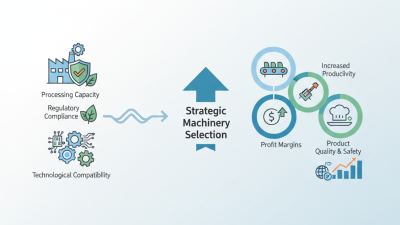
Recommended evaluation weighting for comparing machinery suppliers across food processing, packaging, and production-line requirements.

Production fit and food-safety compliance should receive the greatest attention because machinery must match the product, throughput, hygiene requirements, and applicable regulations. Total cost, after-sales service, integration capability, and delivery reliability are also important when selecting a supplier for a specific production need.