Top Food Machinery Trends in 2026 What Buyers Should Know?
As the food machinery industry rapidly evolves, understanding upcoming trends is crucial for buyers. By 2026, advancements in technology will reshape how food is processed, packaged, and delivered. Buyers must stay informed to make smart investment choices.
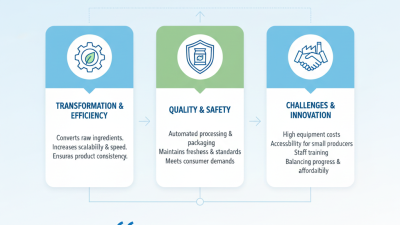
Innovative automation will dominate food machinery trends. High-speed production lines will improve efficiency. Additionally, eco-friendly materials will emerge, addressing sustainability concerns that are increasingly important to consumers. These trends bring both exciting opportunities and challenges for buyers.
Moreover, the integration of smart technologies will enhance operational capabilities. Data-driven insights will streamline processes. However, the need for skilled personnel will grow, creating potential skill gaps. Buyers must evaluate their workforce and training needs to adapt to these changes effectively.
Emerging Automation Technologies Shaping Food Machinery by 2026
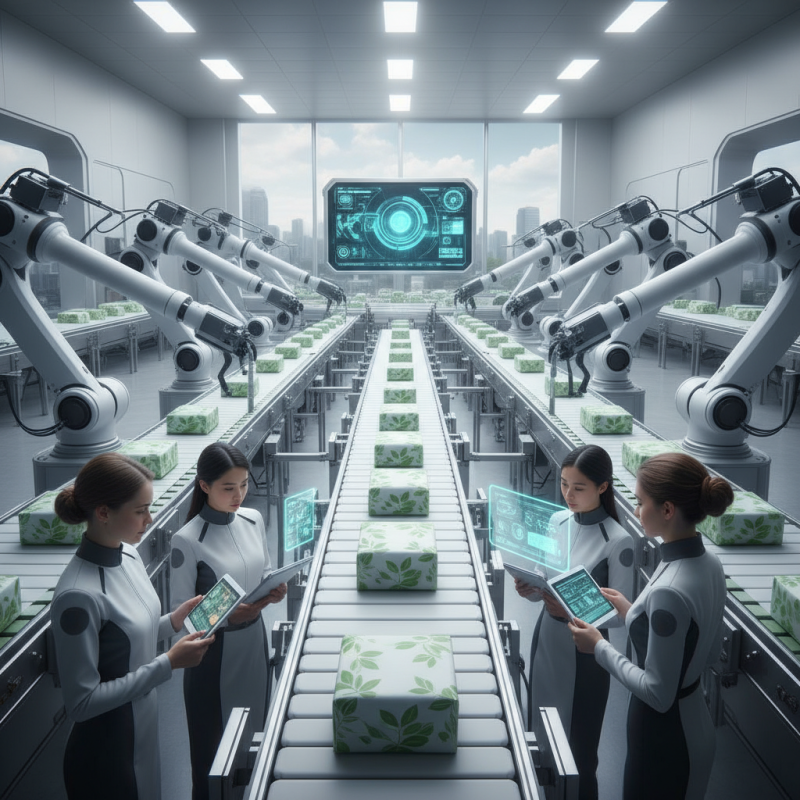
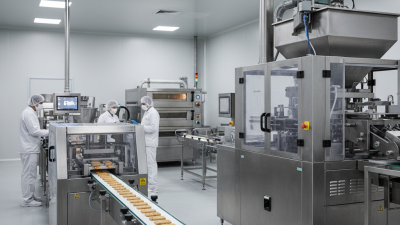
As we approach 2026, automation technologies in food machinery are quickly evolving. Companies are leveraging advanced robotics to enhance efficiency. These machines are designed to perform repetitive tasks with speed and precision. Operators can reduce human error and streamline production lines. The result is a more reliable food processing environment.
Artificial intelligence is also a game changer. It helps analyze data to predict maintenance needs. This proactive approach can prevent unexpected downtimes. Moreover, machine learning algorithms improve quality control by detecting inconsistencies in real time. However, there are challenges in integrating these systems. Workers may need training to adapt to new technologies.
Safety remains a top priority in food machinery. Advanced sensors are becoming standard to monitor equipment conditions. Yet, implementing these systems requires careful planning. Organizations must ensure compliance with safety regulations while not compromising efficiency. Balancing automation with human oversight is crucial to achieving optimal results.
Top Food Machinery Trends in 2026 What Buyers Should Know?
| Trend |
Description |
Impact on Buyers |
Future Outlook |
| Increased Automation |
More manufacturers are adopting automated systems to improve efficiency and reduce labor costs. |
Buyers can expect lower operational costs but need to consider the initial investment. |
Adoption rates will rise as technology becomes more accessible. |
| Smart Sensors |
Integration of smart sensors for real-time monitoring and data collection. |
Enhanced quality control and reduced waste for buyers. |
Expect more sophisticated monitoring systems in the market. |
| Sustainability Practices |
Focus on reducing carbon footprint and using eco-friendly materials. |
Buyers will prioritize equipment that aligns with sustainability goals. |
Sustainability will be a key factor influencing purchasing decisions. |
| Industry 4.0 Integration |
Adoption of advanced manufacturing technologies including AI and IoT. |
Buyers will need to adapt to new technologies to stay competitive. |
Full integration expected by 2026 for most manufacturing sectors. |
| Modular Machinery |
Shift towards modular solutions that can be customized easily. |
Flexibility and scalability will benefit buyers as plants expand. |
Modular systems will become standard practice in new installations. |
Sustainability in Food Machinery: Innovations and Industry Standards
Sustainability is transforming the food machinery sector. Innovations are emerging that focus on reducing environmental impact. Energy-efficient machines are gaining traction, using less power while maintaining performance. These advancements are crucial as energy costs rise.
Industry standards are evolving to prioritize sustainable practices. Regulations now encourage the use of eco-friendly materials. Manufacturers must adapt their processes to comply. This shift can pose challenges, especially for older machines. Upgrading might not be straightforward.
Some companies struggle to balance cost and sustainability. Investing in new technology can be daunting. Yet, the long-term benefits often outweigh the initial investments. Sustainability isn’t just an option; it’s becoming essential in food machinery.
Impact of AI and Machine Learning on Food Production Efficiency
The integration of AI and machine learning in food production is revolutionizing efficiency. According to a report by ResearchAndMarkets, the global food processing equipment market is expected to reach $150 billion by 2026. AI technologies can reduce operational costs by up to 30%. These advancements allow for improved quality control, predicting equipment failures before they happen.
Implementing AI in food manufacturing helps optimize supply chains. It analyzes real-time data to create precise production forecasts. As a result, waste is minimized. For example, AI can monitor inventory levels and reduce overproduction. This shift in operations is not only eco-friendly but also economically beneficial.
Tip: Start small with AI solutions to see what works for your operation. Test specific areas, like inventory management or quality assurance.
AI and machine learning, however, face challenges. Many companies struggle with data integration. Legacy systems often cannot support new technologies. Training staff to use AI tools can also be resource-intensive. A gradual approach is often necessary to ensure smooth transitions without overwhelming existing processes.
Tip: Encourage ongoing training and development to keep your team up-to-date on technology.
Current Trends in Food Safety Regulations and Compliance Technologies
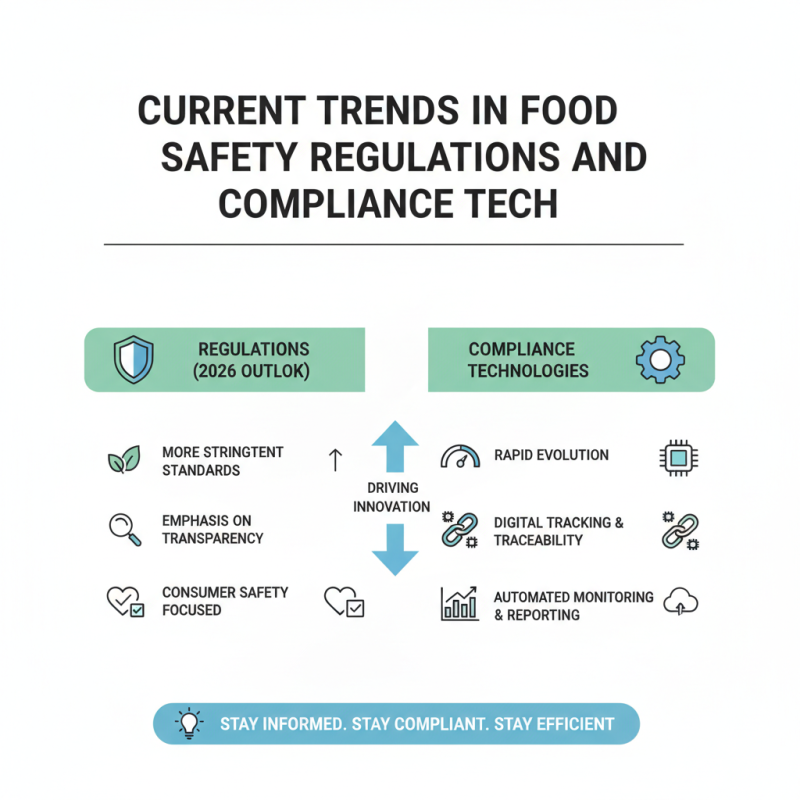
Food safety regulations are becoming more stringent. As we move toward 2026, compliance technologies are evolving rapidly. These changes reflect the growing emphasis on consumer safety and transparency. Buyers must stay informed about these trends to ensure their operations are compliant and efficient.
New tracking systems are being implemented in the food industry. These systems enhance traceability from farm to table. They help businesses quickly locate issues in the supply chain, minimizing risk. Many companies are investing in software that automates compliance reporting. This reduces human error and provides real-time data for decision-making.
However, not all technologies are foolproof. Some systems may struggle with integration. Others can be expensive, leading to hesitation among smaller buyers. It's crucial for businesses to evaluate their specific needs. Engaging with industry experts can provide valuable insights. Collaboration across sectors can help strengthen food safety standards, ensuring a safer food supply for all.
Consumer Demands Driving Customization in Food Processing Equipment
As consumer preferences evolve, the food processing equipment landscape must adapt. A recent report highlights that 70% of food manufacturers are prioritizing customization. This shift stems from consumers demanding products tailored to their specific tastes. Traditional machinery may not suffice to meet these varied needs. Companies must invest in flexible equipment to stay competitive.
Customization in machinery isn't just a trend; it's a necessity. For instance, studies show that 65% of buyers prefer suppliers who offer adaptable solutions. These solutions include modular designs that allow easy modifications. Therefore, manufacturers face pressure to rethink their production lines. The focus should be on integrating technology that fosters this adaptability.
Despite the clear advantages of customization, challenges remain. Not all manufacturers are equipped to handle these demands effectively. Some lack the expertise needed for implementation. Additionally, the increased complexity can lead to longer lead times and higher costs. These factors raise questions about the efficiency of truly customized solutions in the food processing industry. Balancing consumer demands with operational capabilities is crucial for future success.