Top 10 Microwave Oven Baffle Die Suppliers Worldwide
Microwave ovens look simple, yet their internal airflow depends on precise stamped components. The Microwave Oven Baffle Die forms those components repeatedly, often from thin stainless steel or coated sheet metal. Small errors can create burrs, uneven vents, poor alignment, or costly production delays.
Market evidence supports closer attention to tooling quality. Fortune Business Insights estimated the global microwave oven market at approximately USD 10.5 billion in 2023. Its report projects continued growth through 2032. Grand View Research also identifies replacement demand, compact appliances, and manufacturing efficiency as important market factors. Meanwhile, Research and Markets reports continuing expansion in global metal stamping, driven by automation and high-volume production. These figures describe different markets. They should not be treated as identical. That limitation matters.
John G. Nee, a respected tool-and-die educator and author of Fundamentals of Tool Design, wrote, “Good tooling is the foundation of consistent manufacturing.” His principle fits baffle production closely. A reliable die must control forming pressure, material flow, clearance, and repeatability. It should also support quick maintenance on a busy press line.
This guide reviews the Top 10 Microwave Oven Baffle Die Suppliers Worldwide. The comparison considers die accuracy, engineering experience, material compatibility, surface finish, lead time, after-sales support, and documented quality systems. Supplier claims require verification. Factory visits, sample trials, inspection records, and customer references remain valuable. No ranking is permanent. Real performance depends on your material, press capacity, annual volume, and tolerance requirements.
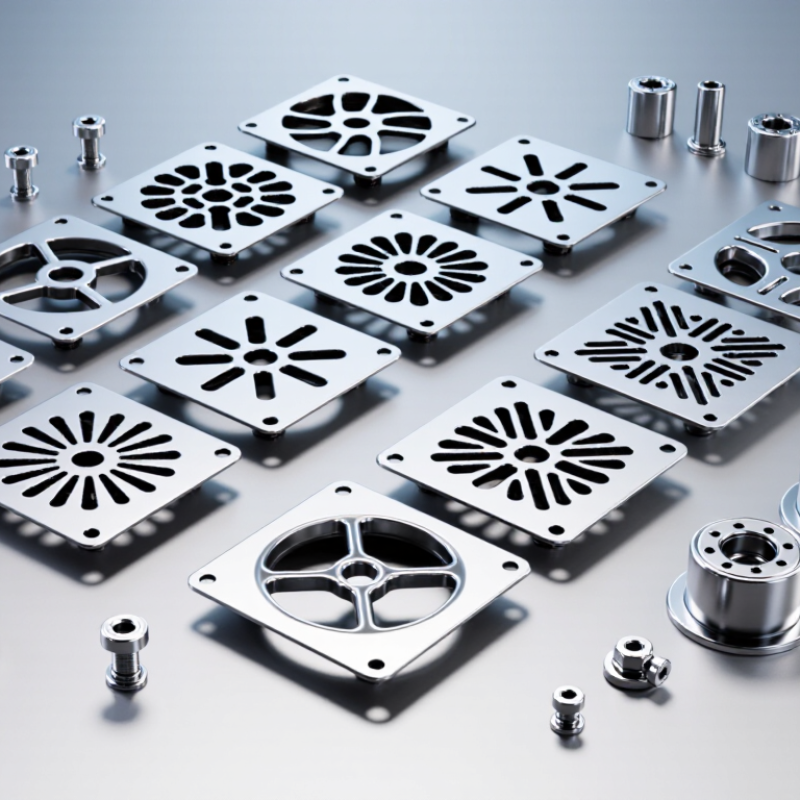
Microwave Oven Baffle Dies: Definition, Functions, and Manufacturing Scope
Microwave oven baffle dies are precision tools used to blank, pierce, and form thin metal sheets. They create baffles, shielding panels, airflow guides, and related internal parts. These components help manage heat, ventilation, and electromagnetic performance inside the oven cavity. Small dimensional errors can cause poor fitting, vibration, sharp edges, or inconsistent heating.
The manufacturing scope covers engineering review, CAD modeling, material selection, die construction, trial stamping, and quality inspection. Common die types include progressive, compound, and single-operation tooling. Stainless steel and coated carbon steel are often selected for corrosion resistance and stable forming behavior. Skilled suppliers check punch clearance, bend radius, springback, surface finish, and repeatability. They may also provide prototype dies, sample runs, spare inserts, and maintenance guidance.
A reliable supplier should explain tolerances clearly and connect test results with production conditions. Experience matters when baffles include louvers, narrow slots, or deep drawn features. These details can increase cracking and distortion. In practice, no die is perfect.
A recurring mistake is judging tooling only by its initial price. Poor alignment may create higher scrap and slower assembly later. Even experienced teams can overlook material variation between batches. For this reason, supplier evaluations should include inspection records, trial samples, correction procedures, and realistic delivery capability. Clear communication remains essential when designs change during validation.
| No. | Baffle Die Capability | Typical Baffle Function | Common Workpiece Material | Applicable Die Process | Typical Manufacturing Scope | Key Quality-Control Focus |
|---|---|---|---|---|---|---|
| 1 | Flat Perforated Baffle Die | Supports airflow or shields selected internal areas while allowing controlled ventilation through openings. | Galvanized steel sheet, cold-rolled steel, or stainless steel sheet. | Progressive punching, blanking, and light forming. | Hole patterns, edge trimming, mounting slots, and flatness control. | Hole position and burr height Consistent pitch, clean edges, and prevention of sharp projections. |
| 2 | Embossed Baffle Die | Adds ribs or raised features to increase stiffness and reduce panel vibration. | Cold-rolled steel and stainless steel, commonly in thin-gauge sheet form. | Embossing, shallow drawing, and compound forming. | Embossed ribs, recessed areas, locating features, and perimeter trimming. | Form height and surface condition Uniform emboss depth, limited cracking, and controlled springback. |
| 3 | Deep-Drawn Baffle Die | Produces a three-dimensional baffle that directs air or separates internal oven zones. | Low-carbon steel sheet or corrosion-resistant stainless steel sheet. | Deep drawing, redraw operations, piercing, and trimming. | Drawn walls, radiused corners, flange formation, and secondary piercing. | Wall thickness and draw quality Wrinkle prevention, crack control, corner radius, and dimensional repeatability. |
| 4 | Louvered Baffle Die | Creates directional openings for airflow while retaining structural strength. | Aluminized steel, galvanized steel, or stainless steel sheet. | Louver forming, piercing, progressive stamping, and trimming. | Angled louvers, ventilation slots, mounting holes, and edge finishing. | Louver angle and opening size Consistent airflow openings, low distortion, and burr control. |
| 5 | Folded-Edge Baffle Die | Improves rigidity and reduces exposed sharp edges on the finished component. | Pre-coated steel, cold-rolled steel, or stainless steel. | Blanking, bending, hemming, and edge-folding operations. | Peripheral flanges, folded safety edges, tabs, and assembly reliefs. | Bend accuracy and edge safety Stable flange width, coating protection, and absence of exposed burrs. |
| 6 | Multi-Station Progressive Die | Combines several operations in one continuous press cycle for repeat production. | Thin-gauge steel, stainless steel, and other formable sheet metals. | Progressive blanking, piercing, forming, embossing, and cutoff. | Strip layout, pilot registration, in-die forming, automatic part separation, and scrap management. | Station-to-station repeatability Strip feeding accuracy, tool wear, burr direction, and production consistency. |
| 7 | Compound Baffle Die | Performs multiple cutting actions during one press stroke when a compact tooling setup is preferred. | Cold-rolled steel, galvanized steel, and stainless steel sheet. | Compound blanking and piercing, followed by separate forming if required. | Outer profile, internal openings, mounting holes, and repeatable cut geometry. | Profile accuracy and die clearance Clean sheared edges, limited distortion, and controlled cutting clearance. |
| 8 | Transfer-Forming Baffle Die | Forms larger or more complex three-dimensional baffles through sequential die stations. | Low-carbon steel, stainless steel, or coated sheet metal. | Transfer stamping, drawing, forming, piercing, and trimming. | Complex contours, multiple draw stages, integrated holes, and final calibration. | Contour and positional accuracy Part transfer stability, deformation control, and station alignment. |
| 9 | Prototype and Low-Volume Baffle Die | Validates part geometry, assembly fit, and forming feasibility before mass production. | Material selected to match the intended production sheet wherever practical. | Simple blanking, soft tooling, CNC-machined forming tools, or modular dies. | Design verification, limited batches, engineering changes, and pilot assemblies. | Design validation Fit, function, springback, manufacturability, and documented dimensional results. |
| 10 | High-Volume Replacement and Maintenance Die | Maintains production continuity by replacing worn cutting or forming components. | Tool steel for die components with the specified production sheet material for parts. | Die refurbishment, insert replacement, regrinding, reconditioning, and replication. | Punches, dies, guide components, wear inserts, spare assemblies, and preventive maintenance. | Service life and interchangeability Hardness consistency, fit of replacement components, wear resistance, and repeatability. |