A Heavy Duty Storage Cabinet is built for demanding workplaces where ordinary furniture quickly fails. It stores heavy tools, spare parts, equipment, and maintenance supplies. Unlike a household cupboard, it usually uses reinforced steel, welded frames, adjustable shelves, and durable locking systems. Its real value appears in busy workshops, warehouses, laboratories, and service areas.
Dr. Alan Hedge, a respected ergonomics specialist, stated, “Ergonomics is the science of designing the workplace to fit the worker.” This principle matters when choosing a Heavy Duty Storage Cabinet. Shelf height should reduce awkward reaching. Handles should support controlled opening. Drawers should move smoothly, even during repeated daily use. The cabinet must also match the floor, working space, and expected load.
Numbers matter.
A strong appearance proves little. Buyers should check the rated capacity per shelf, steel thickness, corrosion resistance, ventilation, and anchoring requirements. Uneven loading can damage shelves or create tipping risks. A locking door may protect access, but it does not replace proper organization. Some cabinets perform well in dry workshops yet deteriorate in humid environments. That limitation is easy to overlook.
The best cabinet is not always the largest one. It is the one that fits the actual workload, available space, and maintenance routine. This article will explain cabinet construction, common applications, load ratings, safety considerations, and practical selection methods. It will also question a common assumption: heavier does not automatically mean better. Reliability comes from balanced design, verified capacity, and consistent use.
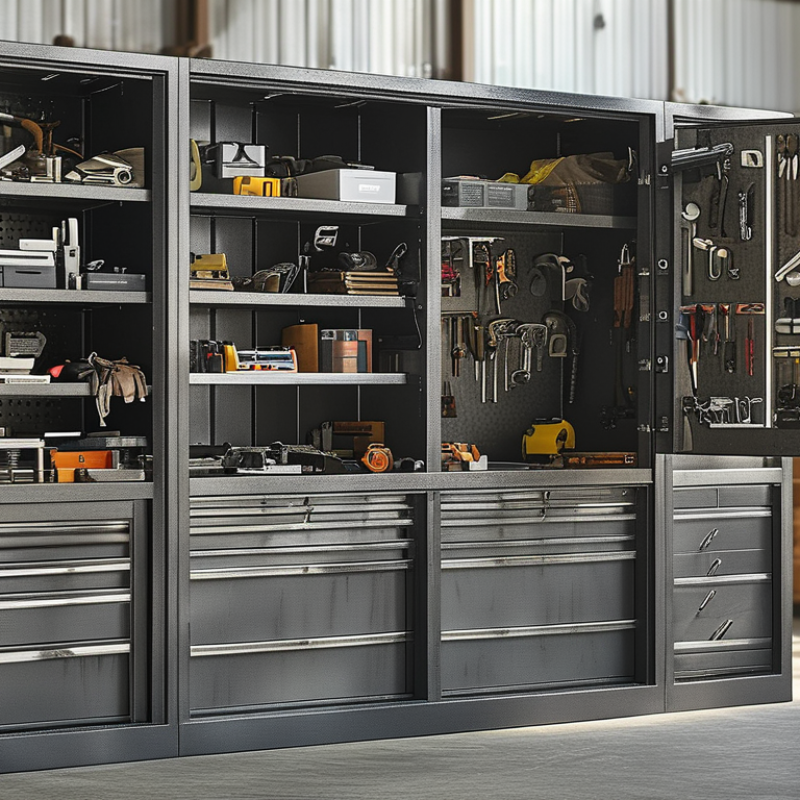
What Is a Heavy Duty Storage Cabinet?
Definition and Purpose of a Heavy-Duty Storage Cabinet
A heavy-duty storage cabinet is a reinforced enclosure designed to hold heavy tools, equipment, parts, or supplies. Unlike a light household cabinet, it uses stronger steel, rigid shelves, and durable hinges. Its purpose is practical: organize weight safely while protecting stored items from dust, impact, and unnecessary movement.
In a workshop, a properly selected cabinet can keep hand tools, fasteners, and maintenance equipment within reach. Adjustable shelves help separate bulky objects from smaller components. Lockable doors may also control access in shared work areas. However, “heavy-duty” is not a universal rating. Buyers should check the stated load capacity, shelf spacing, cabinet dimensions, and floor requirements before installation.
A reliable cabinet should remain stable when shelves are fully loaded. Level flooring matters. Uneven placement can strain doors and reduce balance over time. In my experience, users often focus on maximum capacity and overlook daily handling. A shelf may support a heavy load, yet repeated sliding or uneven distribution can cause problems. Weight should be spread across the shelf, with dense items stored lower.
Ventilation, corrosion resistance, and fire performance also depend on the cabinet’s design and environment. A metal cabinet is not automatically suitable for every workplace. Humid rooms may require additional protection, while delicate equipment may need internal padding. These details are easy to miss, and a better choice sometimes begins with measuring the storage area twice.
A heavy-duty storage cabinet is a reinforced steel cabinet designed to organize and protect tools, components, equipment, and other heavy materials. Compared with light-duty units, it typically provides stronger shelves, higher load capacity, improved durability, and secure doors.
The chart shows common illustrative load-capacity bands per shelf. Actual ratings depend on cabinet construction, shelf dimensions, material thickness, and how the load is distributed.
A heavy-duty storage cabinet is built for dense, repeated, and sometimes awkward storage. Its purpose is simple: protect materials while keeping access controlled and organized. The real difference lies in its structure, not its appearance. In practical facility inspections, weak shelves often fail before the cabinet body. That detail matters. The U.S. Bureau of Labor Statistics recorded 5,283 fatal workplace injuries in 2023. This figure shows why stable storage deserves serious attention.
Structural strength begins with reinforced steel panels, welded frames, and load-rated shelves. Adjustable shelves should lock firmly into vertical supports. They should not shift under uneven loads. Doors need strong hinges, reliable latches, and minimal flex. Full-height doors can also reduce exposed edges in busy work areas. Anchoring helps prevent tipping, especially when upper shelves hold dense parts. However, a thick panel does not guarantee safety. Capacity changes with shelf spacing, load shape, and uneven floors. That is where specifications can mislead.
Tips: Check the cabinet’s usable load rating, not only its total capacity. Measure the floor area and door swing first. Keep heavy items on lower shelves. Inspect welds, shelf clips, hinges, and anchors during routine checks. OSHA material-handling guidance supports stable storage and clear aisles. I would also record damaged components immediately. Small defects are easy to ignore, but they rarely improve with use.
A heavy duty storage cabinet is built for repeated loading, not just a larger appearance. Its performance depends on material thickness, joint strength, shelf design, and anchoring. The U.S. Bureau of Labor Statistics reported 2.6 million nonfatal workplace injuries in 2023. That figure supports careful storage planning, especially where unstable loads can create impact or lifting hazards.
Cold-rolled steel remains common because it resists dents and supports high shelf loads. Many industrial cabinets use 18- to 20-gauge steel, with folded edges and welded corners. Thicker panels help, but more metal alone does not guarantee durability. Weak hinges or poor welds can fail first. Powder coating adds a hard, cleanable surface, although damaged areas may still corrode in humid rooms.
Stainless steel suits washdown areas and corrosive environments. Aluminum weighs less, but it usually needs thoughtful reinforcement. High-density plastic resists moisture and chemicals, yet it can deform under heat or uneven loading. Adjustable shelves should carry their rated capacity across the full surface, not one concentrated box. ANSI/MH28.1 guidance emphasizes testing rack and storage components under defined loading conditions. OSHA 29 CFR 1910.176 also requires stored materials to remain stable and secure. In practice, anchoring is often overlooked. I would verify the floor, wall condition, load distribution, and cabinet rating before installation.
What Is a Heavy Duty Storage Cabinet?
Heavy duty storage cabinets are reinforced units built for demanding workplace loads. They commonly use welded steel bodies, adjustable shelves, lockable doors, and load-rated drawers. Unlike ordinary office cupboards, they are designed for repeated opening, heavy tools, spare parts, equipment, and protective clothing. A 2023 report from the U.S. Bureau of Labor Statistics recorded about 2.6 million nonfatal workplace injuries in private industry. Organized storage cannot prevent every incident, but it can reduce clutter and unsafe reaching.
Different workplaces need different cabinet types. Manufacturing floors often use drawer cabinets for dies, hand tools, and small components. Warehouses usually need wide-shelf cabinets for packaged stock and maintenance supplies. Laboratories may require corrosion-resistant interiors and controlled access. Offices, schools, and healthcare facilities often choose compact cabinets for files, devices, uniforms, or cleaning equipment. OSHA 1910.176(b) requires storage areas to remain free from hazards, making cabinet placement and aisle clearance part of practical safety planning.
Capacity matters. So does visibility.
A facility manager should check shelf ratings, anchoring options, door clearance, ventilation, and cleaning requirements before purchase. A cabinet overloaded beyond its rating can deform, tip, or become difficult to inspect. This is where product claims deserve careful review. Real experience often reveals problems that specifications miss, such as drawers colliding with nearby equipment or shelves sagging after months of use. Heavy duty does not mean maintenance-free. Regular inspections, clear labels, and sensible weight distribution remain essential. Sources: U.S. Bureau of Labor Statistics, Employer-Reported Workplace Injuries and Illnesses, 2023; OSHA, 29 CFR 1910.176.
| Cabinet Type | Primary Purpose | Typical Construction | Typical Load or Capacity | Suitable Workplace Applications | Important Features |
|---|---|---|---|---|---|
| Heavy-Duty Steel Cabinet | General storage of tools, equipment, components, spare parts, and documents. | Welded or bolted steel body with reinforced doors and adjustable shelves. | Commonly about 100–250 kg per shelf, depending on shelf design and load distribution. | Factories Workshops Warehouses Maintenance Rooms | High rigidity, lockable doors, adjustable shelving, long service life, and resistance to everyday impact. |
| Tool Storage Cabinet | Organized storage for hand tools, power tools, measuring equipment, and maintenance supplies. | Powder-coated steel with drawers, trays, pegboards, or internal tool panels. | Drawer capacities commonly range from about 30–100 kg each; total capacity varies by model. | Automotive Workshops Maintenance Areas Engineering Departments | Full-extension drawers, drawer locks, anti-tip mechanisms, dividers, and high-visibility labels. |
| Mobile Storage Cabinet | Provides secure storage that can be moved between workstations or production zones. | Steel cabinet mounted on industrial casters, usually with locking wheels. | Often designed for approximately 200–600 kg total load, depending on the frame and casters. | Production Lines Workshops Service Areas Laboratories | Swivel casters, wheel brakes, reinforced base, push handle, and secure doors or drawers. |
| Flammable-Liquid Safety Cabinet | Stores flammable liquids and helps reduce fire risk in workplaces using combustible chemicals. | Double-wall steel construction with an air gap, raised leak-containment sill, and self-closing doors. | Common sizes include approximately 30–110 gallons, subject to local regulations and cabinet certification. | Laboratories Manufacturing Plants Maintenance Shops Educational Facilities | Fire-resistant design, spill containment, warning labels, grounding provisions, and controlled access. |
| Chemical Storage Cabinet | Separates and protects chemical containers while supporting safer inventory control. | Steel, corrosion-resistant laminate, or chemical-resistant polymer construction selected for the stored substances. | Capacity depends on container size, shelf rating, cabinet dimensions, and chemical compatibility. | Laboratories Research Facilities Healthcare Areas Industrial Sites | Adjustable spill-retaining shelves, ventilation options, chemical compatibility, and clear segregation by hazard class. |
| Parts and Bin Cabinet | Stores small components such as fasteners, electrical parts, fittings, and replacement items. | Steel frame with modular bins, drawers, or removable containers. | Individual bins may hold from a few kilograms to more than 20 kg, depending on size and material. | Assembly Areas Maintenance Stores Electronics Workshops Warehouses | High-density organization, transparent bin fronts, part labels, modular layouts, and quick visual identification. |
| Garment and Personal-Item Locker | Stores workwear, personal protective equipment, uniforms, and employee belongings. | Ventilated powder-coated steel with individual compartments, shelves, hooks, or sloped tops. | Load depends on compartment and shelf design; intended for personal items rather than dense industrial materials. | Factories Construction Sites Sports Facilities Service Facilities | Individual locks, ventilation slots, coat hooks, nameplates, cleanable surfaces, and optional bench seating. |
| Electrical and IT Equipment Cabinet | Protects electrical parts, control equipment, network hardware, and sensitive technical accessories. | Steel enclosure with cable-entry points, mounting panels, rails, and optional sealed gaskets. | Load is determined by mounting rails, internal panels, shelf ratings, and the enclosure structure. | Control Rooms Data Areas Utility Rooms Manufacturing Facilities | Access control, cable management, ventilation or cooling provisions, dust protection, and grounding capability. |
| Outdoor or Weather-Resistant Cabinet | Stores tools, electrical equipment, and supplies exposed to moisture, dust, or changing temperatures. | Galvanized or coated steel, stainless steel, or weather-resistant polymer with sealed openings. | Capacity varies according to cabinet size, anchoring method, shelf rating, and environmental conditions. | Utilities Construction Sites Outdoor Maintenance Transport Facilities | Water and dust resistance, corrosion protection, roof overhang, drainage, secure locks, and floor or wall anchoring. |
| Fire-Resistant Document Cabinet | Protects paper records, electronic media, and critical documents from heat and fire exposure. | Insulated steel body with fire-resistant layers and protected locking hardware. | Storage capacity is generally specified by internal volume, file size, and certified fire-resistance duration. | Offices Financial Departments Legal Offices Records Rooms | Fire-resistance rating, water-resistance options, locking mechanism, adjustable filing shelves, and document organization. |
| Selection note: Actual load ratings, fire-resistance periods, chemical compatibility, weather protection, and required anchoring must be verified from the cabinet’s technical documentation and applicable workplace regulations. Shelf capacity should be evenly distributed and must not exceed the manufacturer’s stated rating. | |||||
What Is a Heavy Duty Storage Cabinet?
Safety, Load Capacity, and Maintenance Considerations
A heavy duty storage cabinet is built for demanding workplaces, workshops, and stockrooms. Its reinforced frame supports heavier contents than ordinary office furniture. However, strength alone does not guarantee safe storage. Cabinet placement, shelf adjustment, and daily loading habits matter just as much.
Check the stated load rating before installing anything. The rating often applies to one shelf, not the entire cabinet. Distribute weight across the shelf surface, with dense items kept low. Never exceed the rating, even when the cabinet appears stable. Anchor tall cabinets to a suitable wall or floor when possible. Keep doors fully closed, and repair damaged latches promptly. I have seen a cabinet remain upright while an overloaded shelf bent visibly. It looked safe from a distance.
Maintenance should be simple, regular, and documented. Inspect welds, shelf supports, hinges, handles, and fasteners for looseness or corrosion. Wipe spills quickly, especially near the cabinet base. Use a dry cloth for routine cleaning, and follow the material’s care requirements. Do not force a stiff door. Find the cause instead. A monthly inspection works well for many facilities, but busy areas may need weekly checks. Records should note defects, repairs, and inspection dates. Small oversights become expensive. Shelves can weaken gradually, and users may not notice until stored items shift.
+44 (0)1373 831 373