Laundry Disinfectant is designed to reduce or destroy selected microorganisms on washable fabrics. It is not simply a stronger laundry detergent. Detergent removes soil, body oils, and many microbes. A disinfectant adds an antimicrobial step when the product label allows use on clothing. This difference matters around towels, underwear, bedding, and items exposed to illness.
Microbiologist Dr. Charles Gerba has often stressed, “Cleaning and disinfecting are not the same thing.” That principle explains how Laundry Disinfectant works. Its active ingredients may damage microbial membranes, disrupt proteins, or interfere with cellular processes. Effectiveness depends on concentration, water temperature, contact time, and fabric condition. A capful poured into a crowded, cold wash may not deliver the result someone expects. More product is not automatically better.
The label remains the practical authority. It identifies suitable fabrics, required amounts, and safety precautions. Some products work during the wash cycle. Others require soaking or a separate rinse. Never mix disinfectants with bleach, acids, or other cleaners. Chemical combinations can release dangerous fumes. Ventilation also matters.
A clean scent proves very little. That is easy to forget.
Real laundry experiences are less perfect. Overloading a machine, using hard water, or removing clothes slowly can reduce hygiene performance. Laundry Disinfectant may support better control, but it cannot replace handwashing or proper treatment of heavily soiled textiles. Users should check the product registration and manufacturer instructions in their country. Careful use, not dramatic claims, creates reliable laundry hygiene.
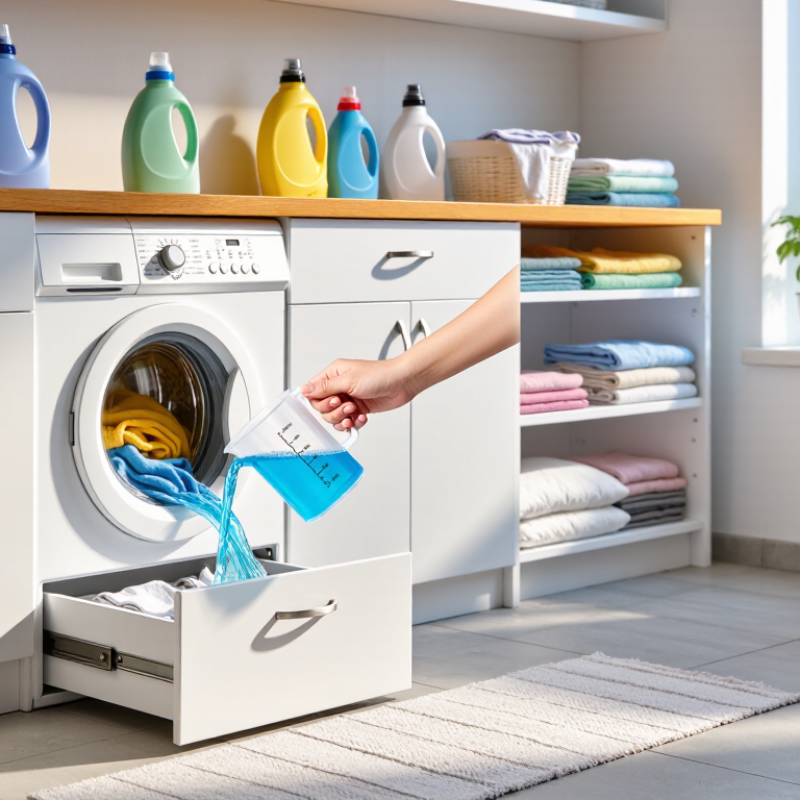
Laundry disinfectant is a laundry additive designed to reduce microorganisms on washable fabrics. It is different from ordinary detergent. Detergent removes oils, dirt, and many stains, while disinfectant targets bacteria, some viruses, or fungi, depending on its formula and testing. It works through active ingredients that damage microbial cell structures or interrupt their growth.
Contact time matters. The product may need a specific amount, water temperature, and rinse process to work properly. “More” does not mean better.
In practical laundry care, disinfectant can be useful for towels, bedding, sports clothing, or garments exposed to bodily fluids. However, not every load requires it. Excessive use may irritate sensitive skin, fade fabric, or create unnecessary chemical exposure. Always read the product directions and check the garment care label.
Never mix disinfectant with bleach, ammonia, or other cleaners. That shortcut is unsafe. A careful approach is more reliable than guesswork, although instructions can still feel confusing.
Tips:
Measure accurately, leave enough space for water movement, and select the recommended cycle. Wash heavily soiled items separately when possible. Store the product away from children and pets. If a fabric is delicate or unfamiliar, test a hidden area first.
I once assumed a strong smell meant stronger disinfection, but that is not dependable evidence. Performance should be judged by verified instructions, not fragrance.
Laundry disinfectants reduce microorganisms through chemistry, heat, or both. Oxidizing ingredients can damage microbial proteins and genetic material. Other active ingredients disrupt cell membranes, causing leakage and cell death. The result depends on concentration, contact time, water temperature, and fabric condition. Dirt can shield microbes.
The numbers matter. WHO guidance recommends washing contaminated textiles at 60–90°C with detergent when possible. CDC healthcare guidance describes thermal disinfection near 71°C for 25 minutes.
Home machines rarely maintain those conditions consistently. That is where a properly labeled laundry disinfectant may help, especially during illness or when washing heavily soiled items. However, “kills 99.9%” is a test result, not a household promise. Laboratory fabrics are cleaner and conditions are controlled. Real laundry is messier.
A fresh scent proves almost nothing. Residue, overloading, and short rinse cycles can reduce performance. I would check the product’s required dosage, temperature, and contact time rather than guessing. Even then, some spores and resistant organisms may survive. Further testing and better household data would make these claims easier to judge.
Laundry disinfectants reduce or destroy many microorganisms on washable fabrics. Their performance depends on the active ingredient, water temperature, contact time, and fabric condition. A product may clean visible dirt without disinfecting it, so these functions should not be confused.
Chlorine bleach uses sodium hypochlorite, a strong oxidizing agent that damages microbial cell structures. It works well on many white, bleach-safe cotton items, but may weaken fibers or remove color. Oxygen-based formulas often use hydrogen peroxide or percarbonate compounds. They release oxygen in water and can provide gentler stain and odor control, although their disinfecting effect varies by formula. Always check the label.
Quaternary ammonium compounds, often called quats, disrupt microbial membranes and are used in some laundry sanitizing products. They may perform better when fabrics remain wet for the stated contact period. Hydrogen peroxide products offer another oxidation-based approach and may suit selected colored fabrics, but “color-safe” does not mean risk-free. Read the label. Never mix disinfectants, especially chlorine products with acids or ammonia-based cleaners, because dangerous gases can form. I have found that overloaded machines and short wash cycles reduce practical results, even when the active ingredient is effective in laboratory testing. That detail is easy to overlook. Reliable use means measuring correctly, choosing compatible fabrics, and following the manufacturer’s temperature and contact-time instructions.
Laundry disinfectant is an antimicrobial product designed to reduce specific germs on washable fabrics. It works through active ingredients, contact time, and proper dilution. It is not a substitute for detergent, which removes oils, dirt, and body soil. The U.S. Environmental Protection Agency requires antimicrobial efficacy claims to be supported by testing data. Always check the product label for approved fabrics, water temperatures, and target organisms.
Safe use matters more than using extra liquid. Read the label before loading the machine. Measure carefully, and do not pour concentrated disinfectant directly onto clothing. Use the recommended cycle and allow the stated contact time. The Centers for Disease Control and Prevention advises washing with detergent, using the warmest suitable water, and drying items completely. Never mix disinfectants with bleach, ammonia, vinegar, or other cleaners. Dangerous vapors may form. Wear gloves if the label recommends them, and keep the room ventilated.
Tips: Test delicate fabric on a hidden seam first. Separate heavily soiled items from everyday laundry. Do not overload the drum; crowded fabrics may block solution contact. Dry towels fully before storing them. More product does not mean cleaner. I once assumed it did, and that assumption was wrong. If a fabric remains damp or develops an odor, review the dosage, cycle, and machine hygiene instead of repeatedly adding disinfectant. EPA registration and label directions provide stronger evidence than online cleaning claims.
Laundry disinfectants are products designed to reduce microorganisms on fabrics when used according to their labels. Temperature is an important part of laundering: 30°C, 40°C, and 60°C correspond to approximately 86°F, 104°F, and 140°F, while public-health guidance commonly identifies hot-water laundering at about 71°C (160°F) or above as a high-temperature option. Temperature alone does not guarantee disinfection, so always follow the product label, use the correct dosage, and never mix bleach with ammonia or acidic cleaners.
Laundry disinfectant is designed to reduce specific microorganisms on washable fabrics. It usually works through chemical agents that damage microbial membranes or disrupt essential proteins. Its performance depends on concentration, contact time, water temperature, and fabric condition. The U.S. Environmental Protection Agency’s Product Performance Test Guidelines explain that disinfectant claims must be supported by controlled laboratory testing. Real laundry is less predictable.
Detergent has a different job. It lifts skin oils, food residue, sweat, and dirt so water can remove them. It does not automatically disinfect every load. The Centers for Disease Control and Prevention recommends washing items with the warmest suitable water and drying them completely. Drying matters more than many shoppers expect. A laundry disinfectant may add microbial reduction, but it cannot replace proper cleaning.
Bleach can disinfect and whiten, yet it is harsher on colors, elastics, and some fibers. It must never be mixed with ammonia, acids, or other cleaning products. EPA guidance also stresses following the product label for dilution and contact time. This comparison is not perfectly neat. A heavily soiled towel may need detergent first, while a healthcare-related textile may require an approved disinfecting process. The American Cleaning Institute’s 2023 consumer research shows that laundry remains a frequent household cleaning task, but frequent use does not guarantee correct dosing. More product is not necessarily more protection. Always check fabric-care symbols, ventilation, and the validated use directions.
+44 (0)1373 831 373