Choosing the best bakery machinery manufacturers in China requires more than comparing prices or polished product photos. A mixer may look robust in a brochure, yet its bowl, gearbox, and controls tell a more useful story on the factory floor. Buyers should compare production capacity, materials, automation options, spare-parts access, and after-sales support. Small details matter. A poorly matched oven can create uneven color across trays, while an undersized mixer can slow an entire shift.
Baking educator Peter Reinhart’s teaching emphasizes a practical principle: consistent results depend on a repeatable process. That principle matters when evaluating bakery machinery. Ask manufacturers how they test equipment with real dough, not just empty machines. Request operating videos, technical specifications, and references from bakeries with similar products and output. Where possible, inspect the equipment before purchase. A short demonstration helps, but it cannot replace a careful factory audit.
This guide compares Chinese suppliers by product range, engineering capability, customization, service, and export experience. It also considers common equipment, from dough dividers and proofers to tunnel ovens and packaging lines. No single manufacturer suits every bakery. A small pastry workshop and a high-volume bread plant need different layouts, budgets, and levels of automation. The shortlist is a starting point, not a guarantee. Verify claims directly, and ask specific questions about installation, training, and replacement parts. Some comparisons may remain imperfect; supplier information changes, and a promising catalogue does not always reflect daily performance.
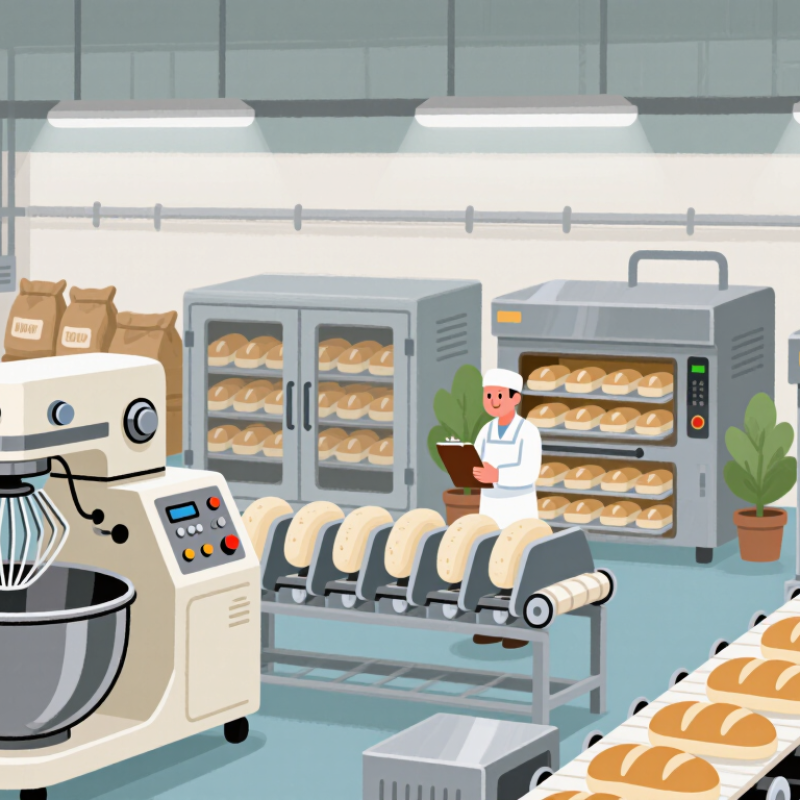
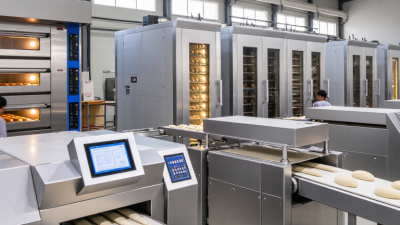
China’s bakery machinery industry serves small pastry shops, central kitchens, and high-volume factories. Manufacturers produce spiral mixers, dough dividers, proofers, tunnel ovens, and cooling conveyors. Many factories cluster around metalworking and electrical-component supply chains, helping buyers compare equipment and request custom line layouts. On a production floor, practical details matter: a mixer’s bowl clearance, an oven’s temperature recovery, and whether a conveyor fits the room’s corners. Small details, real consequences.
Grand View Research estimated the global bakery processing equipment market at USD 11.58 billion in 2023 and forecast a 5.1% compound annual growth rate from 2024 to 2030. This is a global estimate, not a China-only figure, so it should not be used to rank Chinese suppliers. China’s manufacturing strength is often associated with flexible production and broad equipment ranges, but capability varies by factory. A polished catalog is not proof of stable performance. Not always. Buyers can ask for test runs using their own dough, temperature logs, food-contact material records, and a spare-parts list. I would also inspect cleaning access and control-panel language; these can be overlooked until installation. Lower purchase cost may bring longer commissioning or more operator training. That trade-off deserves a close look.
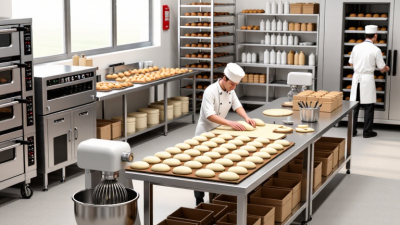
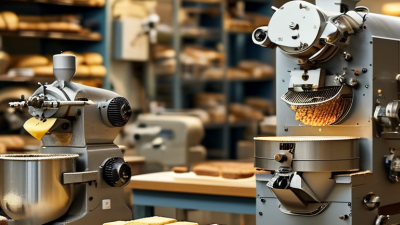
Chinese bakery machinery covers equipment for mixing, shaping, baking, cooling, and packing. Mixers include spiral models for bread dough and planetary models for cakes and creams. Dividers, rounders, moulders, and sheeters form dough into consistent portions and shapes. Proofers control warmth and humidity; ovens range from deck and rack types to continuous tunnel systems. Cooling conveyors and packaging machines complete many production lines. Small details matter.
The FAO’s 2024 Cereal Supply and Demand Brief forecast world wheat output at about 796 million tonnes. This is not a bakery-equipment market measure, but it shows the scale of a key bakery ingredient and the need for reliable flour and dough handling. When evaluating machinery, check batch size, temperature control, cleaning access, and spare-part availability. Ask to see a product run using dough similar to yours. A fast line can still waste dough if its divider is poorly adjusted. Specifications help, but they do not replace a factory trial. No single layout suits every bakery.
Typical temperature ranges for three temperature-controlled stages in bakery production.
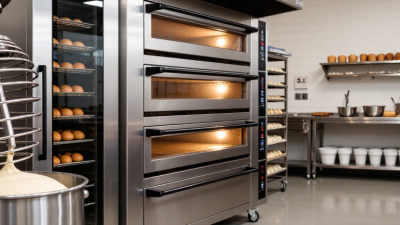
Retarders, proofers and baking ovens are common bakery equipment categories. The ranges shown are general operating examples; actual settings vary by recipe, process and machine model. Other common machinery includes mixers, dough dividers, moulders and slicers.
Assess Chinese bakery machinery manufacturers through evidence from the factory floor, not polished catalogues. Ask for a live test using your own dough or product, and record output, reject rate, changeover time, and cleaning time. Check whether the quoted capacity holds across several production runs. One fast demonstration proves little. Request electrical drawings, spare-parts lists, and maintenance instructions in English, then confirm which components are locally available.
Use industry data as context, not a substitute for supplier checks. The International Federation of Robotics’ World Robotics 2024 report recorded 541,302 industrial robot installations worldwide in 2023; about 70% were in Asia. That signals a strong regional automation base, but it does not prove a bakery line is reliable. Ask for equipment-specific references and speak with operators about downtime. The World Bank’s Logistics Performance Index 2023 ranked China 19th among 139 economies. National rankings cannot guarantee your shipment’s schedule, so verify packaging, export experience, and delivery milestones directly.
Review quality controls in person where possible. Trace a sample part from material certificate to final inspection, and compare inspection records with the machine serial number. Check guarding, emergency stops, sanitation access, and whether operators can remove belts without awkward tools. Request a written acceptance test with measurable targets. I would not treat a certificate as proof of daily performance; it is only one piece of evidence. Some details may still be missed during a short audit. That is why a trial run matters.
Notable bakery machinery manufacturers in China serve bakeries, industrial plants, and food-service kitchens. Their ranges may include dough mixers, dividers, proofers, ovens, and cooling conveyors. The useful distinction is not a polished catalogue. It is whether a supplier can match line speed, product size, and cleaning needs to the buyer’s actual production plan.
MarketsandMarkets’ 2023 bakery processing equipment report estimated the global market at USD 11.6 billion, with a forecast of USD 15.8 billion by 2028. That growth suggests sustained investment, but it does not establish which Chinese manufacturer performs best. Buyers should examine factory records, electrical specifications, and test-run results. Ask to see dough pieces weighed at the stated tolerance, and check whether oven temperatures remain even across the belt.
A supplier’s technical support matters after installation. Request spare-parts lead times, wiring diagrams, and a written commissioning plan. Look closely at food-contact surfaces and the access points around belts and guards. Small details count. A fast line can still waste product if changeovers take too long. One limitation is that published market reports rarely compare individual factories on service quality; buyers need independent checks, and sometimes those checks are inconvenient.
This overview compares common bakery machinery categories available from manufacturers in China. It focuses on equipment functions and evaluation criteria rather than company or brand names. Configurations vary by supplier and should be confirmed against the intended product and production process.
| Machinery category | Production stage | Main function | Common configurations | Buyer evaluation points |
|---|---|---|---|---|
| Dough mixers | Mixing | Mix flour, water, yeast, and other ingredients to form dough. | Spiral, planetary, and horizontal mixers; fixed or removable bowls. | Check batch size, mixing speed, bowl design, dough temperature control, and cleaning access. |
| Dough dividers and rounders | Dividing and rounding | Portion dough into consistent pieces and, where equipped, shape them into rounds. | Semi-automatic or automatic models; designs for different dough weights and types. | Verify portion-weight range, weight consistency, dough handling, and changeover requirements. |
| Moulders and sheeters | Forming | Roll, flatten, or shape dough for products such as loaves, rolls, and laminated items. | Single- or multi-stage rollers; adjustable thickness and conveyor settings. | Assess product compatibility, dough stress, adjustment range, belt materials, and cleaning access. |
| Proofing equipment | Fermentation | Provide controlled temperature and humidity for dough fermentation. | Retarder-provers, proofing cabinets, and continuous proofing chambers. | Check temperature and humidity control, usable capacity, airflow uniformity, and insulation. |
| Bakery ovens | Baking | Bake products using controlled heat; some designs also provide steam injection. | Deck, rack, and tunnel ovens; electric, gas, or other fuel options depending on the model. | Compare usable baking area, temperature uniformity, energy source, steam options, and installation needs. |
| Cooling systems | Cooling and handling | Cool baked products before slicing, packaging, or further processing. | Cooling conveyors, spiral coolers, and rack-based cooling arrangements. | Confirm product flow, available floor space, conveyor integration, and cleaning requirements. |
| Slicers and packaging machines | Finishing and packing | Slice products and prepare them for packaging and distribution. | Bread slicers and flow-wrapping or bagging systems, available as stand-alone or line-integrated units. | Check loaf dimensions, slice thickness, packaging material compatibility, speed matching, and guarding. |
Specifications, output, and available options depend on the machine model and product recipe. Request technical drawings, applicable electrical and safety documentation, sample-product trials, warranty terms, and after-sales service details before purchasing.
Choosing a bakery machinery manufacturer starts with your product, not a catalogue. List your actual recipes, batch sizes, and target output per hour. Then ask manufacturers to test your dough or batter under realistic conditions. A mixer that performs well with a small test batch may struggle during a full production run. Check whether conveyors, ovens, and cooling systems fit your floor plan and work together. Ask to see cleaning access around belts, guards, and product-contact surfaces. A polished brochure can still hide awkward corners.
Energy use matters too. The International Energy Agency’s Energy Efficiency 2023 report says industry accounted for about 37% of global energy consumption in 2022. Request operating data for the equipment you are considering, including heating, standby, and changeover stages. Compare warranty terms, spare-parts availability, technician response times, and operator training. Request references from bakeries producing similar goods, and speak directly with their maintenance teams. Their feedback may be less tidy than a sales presentation, but often more useful.
Tips: Bring your product, recipe, and target output to a factory trial. Ask for measured results, not estimates. Check cleaning time and noise levels in person. Review drawings and service terms before paying a deposit. Allow room in your budget for installation and staff training; these costs are easy to underestimate.
+44 (0)1373 831 373