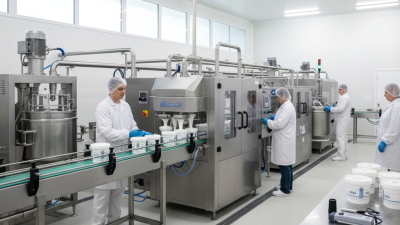
Choosing the best creamery equipment requires more than comparing prices or polished product photos. It demands a clear understanding of your dairy products, daily output, staff skills, and facility limits. A small artisan creamery may need a compact pasteurizer, reliable cream separator, and flexible filling machine. A larger plant may require automated vats, continuous freezers, and integrated cleaning systems.
Start by measuring real production conditions. Record milk volume, batch size, peak hours, available floor space, water pressure, drainage, and electrical capacity. These details affect equipment performance. Hygienic design matters equally. Look for food-grade stainless steel, smooth welds, accessible seals, and validated clean-in-place features. Ask suppliers how their machines handle temperature control, product transfer, and maintenance access.
Do not trust capacity claims without evidence. Request test data, installation references, service response times, spare-parts availability, and operator training details. Independent dairy engineers or experienced technicians can help verify the specifications. Compliance documentation should also be reviewed before purchase.
The cheapest option can become expensive.
A practical mistake is choosing equipment for today’s production only. Growth may expose weak pumps, limited cooling space, or slow cleaning cycles. However, oversized machinery can waste energy and complicate operation. The best decision balances performance, safety, sanitation, reliability, and future demand. Some assumptions may still prove wrong after installation. That is why a site assessment, product trial, and written quotation deserve careful attention before signing any order.
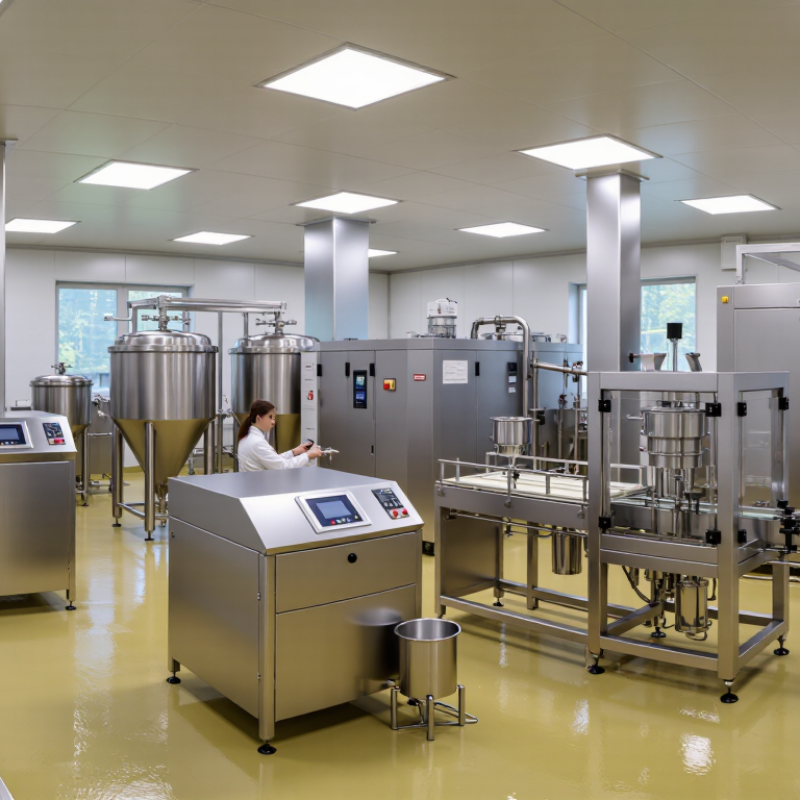
Choosing creamery equipment starts with a realistic definition of output needs. Estimate daily volume, peak production hours, and cleaning time before comparing machine specifications. A system rated for 2,000 liters may produce less during frequent product changes. Plan for demand, not the most attractive brochure number.
Product type also shapes the equipment decision. Cultured cream, ice cream mix, and table cream require different heating, cooling, mixing, and filling controls. A jacketed tank can support gentle processing, while a homogenizer may improve texture and reduce separation.
Product trials should measure viscosity, temperature stability, and filling accuracy. Small trials reveal problems early.
Milk-fat control deserves close attention. A 4.5% target requires reliable testing, accurate flow meters, and consistent blending. Seasonal milk variation can shift results more than expected. Operators should test incoming milk, calculate cream additions, and verify the finished product after mixing. Keep records.
Do not trust one calculation.
Leave capacity for maintenance, transfer losses, and unexpected downtime. My practical mistake was allowing enough volume but not enough cleaning time. The equipment looked efficient on paper, yet the schedule became cramped. A modest buffer often protects product quality better than maximum utilization. Consult qualified process engineers when heat treatment, sanitation, or regulatory records require formal validation.
Choosing creamery equipment starts with sanitary design, not appearance or price. In daily production, milk residue often hides around welds, valves, gaskets, and poorly drained corners. Smooth, accessible surfaces make cleaning more consistent and reduce inspection time.
Look for equipment designed around 3-A Sanitary Standards where applicable. These standards address cleanability, materials, drainage, and hygienic construction. However, a 3-A reference alone does not guarantee perfect operation. Confirm the exact equipment scope, documentation, and installation requirements. Welds should be smooth and continuous, with minimal crevices. Internal surfaces should drain fully after cleaning.
Material selection also matters. 304 stainless steel suits many dairy environments and usually offers reliable corrosion resistance. 316 stainless steel contains molybdenum, improving resistance to chlorides, acidic ingredients, and aggressive cleaning conditions. It costs more, but replacement costs can be higher when corrosion reaches product-contact areas. Still, 316 is not indestructible. Incorrect chemicals, poor rinsing, or trapped moisture can damage either grade.
Tips: Ask for material certificates, surface-finish details, weld inspection records, and cleaning instructions. Check whether operators can remove seals and inspect hidden spaces without special tools. Test drainage with water before commissioning. A small puddle can reveal a large design weakness. I would also review maintenance logs after several cleaning cycles, because real performance may differ from the specification.
| Evaluation Dimension | 3-A Sanitary Standards | 304 Stainless Steel | 316 Stainless Steel | Practical Selection Guidance |
|---|---|---|---|---|
| What It Represents | A set of hygienic design criteria for equipment used in dairy and food processing. It addresses cleanability, product contact surfaces, drainage, accessibility, and construction details. | A material grade containing chromium and nickel, commonly used for food-processing equipment and general sanitary applications. | A material grade containing chromium, nickel, and molybdenum. The molybdenum improves resistance to pitting and crevice corrosion in chloride-containing environments. | Do not treat 3-A compliance and stainless-steel grade as alternatives. Sanitary design and material selection should be evaluated together. |
| Primary Hygienic Purpose | Minimizes areas where milk, cream, cultures, or cleaning fluids can accumulate and supports effective cleaning and inspection. | Provides a smooth, corrosion-resistant surface that is suitable for many dairy product-contact applications when properly fabricated and finished. | Provides similar hygienic surface characteristics to 304 while offering greater resistance to localized corrosion in demanding service conditions. | Prioritize hygienic geometry, weld quality, surface finish, and cleanability—not material grade alone. |
| Typical Product-Contact Use | Applicable to equipment such as tanks, pumps, valves, piping, fillers, and processing units when the specific design meets the relevant sanitary criteria. | Common for tanks, pipelines, frames, fittings, and product-contact components handling many non-aggressive dairy products. | Often selected for product-contact parts exposed to higher chloride levels, salty ingredients, aggressive cleaning conditions, or greater corrosion risk. | Match the grade to the actual product chemistry, cleaning chemicals, temperature, and chloride exposure. |
| Surface Finish | Requires product-contact surfaces to be smooth, cleanable, and free from imperfections that could harbor soil or microorganisms. The exact finish requirement depends on the applicable standard and equipment type. | Can be polished to a suitable sanitary finish, but the grade itself does not guarantee a hygienic surface. | Can be polished to a suitable sanitary finish, but it also requires correct fabrication and finishing to deliver sanitary performance. | Specify measurable finish requirements and verify them on product-contact surfaces, welds, ports, and fittings. |
| Welded Construction | Sanitary designs generally require continuous, smooth, cleanable welds without cracks, pits, crevices, or exposed contamination traps. | Weld discoloration, roughness, or heat-affected areas can reduce corrosion resistance if they are not properly cleaned, passivated, and finished. | Also requires proper welding, post-weld cleaning, and passivation. The alloy does not eliminate fabrication-related corrosion risks. | Request weld inspection criteria, finishing procedures, and documentation for critical product-contact assemblies. |
| Drainability | Promotes self-draining layouts, minimized dead legs, suitable slopes, and avoidance of pockets where product or rinse water can remain. | Material choice does not determine whether a system drains correctly. | Material choice does not determine whether a system drains correctly. | Check vessel outlets, piping slopes, valve orientation, instrument connections, and low points in the complete system. |
| Resistance to Milk Acids and Common Cleaners | Provides design guidance but is not a substitute for chemical compatibility testing or a documented cleaning procedure. | Generally performs well in many dairy environments, but can be affected by chlorides, strong acids, and harsh or poorly controlled cleaning conditions. | Usually offers better resistance than 304 to chloride-induced pitting and crevice corrosion, but it is not immune to all chemicals or concentrations. | Review detergent concentration, temperature, exposure time, rinse quality, and chloride content before finalizing the material grade. |
| Chloride Exposure | Does not define a stainless-steel alloy and therefore does not independently determine chloride resistance. | More susceptible than 316 to pitting and crevice corrosion in chloride-rich environments, especially at elevated temperatures. | Better suited than 304 for many chloride-containing conditions because molybdenum improves localized corrosion resistance. | Consider 316 for salty products, brine exposure, chloride-bearing water, or aggressive cleaning environments after confirming chemical compatibility. |
| Cleaning and Sanitizing Compatibility | Supports clean-in-place and manual-cleaning designs by emphasizing accessibility, cleanability, and hygienic construction. | Suitable for many standard cleaning programs when concentrations, temperatures, and exposure times are controlled. | Offers additional corrosion margin in some demanding cleaning environments, but incorrect chemical use can still damage the surface. | Design the equipment and cleaning recipe as one system; validate cleaning effectiveness rather than relying on visual appearance alone. |
| Maintenance and Inspection | Encourages access for inspection, disassembly where necessary, and verification of hygienic condition. | Requires monitoring for scratches, staining, pitting, weld defects, and damaged surface finishes. | Requires the same inspection controls, even though localized corrosion resistance is generally higher than 304. | Include inspection points, gasket replacement procedures, passivation records, and preventive-maintenance intervals. |
| Relative Cost Consideration | May increase equipment cost because hygienic geometry, documentation, fabrication quality, and verification require additional engineering and labor. | Typically offers a lower initial material cost than 316 for comparable thickness and fabrication. | Typically costs more than 304 because of its alloy content, but may reduce corrosion-related replacement or downtime in suitable applications. | Compare total lifecycle cost, including cleaning, maintenance, corrosion risk, product loss, downtime, and expected service life. |
| Best-Fit Application Profile | Equipment where hygienic design, cleanability, inspectability, and sanitary construction are essential. | General dairy processing with moderate corrosion exposure and well-controlled cleaning conditions. | Higher-risk environments involving chlorides, salty formulations, aggressive cleaning, or increased localized-corrosion exposure. | A common decision approach is sanitary design plus 304 for moderate service, or sanitary design plus 316 where corrosion risk justifies the upgrade. |
| Key Limitation | Meeting a sanitary design standard does not automatically guarantee correct installation, cleaning validation, or material compatibility. | Higher corrosion susceptibility in chloride-rich or aggressive conditions compared with 316. | Higher purchase cost and no absolute immunity to corrosion, contamination, poor design, or improper cleaning. | Request material certificates, surface-finish information, weld-quality records, sanitary design documentation, and cleaning instructions. |
How to Choose the Best Creamery Equipment?
For HTST pasteurization, select a system that reliably reaches 72°C for 15 seconds. This is the minimum high-temperature, short-time requirement listed in the U.S. Food and Drug Administration’s Grade “A” Pasteurized Milk Ordinance, 2023. The equipment should include calibrated temperature sensors, automatic flow diversion, and a legally controlled holding tube. A bright temperature display is not enough.
Look closely at heat recovery, product flow, and cleaning access. The International Dairy Federation notes that heat regeneration can significantly reduce heating and cooling energy in milk processing. However, recovery efficiency depends on product design and operating conditions. Ask suppliers for measured energy data, not attractive estimates. Small dairies may also need flexible throughput, because oversized systems can waste water and electricity.
During commissioning, record temperature every cycle and compare the controller with an independent reference thermometer. The FDA PMO requires regular testing of pasteurization instruments and diversion controls. Keep those records securely. In real facilities, blocked valves, air pockets, or unstable flow can undermine a perfect specification. That is the uncomfortable part. A system can meet 72°C briefly and still fail its process if maintenance is weak. Choose equipment that operators can inspect, clean, and verify without guesswork.
Select a pasteurization system that can reliably control both temperature and holding time. Under HTST rules, milk is heated to 72°C for at least 15 seconds.
HTST provides rapid continuous processing with a short holding time, while batch pasteurization uses a lower temperature for a much longer period. UHT processing uses substantially higher temperatures and is shown for comparison; exact requirements may vary by jurisdiction and product category.
Choosing creamery equipment starts with measured flow, not catalog capacity. During pilot runs, record milk volume, peak arrival time, product temperature, and cleaning frequency. A tank sized only for average flow may overflow during a short morning surge. Leave practical headspace. It protects operators and reduces foaming. Use 70–85% of tank capacity as working volume, depending on agitation and product behavior. Viscous products often need slower agitation and longer transfer times.
Match pipe diameters, pumps, and valves to real flow rates across receiving, processing, and filling. A high-capacity pump may perform poorly when suction lines are narrow. Excessive fittings can also create pressure losses. Keep transfer velocity suitable for shear-sensitive products.
CIP design must follow the dirtiest circuit, not the easiest one. Verify spray coverage, return velocity, chemical concentration, temperature, and drainability. Record every cycle with sensors and written logs. Five minutes saved per cycle may reduce cleaning quality. That mistake is expensive.
Size utilities for simultaneous demand. Heating a full tank while cooling another creates a different load than sequential production. Include startup peaks, winter conditions, water supply, refrigeration, steam, and electrical capacity. My first sizing spreadsheet underestimated hot-water recovery time. The process worked, but operators waited between batches. That delay exposed a planning gap. Recheck assumptions using actual batch logs after commissioning. Expect some correction.
The best creamery equipment is not always the fastest or most automated. Evaluate its five-year financial footprint. The U.S. Department of Energy reports that process heating represents about 51% of energy used in American manufacturing. In a creamery, boilers, pasteurizers, refrigeration, and cleaning systems can quietly dominate utility bills. ENERGY STAR guidance places energy costs near 2–10% of food-processing operating costs, depending on the facility. Small losses compound.
Measure yield before comparing quotations. If a plant processes 10,000 liters daily, a 0.5% yield improvement recovers 50 liters each day. Assign that volume a realistic selling value, then subtract added energy, ingredients, and packaging.
Labor deserves equal attention. Record minutes spent on loading, changeovers, cleaning, troubleshooting, and quality checks. A machine saving one operator hour per shift may create stronger returns than a faster filling cycle.
Maintenance is harder to price, but ignoring it weakens the calculation. Review service records, replacement-part prices, downtime hours, and technician availability. The U.S. Department of Energy recommends lifecycle costing rather than purchase-price comparison for industrial systems.
Build a five-year model using purchase cost, installation, training, utilities, maintenance, downtime, and resale value. Divide total net benefit by total investment.
My spreadsheet is never perfect. Test it against twelve months of actual production data, and include a pessimistic case with lower yield, higher energy prices, and one unexpected repair. That uncomfortable scenario may reveal the most suitable equipment.
+44 (0)1373 831 373