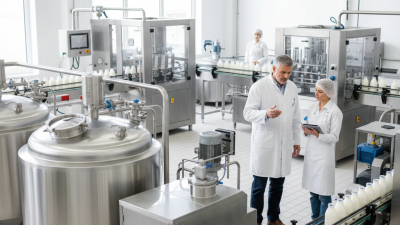
Choosing the best dairy machinery in 2026 requires more than comparing prices, motor power, or polished product photos. A practical decision begins with the dairy’s actual workflow, from receiving chilled milk to cleaning tanks after production. Equipment should match daily volume, product type, floor space, staffing, and future expansion plans. Small details matter. A poorly placed valve can slow cleaning and increase operator fatigue.
Reliable machinery supports hygienic processing, stable temperatures, accurate dosing, and consistent product quality. Look for stainless steel construction, accessible surfaces, validated cleaning procedures, and clear maintenance records. Automation can improve control, but it should not replace trained staff or careful supervision. Sensors may detect temperature changes quickly, yet incorrect calibration can still create costly mistakes. That risk deserves attention.
Supplier experience also matters. Ask for installation guidance, operator training, spare-parts availability, and documented testing. A credible manufacturer should explain performance limits instead of promising perfect results. Independent references from comparable dairies can reveal issues that brochures hide. Check whether the machinery can integrate with existing pumps, filling lines, refrigeration systems, and quality-control tools.
The best choice is rarely the most advanced machine. It is the system that performs safely, efficiently, and consistently in your facility. Energy use, water consumption, cleaning time, noise, and repair access should enter the calculation. No checklist is flawless. Real production conditions often expose weaknesses during busy shifts, seasonal demand, or staff changes. This guide examines those practical concerns, helping buyers evaluate dairy machinery with professional judgment, realistic expectations, and stronger long-term reliability.
Choosing dairy machinery in 2026 should begin with production goals, not catalog features.
Define your expected daily milk volume, product range, and growth plans. A small facility may need a compact pasteurizer, efficient cream separator, and flexible filling system. A larger plant could require continuous processing, automated dosing, and high-capacity storage tanks.
Clarify your processing requirements in measurable terms.
Record fat content, protein levels, heating temperatures, holding times, and target shelf life. These details affect pasteurizer design, homogenization pressure, cooling speed, and tank capacity.
Cleaning also matters. Choose equipment that supports documented sanitation procedures, easy inspection, and applicable food-safety requirements. Stainless steel surfaces, hygienic seals, and accessible pipelines reduce contamination risks and maintenance delays.
In plant assessments, I have seen companies purchase oversized machines for future growth.
The equipment looked impressive, but energy and cleaning costs became difficult to manage. Start with realistic production data. Leave room for expansion, but do not pay for unused capacity.
Check water quality, steam supply, drainage, electrical load, and available floor space before signing a specification. A spreadsheet can miss practical problems. Operators may struggle with complex controls, or a tank outlet may sit too close to the floor. Ask technicians to review installation drawings and maintenance access. Test cleaning cycles with actual working conditions, not only ideal figures.
Choosing dairy machinery in 2026 starts with the milk collection route, not the processing room. FAOSTAT estimates global milk production reached about 965 million tonnes in 2023. That scale makes collection efficiency important. A small farm may need insulated cans, weigh scales, and compact cooling tanks. Larger networks usually require refrigerated road tankers, automated sampling, and rapid chilling below 4°C. The International Dairy Federation’s World Dairy Situation 2024 stresses that cooling speed strongly influences raw milk quality. Check it in practice. A five-minute delay can matter during hot transport.
Processing equipment should match the product, solids content, and daily volume. Plate heat exchangers suit many liquid-milk lines and allow efficient heat recovery. UHT systems require tighter control, sterile filling, and dependable steam quality. For yogurt, fermentation tanks need accurate temperature control and gentle agitation. Tetra-style carton, bottle, and pouch machines each create different cleaning, waste, and shelf-life demands. FAO’s dairy guidance supports hygienic design, cleanable surfaces, and validated sanitation procedures. These details sound basic. They are often ignored.
Packaging decisions should include product temperature, distribution distance, and operator skill. A high-speed filler may waste more milk when demand is irregular. The IDF also highlights energy and environmental pressure across dairy operations, so compare water use, heat recovery, and compressed-air demand. Request measured output data, not only catalogue capacity. Leave room for mistakes. Real plants rarely run at the advertised maximum. Pilot testing with local milk is worth the extra week.
| Stage | Machinery Type | Primary Function | Typical Capacity | Typical Operating Range | Key Hygiene or Quality Control | Energy and Utility Considerations | Best Fit | Selection Priority |
|---|---|---|---|---|---|---|---|---|
| Milk Collection | Milk Collection Tanker | Collects milk from farms and transports it to a processing facility under controlled temperature conditions. | 5,000–30,000 L per vehicle | Milk is normally maintained at approximately 0–4°C during transport. | Food-grade stainless-steel tank, sealed fittings, clean-in-place capability, calibrated sampling equipment, and temperature recording. | Requires refrigeration energy, insulated tank construction, and reliable vehicle access for collection routes. | Multi-farm collection | Tank insulation, route distance, compartment configuration, cleaning access, and legal payload. |
| Milk Collection | On-Farm Bulk Milk Cooler | Cools freshly harvested milk quickly and stores it before collection. | 300–20,000 L tank volume | Designed to cool and hold milk close to 4°C, subject to local regulations and processing requirements. | Agitator, automatic temperature monitoring, hygienic outlet, washable surfaces, and protection against excessive agitation. | Electrical refrigeration load depends on tank size, ambient temperature, milk entry temperature, and cooling speed. | Farm storage | Cooling rate, tank volume, compressor efficiency, insulation, and compatibility with the milking schedule. |
| Milk Collection | Milk Transfer Pump | Moves milk from storage tanks to tankers, balance tanks, filters, or processing lines. | 2,000–30,000 L/h | Low-shear transfer is preferred to minimize foaming and unnecessary mechanical stress. | Sanitary positive-displacement or centrifugal design, smooth internal surfaces, drainability, and hygienic seals. | Motor power is influenced by flow rate, pipe length, lift height, viscosity, and pressure losses. | Farm and plant transfer | Sanitary design, flow control, cleanability, seal reliability, and compatibility with the pipeline diameter. |
| Milk Processing | Milk Reception and Filtration System | Receives incoming milk, removes visible foreign particles, measures volume, and directs milk to storage or processing. | 5,000–50,000 L/h | Usually operated with chilled incoming milk and controlled transfer pressure. | Food-grade piping, inline filter or strainer, sampling point, flow meter, air separation, and automated valve control. | Uses pump power and compressed air or control electricity; pressure drop across filters affects energy use. | Dairy plant intake | Throughput, measurement accuracy, filter replacement procedure, automation level, and CIP integration. |
| Milk Processing | Milk Storage and Balance Tank | Provides hygienic buffer storage between reception, standardization, pasteurization, and filling operations. | 1,000–100,000 L | Chilled storage is commonly maintained near 2–6°C, depending on product and process design. | Insulated stainless-steel vessel, sanitary agitator, level sensor, spray device, and fully drainable outlet. | Refrigeration is required for chilled storage; insulation quality reduces heat gain and operating cost. | Continuous processing | Useful volume, residence time, agitation control, insulation, access for inspection, and cleaning coverage. |
| Milk Processing | Plate Heat Exchanger Pasteurizer | Heats milk for pasteurization and rapidly cools it afterward using heat recovery and separated utility circuits. | 1,000–50,000 L/h | Common high-temperature short-time milk pasteurization uses about 72°C for 15 seconds, subject to applicable regulations. | Flow diversion valve, holding tube, temperature recorder, differential pressure control, and hygienic gasket design. | Regenerative heat recovery can substantially reduce steam and chilled-water demand compared with non-regenerative systems. | Fluid milk | Validated heat-treatment profile, recovery efficiency, cleaning cycle, product flexibility, and control-system reliability. |
| Milk Processing | Milk Homogenizer | Reduces milk fat globule size and limits cream separation to improve product uniformity and texture. | 500–30,000 L/h | Typical homogenization pressures are approximately 100–250 bar, depending on product and formulation. | Sanitary high-pressure pump, suitable valve materials, pressure monitoring, and validated cleaning procedures. | High-pressure operation increases electrical demand; correct sizing prevents excessive energy use and product recirculation. | Milk and dairy beverages | Pressure range, capacity, two-stage capability, wear-part availability, noise level, and product temperature control. |
| Milk Processing | Cream Separator | Separates milk into cream and skim milk and supports fat standardization. | 1,000–30,000 L/h | Separation performance depends on feed temperature, commonly within a warm processing range around 40–55°C. | High-speed bowl, balanced operation, sanitary discharge, automatic desludging option, and controlled feed conditions. | Motor demand is determined by bowl speed, throughput, product temperature, and discharge configuration. | Standardized dairy products | Fat separation accuracy, solids discharge, vibration control, cleaning time, and integration with standardization controls. |
| Milk Processing | Evaporator | Removes water from milk or whey to increase solids concentration and reduce downstream drying or transport costs. | 500–20,000 kg water evaporation/h | Vacuum operation allows evaporation at lower product temperatures than atmospheric boiling. | Hygienic falling-film design, controlled residence time, foam management, condensate separation, and CIP compatibility. | Multiple-effect or mechanical-vapor-recompression designs can reduce steam consumption compared with single-effect systems. | Concentrated milk and whey | Steam economy, heat-sensitive product protection, solids range, cleaning performance, and footprint. |
| Milk Processing | Spray Dryer | Converts concentrated milk or whey into stable powder by atomizing liquid feed into a stream of heated air. | 50–5,000 kg powder/h | Inlet and outlet air temperatures vary by product; powder moisture is commonly controlled to a low percentage range. | Food-grade drying chamber, validated air filtration, moisture control, powder conveying, and hygienic powder recovery. | Thermal energy is the major utility demand; heat recovery and efficient air handling can reduce operating cost. | Milk powder production | Powder quality, moisture uniformity, thermal efficiency, dust control, cleaning strategy, and expansion capability. |
| Packaging | Form-Fill-Seal Machine | Forms packaging material, fills measured product portions, and seals finished packs in one integrated process. | 2,000–30,000 packs/h | Pack size and film type determine the achievable speed and changeover time. | Hygienic product-contact zones, accurate dosing, seal-temperature control, leak detection, and protected filling area. | Requires electrical power, compressed air, and sometimes chilled water; servo drives can improve efficiency. | Pouches and sachets | Seal integrity, dosing accuracy, film compatibility, changeover speed, waste rate, and cleaning access. |
| Packaging | Bottle or Carton Filler | Fills and closes preformed bottles or cartons with liquid dairy products at controlled production speeds. | 1,000–40,000 containers/h | Filling accuracy depends on product viscosity, container size, valve design, and line speed. | Hygienic filling valves, sterile or clean filling zone, cap or seal verification, product-level control, and CIP/SIP capability where applicable. | Utility demand includes electrical power, compressed air, cleaning chemicals, and chilled or sterile air for advanced systems. | Retail milk and beverages | Container range, filling accuracy, hygienic zoning, closure quality, line speed, and format changeover. |
| Packaging | Cup Filling and Sealing Machine | Deposits yogurt, cream, desserts, or other dairy products into cups and seals them with lidding material. | 1,000–25,000 cups/h | Suitable for liquid, semi-liquid, or particulate products depending on the dosing system. | Clean filling environment, controlled dosing temperature, lid placement accuracy, seal inspection, and hygienic product contact parts. | Uses electricity and compressed air; heating elements may be required for sealing films. | Yogurt and desserts | Dosing repeatability, cup and lid compatibility, product handling, seal quality, and format flexibility. |
| Packaging | Aseptic Filling Machine | Fills commercially sterile product into sterilized packaging while maintaining aseptic conditions through sealing. | 3,000–30,000 packs/h | Used with products processed for extended shelf life; exact conditions depend on the validated thermal and aseptic process. | Sterilization system, sterile air management, environmental monitoring, validated hold times, and automated hygienic controls. | Higher utility demand than conventional filling because of sterilization, sterile air, water treatment, and advanced controls. | Extended shelf-life products | Aseptic validation, package barrier performance, sterility assurance, downtime recovery, and operator training. |
| Packaging | Palletizer and Case Packer | Groups filled products into cases and arranges cases on pallets for storage and distribution. | 10–100 cases/min | Performance varies with case dimensions, product orientation, pallet pattern, and handling method. | Product protection, stable stacking, hygienic construction in exposed areas, guarding, and sensor-based fault detection. | Servo-driven systems can lower mechanical wear and improve repeatability; compressed air may be needed for gripping. | High-volume distribution | Throughput, pallet pattern flexibility, floor space, product damage rate, guarding, and integration with warehouse systems. |
| Utilities and Hygiene | Clean-in-Place System | Circulates cleaning solutions and rinse water through tanks, pipelines, heat exchangers, fillers, and other process equipment without dismantling. | 1,000–50,000 L/h circulation flow | Cleaning cycles commonly use controlled combinations of time, temperature, chemical concentration, and flow velocity. | Validated recipes, conductivity and temperature monitoring, hygienic return lines, chemical dosing, and complete drainage. | Water, heating energy, chemicals, and recovery systems strongly influence total operating cost. | All dairy plants | Cleaning validation, water recovery, cycle time, chemical control, recipe traceability, and compatibility with the full process line. |
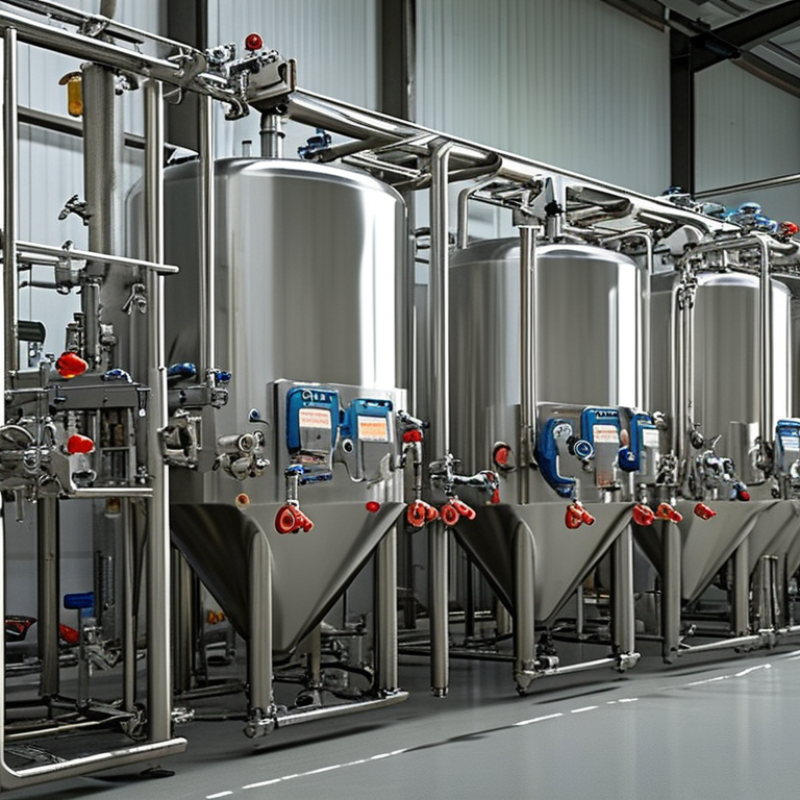
Note: Capacities and operating ranges are typical planning values for dairy installations and may vary with product composition, local food regulations, equipment configuration, automation level, and plant layout. Final specifications should be confirmed through process validation and a site-specific utility assessment.
How to Choose the Best Dairy Machinery in 2026?
Choosing dairy machinery in 2026 starts with accurate capacity planning. Measure daily milk volume, peak-hour demand, and cleaning time. A machine rated for 5,000 liters may struggle during seasonal production spikes. Leave practical room for growth.
My first capacity estimate was once too optimistic, because changeover losses were ignored.
Material selection affects hygiene, durability, and maintenance. Food-grade stainless steel should resist corrosion and avoid rough welds that trap residue. Inspect valves, seals, pipes, and tank interiors directly. Small surface defects matter.
Ask for material certificates and cleaning validation records. Reliable suppliers should explain service intervals without hiding technical details.
Automation can reduce labor and improve temperature control, but it is not automatically better. Check whether sensors monitor flow, pressure, and temperature consistently. Operators still need clear alarms and manual controls during faults.
Avoid complex systems that local technicians cannot repair.
Product compatibility deserves equal attention. Yogurt, cream, cheese milk, and flavored beverages may require different pumps, agitators, or filling settings. Test viscosity, fat content, foaming, and transfer speed before purchase.
A machine that performs well with milk may behave poorly with thicker products.
Review trial data, energy use, spare-part access, and operator training. Keep one assumption open for revision.
When choosing dairy machinery in 2026, measure energy use beyond the purchase price. Check electricity and water consumption per litre processed. Ask for tested figures under realistic production loads. Variable-speed motors can reduce waste during slower cycles. Insulated tanks may also limit heating losses. I once trusted an impressive efficiency claim without checking standby consumption. That mistake increased operating costs.
Hygiene deserves equal attention. Select equipment with smooth welds, sloped surfaces, and minimal dead spaces. Effective clean-in-place systems should reach every product-contact area. Verify cleaning temperatures, chemical compatibility, drainage, and documented validation records. Stainless steel alone does not guarantee safety. Inspectors and experienced technicians should review the design before installation. Small trapped residues can become serious contamination risks.
Maintenance planning protects both output and workers. Look for clear service access, replaceable wear parts, accurate manuals, and accessible spare components. Record vibration, temperature, and cleaning performance over time. Safety features should include guarded moving parts, emergency stops, lockout points, and reliable alarm systems. Interlocks must prevent operation when covers remain open. Keep training practical, with operators testing shutdown procedures on the actual floor. A machine can meet specifications and still frustrate its users. Leave room for that possibility.
Assess energy use, hygiene standards, maintenance access, and safety features against proven dairy-processing requirements.
Reference basis: FDA Grade “A” Pasteurized Milk Ordinance thermal-process criteria, Codex guidance for UHT milk, and commonly used dairy-industry CIP engineering set points. Values are reference points, not a substitute for local regulation or process validation.
Buying dairy machinery in 2026 means pricing the years after installation, not just the stainless-steel frame. Build a total ownership cost sheet covering purchase, freight, installation, utilities, labor, cleaning chemicals, spare parts, training, and downtime. The IEA’s Energy Efficiency 2023 report estimates that electric motor systems consume about 53% of global electricity. Efficient pumps, compressors, and agitators can therefore reduce long-term expenses. Do not trust an attractive quote too quickly.
Calculate energy use per production hour, then multiply it by realistic operating hours and local tariffs. Add planned maintenance and a financial allowance for unexpected failures. The U.S. Department of Energy’s Operations & Maintenance Best Practices Guide supports preventive maintenance because reactive repairs usually create higher costs and disruption. OECD-FAO Agricultural Outlook 2024-2033 projects continued global milk production growth, near 1.6% annually. Choose equipment that can expand without forcing a complete replacement.
Tips: Ask for verified utility data from similar installations. Request a five-year spare-parts schedule and service-response targets. Check hygienic design records, factory acceptance testing, operator training, and warranty exclusions. Speak with two active users, not only supplied references. A supplier should explain cleaning validation and software updates clearly. If the salesperson avoids downtime assumptions, pause. My own calculation would still include a 10–15% uncertainty margin, because water quality, operator habits, and seasonal demand rarely behave perfectly.
+44 (0)1373 831 373