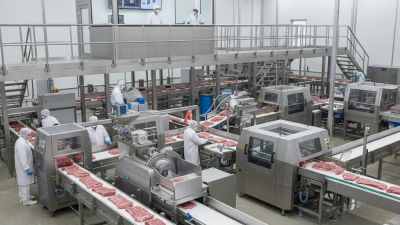
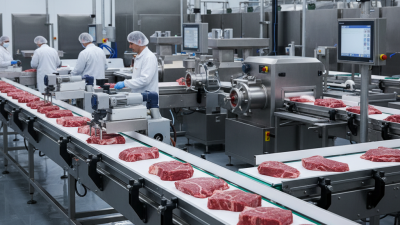
Choosing meat machinery in 2026 requires more than comparing purchase prices. Processors must connect equipment decisions with production volume, product variety, hygiene controls, labor availability, and energy use. The OECD-FAO Agricultural Outlook 2024–2033 expects global meat production to keep growing, with poultry driving much of the expansion. This trend increases pressure on plants to process faster without weakening quality or traceability.
The right machine should fit the actual factory floor. Measure hourly throughput, product dimensions, cleaning time, floor drainage, electrical capacity, and available operator skills. A slicer that handles 3,000 kilograms per hour may still be unsuitable for a small plant with frequent product changes. Consider stainless-steel construction, tool-free access, washdown design, guarding, and documented food-contact materials. The U.S. Department of Agriculture and the European Food Safety Authority continue to emphasize preventive controls, hygienic design, and reliable traceability across food operations.
Automation can reduce repetitive work. It cannot replace sound process design. The PMMI State of the Industry reports show continuing investment in automation, digital monitoring, and labor-saving packaging technologies. However, projected savings often depend on maintenance discipline, training, and stable production schedules. That is where many buying plans become optimistic.
A practical evaluation should compare total cost of ownership, not only the quotation. Include installation, spare parts, water consumption, energy demand, software support, validation, and downtime risk. Request factory acceptance tests and clear performance guarantees. No report can predict every production problem. Site conditions differ. A careful buyer should challenge assumptions, test samples, and speak with comparable processors before selecting meat machinery for 2026.
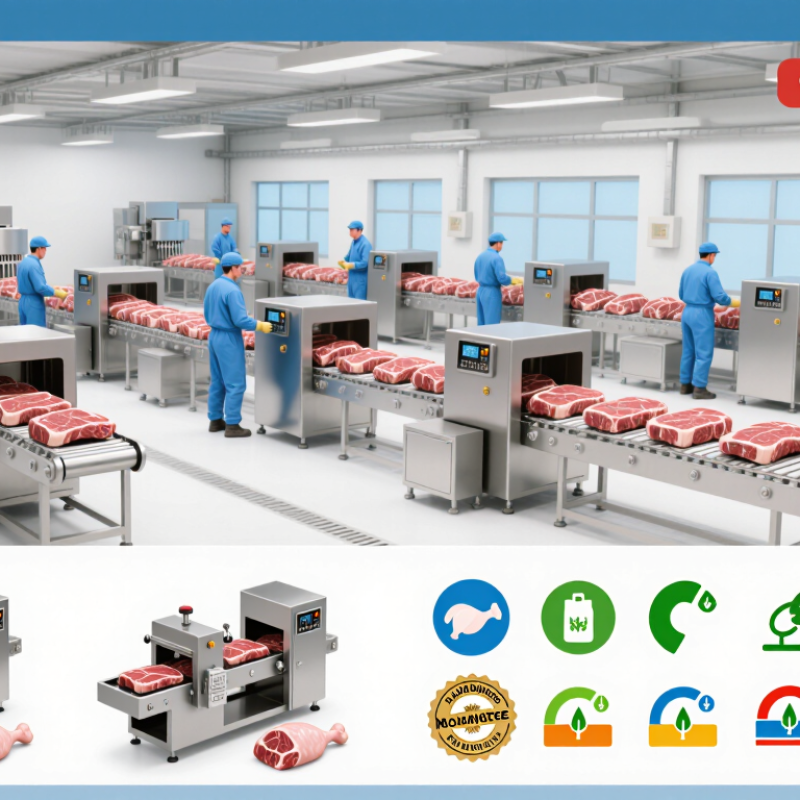
Choosing meat machinery in 2026 should begin with production goals, not catalog photos.
Define your products, daily output, cutting styles, batch sizes, and target customers. A plant making chilled portions needs different equipment from one producing sausages or ready-to-cook meals.
Start with real numbers. The OECD-FAO Agricultural Outlook 2024–2033 projects global meat consumption to increase by about 12% by 2033. FAO’s Food Outlook 2024 forecast global meat production at roughly 368 million tonnes.
These figures suggest rising demand, but they do not justify buying the largest available line. Your actual shift length, labor availability, cold-storage capacity, and seasonal orders matter more.
Measure the full process.
Record kilograms per hour, changeover minutes, yield loss, water use, and cleaning time.
Ask whether operators can inspect contact surfaces without tools. Also check data logging, emergency controls, spare-part access, and training requirements.
Small details hurt. A slicer may meet its rated speed, yet slow down with irregular cuts or frequent sanitation stops.
I have seen capacity plans fail because they ignored loading and cleaning.
A simple pilot test with your own raw material can expose this weakness. Choose equipment that fits today’s workflow, while leaving controlled room for tomorrow’s demand.
Assessing machinery by processing stage is more reliable than choosing equipment by price alone. Each stage needs a different balance of speed, hygiene, precision, and operator control. During receiving, weigh scales and inspection tables should support traceability and quick temperature checks. Poor receiving records can affect every later decision.
Preparation may require grinders, slicers, mixers, or tenderizers, depending on the product. Select machines that match the raw material, batch size, and required particle consistency. For example, a mixer should distribute seasoning evenly without damaging the meat structure. Adjustable cutting settings can reduce waste when product sizes change.
Small details matter.
Forming, cooking, chilling, and packaging demand careful process control. Forming equipment should maintain portion weight within an acceptable tolerance. Cooking systems need dependable temperature monitoring, not just a powerful heater. Chilling equipment must remove heat quickly and support safe storage conditions. Packaging machines should protect seals from moisture, air, and product residue.
I once saw a fast line slow down because cleaning access had been overlooked.
A perfect specification is not enough. Operators also need safe access, simple controls, and practical maintenance schedules. Energy use, spare-part availability, and staff training deserve equal attention. Machinery should be tested with real ingredients before purchase, because laboratory assumptions can miss sticky textures, uneven cuts, or unexpected cleaning time.
How to Choose Meat Machinery in 2026?
Choosing meat machinery in 2026 requires more than checking motor power or purchase price. Start with capacity. Estimate hourly output, product size, and peak production periods. A machine handling 500 kilograms daily may fail during seasonal demand. Leave practical room for growth. Oversizing can also waste energy and floor space.
Automation should reduce repetitive work without removing operator control. Look for adjustable cutting speeds, clear control panels, overload protection, and records for production settings. Hygiene matters just as much. Select equipment with smooth stainless-steel surfaces, removable contact parts, rounded corners, and minimal gaps. These details make cleaning faster and help prevent residue buildup. In real facilities, awkward corners are often missed. That weakness deserves honest attention.
Safety features should include emergency stops, guarded blades, secure covers, and systems that prevent operation during cleaning. Ask how quickly parts can be inspected and replaced. A complicated machine may appear advanced but create maintenance delays. Confirm that operating instructions, cleaning procedures, and training materials are clear. Qualified technicians should verify installation and routine checks.
Tips: Measure doorways, drains, power connections, and cleaning space before ordering. Request a live demonstration with your actual meat texture and batch size. Record noise, heat, cleaning time, and operator feedback. Do not trust a brochure alone. A small trial can reveal uncomfortable truths.
Practical comparison of common meat-processing equipment using typical commercial specifications. Actual performance depends on product, process, configuration, and operating conditions.
| Machinery Type | Typical Capacity | Main Applications | Automation Level | Hygiene and Cleanability | Key Safety Features | Best Suited For |
|---|---|---|---|---|---|---|
| Meat Grinder | 150–3,000 kg/hour | Minced meat, burger blends, sausages, and rework processing | Manual loading to semi-automatic; automatic feeding available for larger lines | Stainless-steel product-contact parts; removable hopper, auger, knife, and plate for sanitation | Interlocked hopper guard, emergency stop, overload protection, and controlled restart | Retail butcheries, restaurants, and medium-to-large processing plants |
| Meat Mixer | 50–2,000 kg per batch | Mixing minced meat, spices, brine, additives, and ingredients | Semi-automatic batch control; programmable mixing cycles on advanced models | Openable or removable mixing components, rounded internal surfaces, and washdown-compatible construction | Lid interlock, emergency stop, guarded drive system, and overload protection | Sausage, burger, meatball, and prepared-meat production |
| Bowl Cutter | 20–750 kg per batch | Fine emulsions, pâté, frankfurters, nuggets, and smooth fillings | Semi-automatic to fully programmable speed and time control | Food-grade stainless-steel bowl and covers; hygienic access for blade and bowl cleaning | Interlocked cover, blade-brake system, emergency stop, and controlled access to rotating parts | Products requiring fine particle size and stable emulsion texture |
| Meat Slicer | 30–120 slices/minute or 100–1,500 kg/hour | Cooked ham, bacon, deli meat, beef, poultry, and portioned products | Manual feed, automatic indexing, or programmable portion slicing | Tool-free or quick-release product-contact parts, smooth surfaces, and drainage-friendly frame design | Blade guard, interlocked access covers, emergency stop, and anti-restart protection | Consistent retail portions and high-volume deli production |
| Vacuum Tumbler | 100–3,000 kg per batch | Marinating, curing, protein extraction, and improving tenderness | Programmable rotation, vacuum, temperature, and cycle-time control | Polished stainless-steel drum, hygienic welds, cleanable seals, and accessible vacuum components | Lid locking, vacuum-release control, emergency stop, and protection against accidental drum movement | Marinated poultry, cured pork, injected beef, and ready-to-cook products |
| Vacuum Packaging Machine | 4–20 cycles/minute; chamber sizes commonly 8–400 litres | Extending shelf life and protecting fresh or processed meat products | Manual chamber loading to automatic conveyor or rotary systems | Stainless-steel chamber, removable sealing bar, smooth welds, and easy access for cleaning | Lid safety lock, controlled chamber release, sealing-temperature monitoring, and emergency stop | Small processors, foodservice operations, and central packaging departments |
| Thermoforming Packaging Machine | 10–40 cycles/minute; approximately 30–200 packs/minute depending on format | Vacuum skin packs, modified-atmosphere packs, and retail tray formats | High automation with recipe management, automatic film handling, and in-line sealing | Hygienic stainless-steel frame, accessible forming and sealing areas, and controlled product-transfer zones | Guarded forming and cutting tools, interlocked doors, emergency stops, and automatic fault shutdown | Large-scale processors needing repeatable retail packaging output |
| Sausage Filler | 100–3,000 kg/hour | Natural and artificial-casing sausages, links, and portioned fillings | Manual filling to automatic linking and portion control | Removable filling tube and piston, stainless-steel hopper, and hygienic product-contact surfaces | Guarded hopper, pressure limitation, emergency stop, and protection against unintended cycling | Butcher shops, sausage rooms, and automated cooked or fresh sausage lines |
Choosing meat machinery in 2026 requires more than comparing purchase prices. Calculate total ownership cost over five to ten years. Include installation, utilities, labor, sanitation, spare parts, training, downtime, and eventual disposal. A cheaper cutter may consume more electricity or require longer cleaning shifts. That difference quietly compounds.
Use measured plant data, not optimistic brochures. Record kilograms processed per hour, electricity use per batch, water consumption, cleaning minutes, and rejected product.
The U.S. Department of Energy reports that compressed-air leaks can waste 20–30% of compressor output. Therefore, pneumatic equipment needs leak inspections and pressure controls.
FAO’s 2023 food-loss reporting estimated that 13.2% of food was lost before retail globally in 2021. Better yield control can matter as much as faster production.
Request a factory acceptance test with your actual product, temperatures, cutting sizes, and shift pattern. Compare output per kilowatt-hour, labor minutes per tonne, and changeover time. Calculate annual savings using realistic production hours. Leave a maintenance reserve for blades, seals, sensors, and unexpected repairs.
Be careful with perfect spreadsheets. Cleaning times vary between operators, and wet production areas accelerate wear.
A small pilot may reveal more than a polished sales presentation. Ask how quickly technicians can diagnose faults, because idle machinery still costs money.
Track performance after installation for twelve months, then revise the calculation.
Supplier support should be tested before machinery enters your plant. The OECD-FAO Agricultural Outlook 2024–2033 projects global meat production will rise about 12% by 2033. More volume will increase pressure on uptime, sanitation, and operator training. Ask suppliers for response times, spare-parts locations, remote assistance, and technician coverage in your region.
Do not accept vague compliance claims. Request hygienic-design drawings, material certificates, electrical documentation, and cleaning instructions. The Codex General Principles of Food Hygiene identifies HACCP as a core food-safety framework. Equipment should support hazard controls, not complicate them.
Check product-contact surfaces, drainage, inspection access, and tool-free disassembly. Small gaps become serious cleaning problems.
Installation is often underestimated. Confirm floor loading, utilities, ventilation, guarding, and line integration before delivery. A proper factory acceptance test should use your product, operators, and planned production speed.
Maintenance matters more than a polished demonstration. According to the U.S. Department of Energy’s Operations & Maintenance Best Practices Guide, preventive maintenance can improve equipment reliability and reduce unplanned downtime. Ask for maintenance intervals, sensor locations, lubrication requirements, and training records.
I would also request references from comparable facilities, not only impressive photographs. Machines rarely fail during a presentation. They fail during cleaning, shift changes, or rushed weekend production. That is where supplier support proves real.
+44 (0)1373 831 373