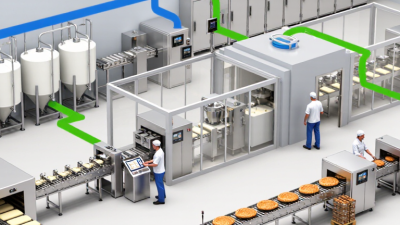
China’s food industry machinery sector has become a serious force in global food production. Its manufacturers supply equipment for dairy, beverages, bakery products, meat processing, snacks, and packaged foods. This guide examines ten leading Chinese companies and the practical strengths behind their reputations.
The comparison considers processing accuracy, machine hygiene, automation, energy use, after-sales support, and export experience. It also looks at details that brochures often hide. Can a filling line maintain stable output during a long shift? Are stainless-steel corners easy to clean? Does the control system help operators, or confuse them? These questions matter in real factories. A low purchase price means little if maintenance becomes expensive.
Food industry machinery must protect product quality while handling demanding production conditions. As food engineering expert Dr. R. Paul Singh puts it, “Food engineering is the application of engineering principles to food processing.” That idea guides this review. Engineering is not only about speed. It also involves temperature control, contamination prevention, material selection, and consistent performance.
No ranking is perfectly neutral. Some manufacturers have stronger export networks, while others offer better customization for smaller plants. A company may excel in aseptic filling but provide weaker packaging solutions. Another may build robust equipment, yet need improvement in documentation or technical service. That is worth admitting. Buyers should verify certifications, factory capability, spare-parts access, and test results before signing contracts. The following overview offers a practical starting point, not a final purchasing decision.
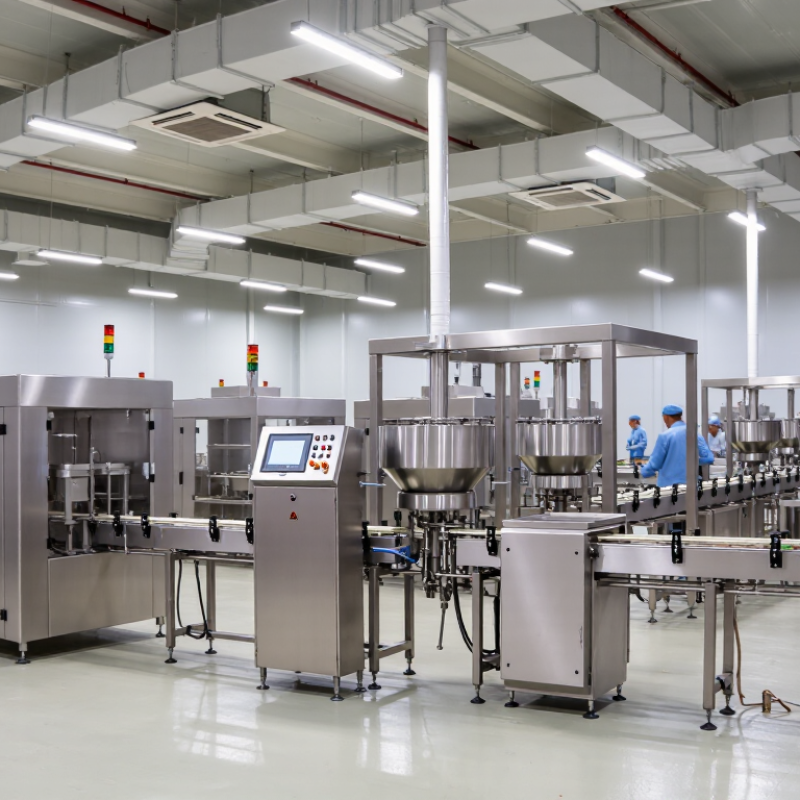
A leading food machinery manufacturer in China is defined by verified performance, not a polished catalog. Fortune Business Insights valued the global food processing equipment market at USD 52.37 billion in 2023. The market is projected to reach USD 75.35 billion by 2032. This growth raises buyer expectations for safer, smarter, and more efficient equipment.
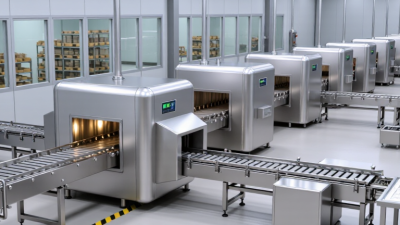
Engineering evidence should appear on the factory floor. Machines need smooth welds, accessible cleaning points, controlled temperatures, and stable output during long production runs. PMMI’s 2024 industry report highlights automation, sanitation, and labor efficiency as major investment priorities. A serious manufacturer should provide factory acceptance tests, material certificates, maintenance records, and measurable energy data. Small details matter. A poorly placed sensor can create repeated stoppages.
Reliability also includes after-sales experience. Spare parts should arrive quickly, while technicians must understand local production conditions. The FAO’s State of Food and Agriculture report estimated that 14% of food is lost between harvest and retail. Better filling accuracy, sealing, chilling, and handling can reduce avoidable waste. Yet no supplier should promise perfect results. Product viscosity changes, operators make mistakes, and factory layouts are rarely ideal. Buyers should request trial runs with their own ingredients and inspect cleaning time, rejection rates, and actual power consumption. A strong manufacturer accepts this scrutiny. That gap matters.
China’s food industry machinery sector has moved beyond basic filling, sealing, and conveying equipment. Over the past decade, processors have demanded cleaner designs, faster changeovers, and stronger traceability. A 2024 report from Mordor Intelligence estimates China’s food processing equipment market at more than 8 billion US dollars. Its growth reflects expanding ready-to-eat meals, beverage production, and cold-chain distribution.
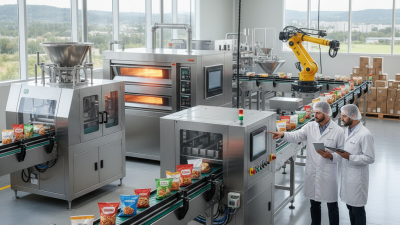
Automation is now visible on factory floors. Vision sensors inspect bottle caps, robotic arms stack cartons, and digital systems record temperature changes within seconds. The China Food and Packaging Machinery Industry Association has highlighted packaging automation and intelligent control as major development directions. These systems reduce manual contact and improve production consistency. Yet the transition is uneven. Smaller factories may still rely on semi-automatic lines because advanced equipment requires skilled technicians and costly maintenance.
Energy efficiency has also become a practical concern. The International Energy Agency reports that industrial motors consume a significant share of global electricity, making efficient drives important for pumps, mixers, and conveyors. In my experience, equipment performance is not measured only by speed. Washdown time, spare-part access, noise, and operator training often decide whether a line succeeds. Some manufacturers still promote impressive output figures without explaining downtime. That gap deserves more honest evaluation.
China’s food machinery sector is broad, so a specialty-based ranking is more useful than a simple sales list. The China Food and Packaging Machinery Industry Association reports steady demand for automated processing and packaging equipment. Mordor Intelligence also forecasts continued growth in China’s food processing equipment market through 2029.
The leading specialties include filling machines, flexible packaging lines, canning systems, bakery equipment, meat-processing machinery, dairy-processing units, beverage production lines, freezing equipment, inspection systems, and factory automation. Filling specialists focus on stable flow and accurate dosing. Packaging manufacturers develop sealing systems that handle humid production rooms. Bakery equipment makers improve temperature control and belt movement. Meat and dairy machinery must support cleaning, traceability, and cold-chain requirements.
Details matter. A reliable line should maintain output during an eight-hour shift, not only during a showroom test. Stainless steel surfaces, tool-free access, and clear sensor alarms reduce maintenance pressure. Research from Interact Analysis identifies automation and digital monitoring as major manufacturing trends in China. However, rankings remain imperfect. Public data often combines machinery categories, making direct comparisons difficult. Export performance also needs checking through installation records, service response, and verified customer references. Suppliers with strong engineering teams may outperform larger manufacturers in narrow fields. That difference is easy to miss.
China Top 10 Food Industry Machinery Manufacturers?
When comparing China’s leading food machinery manufacturers, buyers should examine equipment categories, not only production capacity. Common machinery includes mixers, slicers, grinders, ovens, filling lines, sealing machines, and complete packaging systems. Each machine must match the product’s texture, moisture, temperature, and daily output. A sauce line may require precise dosing, while a biscuit line depends on stable baking zones and conveyor speed.
Modern equipment often combines stainless-steel construction, servo motors, PLC controls, and touch-screen monitoring. Vision sensors can check missing seals or incorrect labels. Metal detection supports routine quality control. Clean-in-place systems reduce manual washing, but they still need inspection. A pipe may look clean while residue remains inside a valve. That detail is easy to miss.
Applications range from small workshops to continuous industrial plants. Manufacturers should provide process trials, factory acceptance testing, installation guidance, and operator training. Buyers should also verify spare-part availability and maintenance response times. A fast machine is not always the best machine. Excessive speed can damage delicate products or increase waste. Some technical specifications may appear impressive, yet real performance depends on raw materials, operators, and cleaning habits. Careful testing with actual ingredients remains essential.
| No. | Machinery Category | Core Equipment | Key Technologies | Typical Capacity Range | Main Applications | Important Selection Criteria |
|---|---|---|---|---|---|---|
| 1 | Food Processing Lines | Integrated washing, cutting, cooking, cooling, conveying, and packing systems | PLC control, recipe management, automated conveying, CIP-ready design, and production traceability | Approximately 0.5–20 tonnes per hour, depending on product and process | Prepared foods, frozen foods, canned foods, sauces, and ready-to-eat products | Process integration, hygienic design, product yield, automation level, and after-sales support |
| 2 | Beverage Filling and Packaging Equipment | Rinsers, fillers, capping machines, bottle unscramblers, labeling machines, and packers | Volumetric or flow-meter filling, servo motion control, automated inspection, and hygienic filling systems | Approximately 2,000–60,000 bottles per hour | Water, carbonated drinks, juice, dairy beverages, tea, and functional beverages | Filling accuracy, container compatibility, changeover time, sanitation, and line speed |
| 3 | Bakery and Pastry Machinery | Dough mixers, dividers, rounders, proofers, ovens, cooling conveyors, and depositors | Servo-controlled forming, continuous proofing, convection or tunnel baking, and temperature monitoring | Approximately 500–10,000 pieces per hour | Bread, buns, cakes, cookies, pastries, pizza bases, and filled bakery products | Weight consistency, baking uniformity, recipe flexibility, energy consumption, and cleaning access |
| 4 | Meat and Poultry Processing Machinery | Cutters, grinders, mixers, slicers, tumblers, injectors, and forming machines | Vacuum processing, controlled portioning, temperature management, metal detection, and automated weighing | Approximately 300–6,000 kilograms per hour | Sausages, meatballs, burgers, sliced meat, marinated products, and poultry portions | Food-contact materials, temperature control, cutting precision, sanitation, and worker safety |
| 5 | Dairy Processing Equipment | Milk tanks, homogenizers, pasteurizers, separators, yogurt systems, and filling machines | HTST pasteurization, UHT treatment, homogenization, automated CIP, and aseptic or hygienic filling | Approximately 1,000–50,000 liters per hour | Milk, yogurt, cream, flavored dairy drinks, condensed milk, and plant-based beverages | Thermal accuracy, microbial control, aseptic performance, product loss, and CIP efficiency |
| 6 | Fruit and Vegetable Processing Machinery | Washers, graders, peelers, cutters, pulpers, blanchers, and juice extractors | Optical sorting, water-saving washing, enzymatic control, gentle handling, and continuous blanching | Approximately 1–15 tonnes per hour | Juices, purees, canned vegetables, frozen produce, dehydrated foods, and fruit fillings | Raw-material yield, product damage, water consumption, cleaning time, and seasonal flexibility |
| 7 | Grain, Flour, and Milling Machinery | Cleaners, destoners, dehullers, roller mills, sifters, mixers, and flour packing machines | Pneumatic conveying, particle-size control, automated dosing, dust collection, and online quality monitoring | Approximately 1–30 tonnes per hour | Wheat flour, rice products, corn products, starch, cereal ingredients, and animal-feed ingredients | Extraction rate, particle uniformity, dust control, energy efficiency, and food safety |
| 8 | Snack and Extrusion Machinery | Twin-screw extruders, dryers, fryers, flavoring machines, and snack packaging systems | Extrusion cooking, moisture control, continuous frying, hot-air drying, and automated seasoning | Approximately 100–1,500 kilograms per hour | Puffed snacks, cereal products, pellets, pet food, protein foods, and instant products | Screw configuration, texture control, moisture uniformity, oil management, and product changeover |
| 9 | Filling, Sealing, and Packaging Machinery | Vertical form-fill-seal machines, premade-pouch machines, tray sealers, and vacuum packers | Multihead weighing, auger dosing, vacuum sealing, modified-atmosphere packaging, and vision inspection | Approximately 20–200 packages per minute | Dry foods, powders, frozen foods, snacks, sauces, meat products, and ready meals | Dosing accuracy, seal integrity, packaging-material compatibility, format flexibility, and maintenance |
| 10 | Drying, Dehydration, and Freeze-Drying Equipment | Hot-air dryers, vacuum dryers, spray dryers, fluid-bed dryers, and freeze dryers | Airflow and humidity control, vacuum drying, low-temperature sublimation, heat recovery, and automated monitoring | Approximately 50–5,000 kilograms of feed material per batch or hour | Fruit, vegetables, instant foods, coffee, herbs, seafood, functional ingredients, and pharmaceutical foods | Moisture uniformity, nutrient retention, energy consumption, drying time, and final product quality |
Selecting a Chinese food machinery manufacturer requires more than comparing catalog prices. According to FAO, 13.2% of food was lost between harvest and retail in 2021. Reliable processing and packaging equipment can reduce avoidable waste. Ask for verified output data, product-contact material certificates, and recent factory references. A polished brochure is not enough.
Check whether the manufacturer understands your process, not only your machine list. Review hygienic design, clean-in-place performance, temperature control, and changeover time. Stainless steel grade matters, especially around acidic or salty products. Request a documented Factory Acceptance Test with your actual materials. ISO 22000-based food safety procedures also show stronger process discipline, although certification alone cannot guarantee good equipment.
Compare total ownership cost over five years. Include energy use, labor, spare parts, software support, installation, and downtime. PMMI’s 2024 industry outlook continues to identify automation, labor shortages, and connected equipment as major packaging priorities. A useful supplier should provide remote diagnostics and clear data ownership terms. Visit the production site if possible. Observe weld quality, assembly cleanliness, testing records, and how engineers answer difficult questions. I would also contact two existing customers, not only the references selected by sales staff. My comparison may still miss hidden maintenance risks, so leave room for an independent technical audit.
+44 (0)1373 831 373