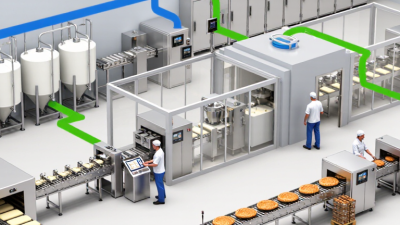
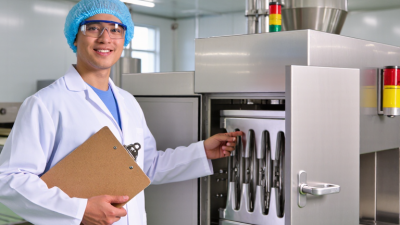
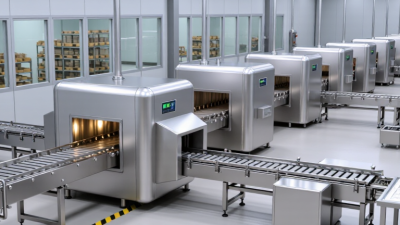
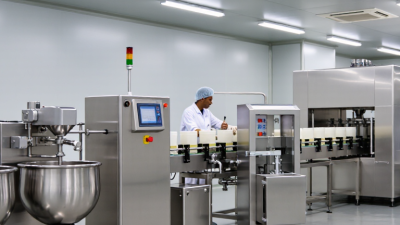
In 2026, food industry equipment is not just a collection of stainless-steel machines. It is the working system behind safe, consistent production. A small bakery may rely on mixers, proofers, and ovens. A ready-meal plant needs different tools: cutters, cooking lines, chillers, and packaging machines. The right choices depend on the product, production volume, available floor space, and cleaning needs.
Cornell food-safety expert Dr. Martin Wiedmann emphasizes a principle relevant to every equipment decision: food safety controls must extend throughout the production process. That means examining more than a machine’s speed. Consider cleanable surfaces, temperature control, inspection points, and how ingredients move between steps. Details matter. A poorly placed conveyor can slow workers and complicate cleaning. A well-chosen sensor can help flag a temperature problem before it affects a full batch.
This guide explores the leading equipment categories, including processing and mixing systems, thermal equipment, refrigeration, conveying, packaging, and inspection tools. It also considers automation and sanitation systems, which increasingly shape everyday plant operations. No single list fits every facility. A high-speed packaging line may be essential for one producer and unnecessary expense for another. That distinction is easy to overlook. The following overview offers a practical starting point for comparing equipment, asking sharper questions, and spotting trade-offs before a purchase becomes part of the production floor.
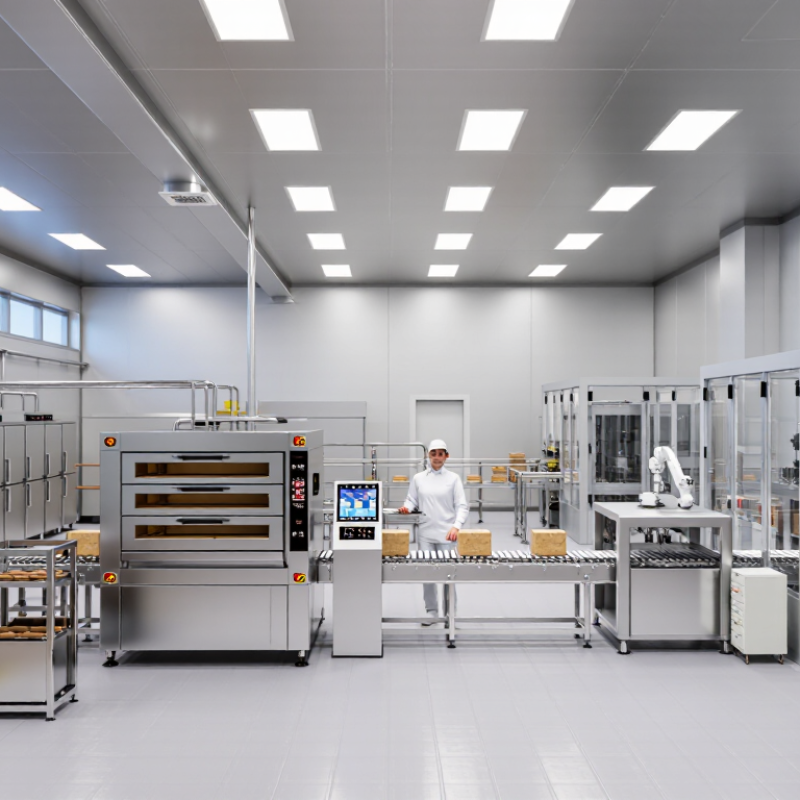
Cold TCS foods need dependable temperature control during preparation, not just storage. The FDA Food Code 2022 sets cold holding at 41°F (5°C) or below. Refrigerated prep tables, reach-in coolers, and chilled mixing equipment help keep ingredients within that limit while staff portion or combine them. Keep lids closed between tasks, avoid overloading equipment, and check temperatures with a calibrated probe. Small details matter. A crowded table or slow restocking can warm ingredients near the work surface, even when the display shows a safe reading.
The CDC estimates that foodborne illnesses affect about 48 million people in the United States each year. That estimate appears in its foodborne illness burden data, underscoring why routine controls matter. Record product temperatures at practical checkpoints, such as after mixing and before returning ingredients to refrigeration. Use clean, shallow containers when moving prepared foods, and leave space for cold air to circulate. One weak point is easy to underestimate: staff may trust a unit’s display without checking the food itself. Equipment supports safe handling, but it cannot replace consistent monitoring or a workable prep schedule.
In 2026, cooking equipment is judged by more than capacity. Hot-holding units must keep food at a safe temperature throughout service. The FDA Food Code 2022 sets hot holding at 135°F (57°C) or above for time/temperature control for safety foods. Local requirements and applicable exceptions should also be checked.
Steam tables, heated cabinets, and soup wells help maintain serving temperatures, but equipment settings alone cannot confirm food safety. The CDC estimates that foodborne illnesses cause about 48 million illnesses, 128,000 hospitalizations, and 3,000 deaths in the United States each year. These figures come from a 2011 study by Scallan and colleagues in Emerging Infectious Diseases. They do not isolate hot-holding failures, but they underscore the importance of careful temperature control.
Measure the food itself with a calibrated probe, checking the center rather than the pan’s edge. Displays can mislead. Crowded pans may create cold spots, even in a well-maintained unit. Keep practical temperature records and check food during service, not just at setup. We often focus on purchase specifications and underinvest in routine checks. The FDA Food Code provides the benchmark; staff still need to verify that each unit holds food at or above it.
Blast chillers are designed to move cooked food through a narrow temperature window quickly. The FDA Food Code 2022 sets a benchmark: cool time and temperature control for safety food from 135°F to 70°F within two hours, then to 41°F within six hours total. The code is a model adopted by local authorities, so kitchens should verify their local requirements. Small details matter. Shallow pans, space between containers, and unobstructed airflow help cold air reach the food instead of merely chilling the pan edges.
Use a sanitized probe to check the warmest, thickest portion, and record temperatures during cooling. A display reading alone cannot confirm the food’s core temperature. The CDC estimates that foodborne illnesses cause about 48 million illnesses in the United States each year; that figure covers many causes, but it shows why dependable controls matter. A chiller’s stated capacity also may not reflect a fully loaded shift. This is where specifications meet messy kitchens. Staff need to avoid stacking hot pans too tightly, and supervisors should review cooling logs for repeated slowdowns. The target is clear; real kitchens still need to test their own loading patterns.
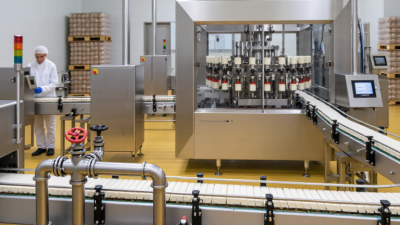
Packaging lines are more than conveyors, fillers, and sealers. Under FDA’s FSMA Preventive Controls for Human Food rule, covered facilities must analyze hazards and apply risk-based controls when needed. That does not mean every line needs the same equipment. A line handling allergen-sensitive products may need reliable label checks, while a ready-to-eat product may require stronger sanitation controls. Small failures matter.
The scale of the risk is real. CDC estimates that foodborne illnesses affect about 48 million people in the United States each year, with 128,000 hospitalizations and 3,000 deaths. These figures come from CDC’s foodborne-illness burden estimates, published by Scallan and colleagues in Emerging Infectious Diseases in 2011. On a packaging floor, practical safeguards can include verified seal settings, calibrated temperature sensors, and reject systems that remove defective packs. Records should show who checked each control, when it was checked, and what happened after a failure. A sensor can drift. A label can be loaded incorrectly. The paperwork may look complete while the process still needs attention. Teams should test controls under real production conditions, then revise them when products, packaging, or line speeds change.
Common packaging-line equipment and the food-safety controls a facility may consider when its hazard analysis identifies relevant risks.
| Equipment type | Primary packaging-line function | Potential food-safety concern | Example risk-based controls | Useful monitoring and records |
|---|---|---|---|---|
| Product fillers and depositors | Dispense a measured amount of liquid, paste, powder, or solid product into a package. | Product-contact contamination, allergen cross-contact, or contamination from residues left during changeovers. | Use hygienic product-contact parts; apply documented cleaning and sanitation procedures; verify changeover steps where allergens or other identified hazards are involved. | Cleaning and sanitation records, changeover checks, pre-operational inspection results, and corrective-action records. |
| Form-fill-seal machines | Form packaging from film, fill it with product, and seal it in a continuous process. | Contamination from packaging materials or equipment surfaces; inadequate seals that expose product to contamination or moisture. | Protect and inspect packaging materials; maintain clean product-contact areas; monitor seal settings and verify seal integrity when the hazard analysis identifies it as important. | Packaging-material inspection records, seal checks, equipment maintenance logs, and sanitation records. |
| Tray, cup, and container sealers | Apply a film or lid to trays, cups, tubs, and other containers. | Leaking or incomplete seals; contamination of container rims or sealing surfaces. | Set and verify sealing parameters; keep rims and contact surfaces clean; segregate and assess packages that fail established acceptance checks. | Seal inspection results, parameter checks, rejected-package records, and maintenance documentation. |
| Vacuum and modified-atmosphere packaging systems | Remove air or introduce a specified gas mixture before sealing a package. | Reduced-oxygen conditions can affect the growth potential of certain pathogens if product formulation, processing, storage, or labeling controls are inadequate. | Evaluate the product and process through the facility’s hazard analysis; maintain validated process parameters where applicable; control storage conditions and required product instructions. | Process-parameter records, gas-composition checks where applicable, temperature records, and verification documentation. |
| Checkweighers and package inspection systems | Check package weight and, depending on system configuration, detect selected foreign material or package defects. | Undetected physical hazards or packages outside established specifications. | Choose detection capability appropriate to the product and identified hazard; verify system operation at defined intervals; control and document rejected product. | Challenge or verification checks, rejection logs, calibration or maintenance records, and investigation records for failures. |
| Labeling and coding equipment | Apply product labels and print lot codes, dates, and handling information. | Incorrect or missing allergen declarations, lot identification, or handling instructions where these are relevant to food safety. | Verify the label against the product and approved specifications at startup and changeovers; check code legibility and maintain controls over label stock. | Line-clearance records, label verification checks, code checks, and documentation of label discrepancies. |
| Case packers and palletizers | Group sealed packages into cases and prepare them for storage or shipment. | Package damage, mix-ups between products or lots, or exposure to environmental contamination after packaging. | Inspect packages and cases; maintain lot identification and segregation; keep the area clean and protect finished goods during handling and storage. | Packaging-damage records, lot traceability records, housekeeping checks, and finished-goods handling documentation. |
Note: FSMA preventive-controls requirements are risk-based. Applicable facilities determine controls through their food-safety plan and hazard analysis; not every listed machine requires every control. Requirements and exemptions vary by facility and product.
Manual warewashing still matters in kitchens that rely on automated equipment. The FDA Food Code sets a minimum wash-solution temperature of 110°F (43°C) for manual dishwashing, unless the cleaning-agent label specifies another temperature. This applies to the wash compartment, not the rinse or sanitizing step. The Food Code is a model code, so local requirements may differ.
A simple sink thermometer can catch water that feels warm but falls short. Check the wash solution after filling the sink and when adding fresh water. Grease on a pan or cloudy water can signal that the wash step needs attention, but appearance alone cannot confirm safe sanitizing. Even experienced crews can miss a temperature drop during a rush. It happens. Follow the detergent label, keep wash water clean, and use the required sanitizing method for the operation.
Tips: Keep a readable thermometer near the sink. Check the temperature during service, not just at opening. Check local health-department rules for any additional requirements.
+44 (0)1373 831 373