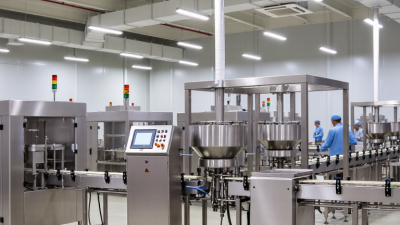
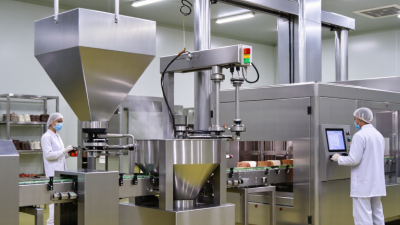
Food factory equipment is the quiet infrastructure behind safe, consistent, and profitable food production. It controls more than speed. Hygienic conveyors, temperature sensors, filling systems, metal detectors, and clean-in-place units help manage contamination risks and product variation. When a pump leaves residue inside a pipe, the problem may remain invisible until testing reveals it. That detail matters.
The World Health Organization estimates that contaminated food causes about 600 million illnesses and 420,000 deaths worldwide each year. The FAO also reports that 13.2% of food is lost between harvest and retail. These figures show why reliable equipment deserves serious attention. Properly designed systems can reduce handling, protect cold-chain conditions, and support traceability across batches. ISO 22000 guidance further emphasizes controlled processes, hazard management, and continual improvement in food safety systems.
However, equipment is not a magic shield. A modern processing line can still fail through poor sanitation, weak maintenance, incorrect settings, or rushed operator training. That is where practical experience becomes essential. Engineers must inspect seals, verify sensor readings, and document cleaning results—not simply trust a new machine. The right food factory equipment should match the product, factory layout, workforce, and production risks. It should also be serviceable when a valve fails during a busy shift. Industry reports often highlight automation’s efficiency, but efficiency without verification can create faster mistakes. The strongest investment combines suitable technology, trained people, and measurable controls. That balance explains why food factory equipment is central to product quality, regulatory confidence, and long-term operational resilience.
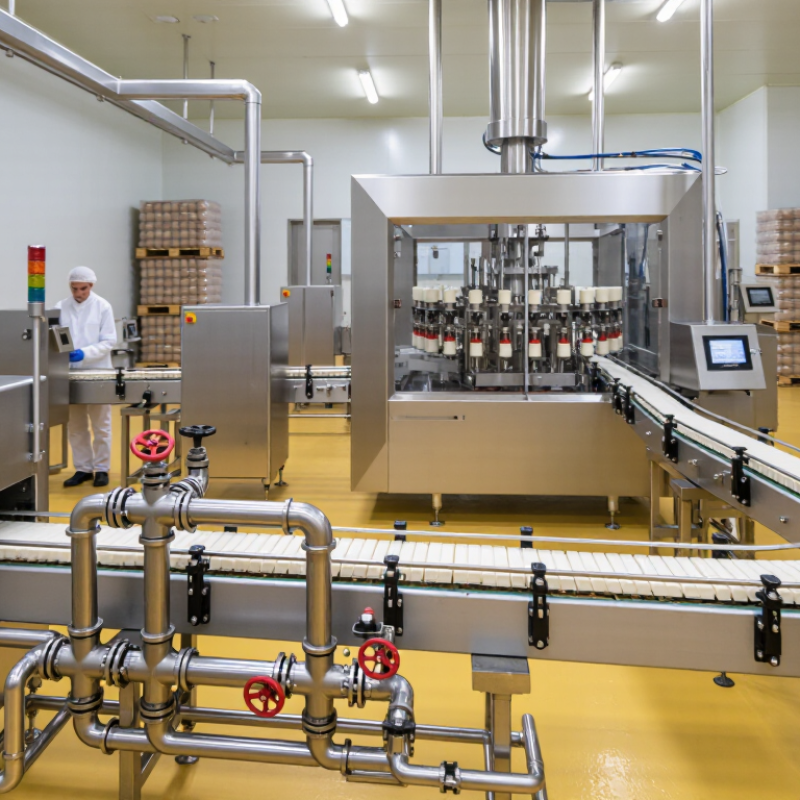
Food factory equipment is the physical system that turns approved ingredients into safe, consistent products. It includes receiving units, mixers, cutters, heat-treatment systems, conveyors, fillers, packaging machines, and cleaning equipment. Each machine supports a controlled step, from a chilled loading dock to a sealed carton.
Not just machinery.
Equipment also includes sensors, control panels, sanitation tools, and inspection devices. A temperature sensor can protect a cooking process, while a metal detector can identify unwanted fragments before dispatch. The World Health Organization estimates that contaminated food causes about 600 million illnesses and 420,000 deaths each year. This makes hygienic design and process control practical safety requirements, not decorative features. Operators still need training. Software cannot replace judgment.
The Food and Agriculture Organization reported that 13.2% of food was lost globally between harvest and retail in 2021, according to its Food Loss Index. Well-designed equipment can reduce spills, overfilling, temperature abuse, and damaged packaging. It can also improve batch records and traceability.
Yet expensive machinery does not guarantee good production. A poorly adjusted conveyor may bruise vegetables, waste ingredients, or create hidden cleaning gaps. Stainless steel can still harbor residue around seals and joints. Regular inspection, calibration, documented sanitation, and preventive maintenance remain essential.
In my view, the most reliable factory is not the most automated one. It is the one whose equipment performs predictably under real working conditions.
Food factory equipment supports production processes by turning raw ingredients into consistent, safe products. A well-designed line controls weighing, mixing, heating, cooling, filling, and packaging. Each stage needs accurate timing. Small temperature errors can change texture, shelf life, or microbial safety.
The need is substantial. FAO’s State of Food and Agriculture 2019 reported that about 13.2% of food is lost between harvest and retail. Better conveyors, storage systems, and process controls can reduce handling damage and delays. The UNEP Food Waste Index Report 2024 estimated 1.05 billion tonnes of food were wasted in 2022. Equipment cannot solve every waste problem. However, precise portioning, leak detection, and automated inspection can prevent avoidable losses.
In practical plant work, hygienic design matters as much as output speed. Smooth surfaces, accessible components, and validated cleaning cycles help limit contamination risks. Sensors also provide useful records for temperature, pressure, and fill weight. Yet faster is not always better. A high-speed line may increase jams, product damage, or difficult cleaning. That lesson is easy to overlook.
Tips: Match equipment capacity with real demand, not an ideal forecast. Test changeover time with actual staff and products. Keep critical spare parts available. Review downtime records every month. A short trial often reveals more than a polished specification.
Food factory equipment is important because it controls safety, consistency, speed, and waste. Different machines handle different stages of production. A reliable layout also reduces unnecessary movement and contamination risks.
Raw materials usually enter through receiving equipment, weighing systems, and inspection stations. Conveyors then move ingredients between work areas. Sorting machines remove damaged pieces or foreign materials. Washers clean produce, while cutters, grinders, and mixers prepare the product. Some factories use blenders for uniform recipes. Others rely on pumps and pipes for liquid foods. Every contact surface should be easy to clean and made from suitable food-grade materials.
Heat-processing equipment includes ovens, steamers, kettles, pasteurizers, and retorts. These systems help control temperature and reduce harmful microorganisms. Cooling tunnels and refrigeration units protect products after heating. Filling machines portion liquids, sauces, or powders accurately. Sealing machines close containers, while labeling and coding equipment support traceability. Metal detectors and vision inspection systems can identify packaging or product defects.
Good sanitation equipment matters just as much. Foam stations, high-pressure cleaning systems, drains, and hygienic storage areas support daily cleaning routines. Sensors can monitor temperature, pressure, weight, and flow. Yet automation is not a cure-all. Poor calibration still creates poor results. A well-designed factory needs trained operators, documented checks, and regular maintenance. Small oversights can affect an entire production batch.
Food factory equipment supports hygienic processing, consistent product quality, efficient production, worker safety, traceability, and compliance with food-safety requirements. The operating ranges below are typical examples and vary according to the product, process design, and applicable regulations.
| Equipment Type | Primary Function | Why It Is Important | Typical Operating Data | Common Food Applications | Key Hygiene or Safety Considerations |
|---|---|---|---|---|---|
| Receiving and Weighing Equipment | Receives, inspects, weighs, and records incoming ingredients and raw materials. | Improves inventory accuracy, supports batch consistency, and helps verify supplier deliveries. | Platform scales commonly measure from several kilograms to several tonnes; checkweighing accuracy depends on load size and equipment design. | Flour, grains, sugar, meat, vegetables, liquids, packaging materials. | Use cleanable surfaces, calibrated scales, allergen identification, lot recording, and separation of raw and ready-to-eat materials. |
| Conveyors and Material-Handling Systems | Moves ingredients, containers, and finished products between processing stages. | Reduces manual handling, improves workflow, and helps maintain continuous production. | Belt, roller, screw, bucket, and pneumatic systems are selected according to product properties, distance, elevation, and required throughput. | Packaged foods, bakery products, cereals, powders, fruits, vegetables, and meat products. | Use food-contact materials, hygienic belt construction, guarded moving parts, spill control, and easy access for cleaning. |
| Washing and Cleaning Equipment | Removes soil, debris, residues, and selected surface contaminants from ingredients or equipment. | Helps reduce contamination risks and prepares raw materials for safe processing. | Uses water, spray pressure, brushes, air, or approved cleaning solutions; temperature and contact time depend on the process and food type. | Fresh produce, seafood, containers, utensils, and processing surfaces. | Cleaning procedures must control water quality, chemical concentration, cross-contamination, drainage, and post-cleaning sanitation. |
| Cutting, Slicing, Grinding, and Mincing Equipment | Reduces ingredients to a specified size, shape, or texture. | Provides uniform portions, improves processing efficiency, and supports consistent cooking or mixing. | Output depends on blade configuration, screen size, product temperature, feed rate, and equipment capacity. | Meat, vegetables, fruit, cheese, nuts, dough, and prepared foods. | Require blade guards, lockout procedures, hygienic dismantling, sharp-tool controls, and checks for metal or hard fragments. |
| Mixers, Blenders, and Emulsifiers | Combines ingredients and creates a consistent mixture, batter, dough, sauce, or emulsion. | Improves recipe uniformity, product texture, and batch-to-batch consistency. | Mixing time, speed, fill level, and temperature are selected according to viscosity, solids content, and formulation. | Bakery dough, sauces, dairy products, beverages, fillings, dressings, and processed meat. | Use sanitary seals, smooth internal surfaces, validated recipes, controlled allergen changeovers, and complete removal of residues. |
| Thermal Processing Equipment | Applies controlled heat through cooking, pasteurization, sterilization, baking, blanching, or frying. | Reduces pathogens, improves safety, develops texture and flavor, and can extend shelf life. | Pasteurization conditions are product-specific; for example, milk pasteurization commonly uses 72 °C for at least 15 seconds under the high-temperature short-time method. | Milk, juices, sauces, canned foods, bakery products, ready meals, and fried foods. | Time-temperature profiles must be validated, monitored, recorded, and protected against under-processing or post-process contamination. |
| Cooling, Refrigeration, and Freezing Systems | Rapidly lowers product temperature and maintains cold-chain conditions. | Slows microbial growth, preserves quality, and helps protect perishable products during storage and distribution. | Many chilled foods are stored at 5 °C or below, while frozen storage is commonly maintained at −18 °C or below; exact limits depend on the product and regulations. | Meat, seafood, dairy products, frozen vegetables, prepared meals, and desserts. | Monitor product and room temperatures, prevent condensation, maintain airflow, and avoid breaks in the cold chain. |
| Filling, Sealing, and Packaging Equipment | Measures products into containers and closes or seals packages for distribution. | Protects food from contamination, supports portion control, improves shelf life, and enables efficient handling. | Filling accuracy, sealing temperature, pressure, dwell time, and line speed depend on the product and packaging material. | Beverages, powders, sauces, snacks, frozen foods, bakery products, and ready-to-eat meals. | Verify seal integrity, label accuracy, package cleanliness, net contents, and compatibility between food and packaging materials. |
| Inspection, Metal Detection, and Checkweighing Systems | Checks product weight, package condition, and selected physical hazards or defects. | Supports quality control, reduces customer complaints, and helps prevent contaminated or incorrectly filled products from being released. | Detection performance depends on product effect, package type, aperture size, equipment setup, and verification standards. | Packaged meat, bakery goods, snacks, beverages, dairy products, and prepared meals. | Use documented performance checks, reject verification, calibration, traceable records, and controlled handling of rejected products. |
| Clean-in-Place Systems | Circulates water, detergents, rinses, and sanitizers through enclosed processing equipment without extensive disassembly. | Improves cleaning consistency, reduces downtime, and helps control microbial and allergen residues. | Cleaning cycles are controlled by time, temperature, chemical concentration, and mechanical action; settings are validated for each system. | Pipelines, tanks, heat exchangers, beverage lines, dairy systems, and sauce-processing equipment. | Require validated procedures, correct chemical dosing, adequate flow velocity, complete rinsing, drainage, and verification records. |
Note: Equipment selection should be based on the food product, production volume, required process controls, facility layout, cleaning method, worker safety, energy use, and applicable food-safety regulations.
Why Is Food Factory Equipment Important?
Why Equipment Matters for Food Safety and Quality
Food factory equipment directly affects how safely and consistently food is produced. Stainless steel surfaces resist corrosion and allow thorough cleaning. Smooth welds also prevent food particles from hiding in narrow gaps. These details may look small. They are not.
In daily production, reliable equipment controls temperature, mixing speed, filling volume, and processing time. Accurate sensors help workers identify unsafe temperature changes before products leave the facility. Well-designed conveyors reduce unnecessary hand contact. Sealed systems can also limit exposure to dust, moisture, and other contaminants.
Good equipment supports quality as well as safety. A mixer that distributes ingredients evenly creates a more consistent texture. A precise cutting machine helps each portion look similar. During inspections, clear maintenance records and calibration checks provide evidence that controls are working. Experienced operators still matter, because machines cannot notice every unusual smell, sound, or change in appearance.
Equipment can fail, even in a well-managed factory. Cleaning may be rushed during busy shifts. A sensor may drift slowly without obvious warning. That uncomfortable possibility deserves attention. Regular inspections, preventive maintenance, employee training, and documented cleaning procedures reduce these risks. In my experience, small neglected defects often become expensive quality problems later. A practical factory leaves room for human judgment, not just automation.
Food factory equipment matters because it converts safety targets into daily, measurable actions. Modern conveyors, sensors, and filling systems can reduce stoppages and improve production consistency.
The U.S. Department of Energy reports that compressed-air leaks may waste 20–30% of a system’s output. Regular leak testing can therefore lower energy costs without changing the production line.
Small failures matter.
Sustainability also depends on equipment design. Variable-speed motors can match power use with actual demand. Heat recovery systems can reuse energy from ovens, boilers, or refrigeration units.
The International Energy Agency identifies energy efficiency as a major route for reducing industrial emissions. However, new equipment is not automatically sustainable.
Poor maintenance, excessive water use, and short replacement cycles can erase expected gains. The UNEP Food Waste Index 2024 reports that 13% of food is lost before retail, making accurate dosing, gentle handling, and reliable cooling especially valuable.
Tips:
Track energy, water, waste, and downtime per production batch. Install sensors at high-consumption points. Review the data monthly.
Keep calibration records and cleaning logs available for audits. Equipment should support hazard controls, traceability, and hygienic design under a documented food safety system, such as ISO 22000.
In practice, operators often notice warning signs before dashboards do. Their experience deserves attention.
One overlooked issue remains training: advanced machines still fail when settings are misunderstood or cleaning steps are rushed.
+44 (0)1373 831 373