How to Choose the Best Dairy Machinery for Your Business?
Choosing the right dairy machinery can determine whether a dairy business grows smoothly or struggles with costly downtime. The decision reaches far beyond stainless-steel appearance and impressive production numbers. It involves product quality, hygiene, labor, energy use, maintenance, and future capacity.
Dr. Dennis R. Heldman, a respected food engineering authority, offers a useful principle: “Understand the process before selecting the equipment.” That idea matters on a real production floor. A filling machine may handle ten thousand cups hourly, yet it can be unsuitable for a small plant with frequent product changes. A pasteurizer may save labor, but only if its controls, heat recovery, and cleaning system match the operation.
The best dairy machinery should fit the milk volume, product range, packaging format, and available utilities. Buyers should examine hygienic design, clean-in-place performance, temperature control, spare-parts access, and supplier support. Ask to see service records. Request a production trial. Speak with operators, not only sales teams.
Total cost deserves careful attention. The cheapest machine can become expensive through water waste, unstable output, or long repair delays. Energy-efficient equipment may require a higher initial investment, but it can reduce operating costs over many years.
Still, no selection checklist is perfect. Business owners sometimes underestimate seasonal demand or overestimate their staff’s technical skills. A thoughtful review should include those uncomfortable gaps. Reliable dairy machinery is not merely powerful equipment. It is equipment that performs safely, consistently, and realistically within the business.
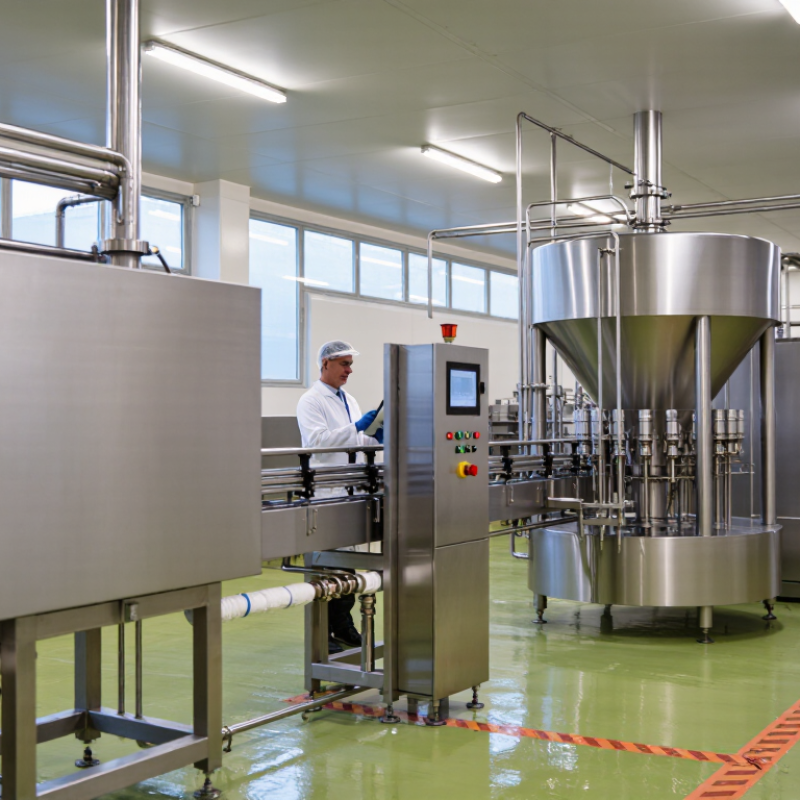
Define Product Capacity Using Tetra Pak’s Global Dairy Processing Benchmarks
Choosing the best dairy machinery begins with a clear product-capacity target. Global dairy processing benchmarks can help translate market demand into practical equipment specifications.
Use benchmark ranges for milk reception, separation, pasteurization, fermentation, filling, and cold storage. Compare your expected daily volume with hourly production rates. Do not size equipment from annual sales alone. Seasonal demand can create serious pressure on a small processing line. A plant producing 8,000 liters daily may need a higher hourly capacity during short operating windows. Record current demand, projected growth, product viscosity, package size, and cleaning frequency. Small details matter.
Calculate average output, peak output, and realistic downtime separately. Include changeovers, maintenance, quality checks, and cleaning cycles. A machine rated for 5,000 liters per hour may deliver less under actual operating conditions. Product temperature and fat content can also affect performance. For yogurt, cultured drinks, and cream products, mixing and filling requirements may differ sharply. I would also allow capacity for future products, but not purchase excessive equipment too early. That mistake increases energy use, idle time, and maintenance costs. The benchmark is a reference, not a promise. Validate it with pilot trials, supplier test data, utility limits, and local operator experience. Before selecting machinery, confirm water availability, steam demand, refrigeration load, floor space, and hygienic drainage. Plans change. Your equipment should adapt without creating unnecessary complexity.
| Business Scale | Typical Milk Intake | Recommended Pasteurizer Throughput | Typical Batch or Holding-Tank Size | Suitable Product Range | Recommended Processing Configuration | Indicative Operating Pattern | Key Selection Priority |
|---|---|---|---|---|---|---|---|
| Micro / Farm Dairy | 500–2,000 L/day | 100–300 L/hour | 200–500 L per batch | Pasteurized milk, cream, yogurt, fresh cheese | Small batch pasteurizer, manual or semi-automatic filling, compact cooling tank, basic clean-in-place system | 1–2 production batches per day; approximately 4–8 processing hours | Low minimum batch size, simple operation, easy cleaning, and low installation cost |
| Small Commercial Dairy | 2,000–10,000 L/day | 300–1,500 L/hour | 500–2,000 L per batch | Pasteurized milk, yogurt, cultured products, soft cheese, butter | Batch or small continuous pasteurizer, balance tank, homogenizer, semi-automatic packaging, dedicated cooling and CIP equipment | 1–2 shifts; approximately 8–16 processing hours | Flexible product changeover, temperature control, packaging speed, and CIP repeatability |
| Medium Dairy Plant | 10,000–50,000 L/day | 1,500–7,000 L/hour | 2,000–10,000 L per tank | Fresh milk, extended-shelf-life milk, yogurt, drinking yogurt, cheese, cream | Continuous HTST pasteurization, standardized milk tanks, inline homogenization, automated filling, automated or semi-automated CIP | 1–2 shifts; typically 12–20 operating hours | Stable flow rate, hygienic design, automation level, product separation, and utility efficiency |
| Large Regional Dairy Plant | 50,000–200,000 L/day | 7,000–25,000 L/hour | 10,000–50,000 L per tank | Pasteurized milk, ESL milk, cultured products, cheese, cream, concentrated dairy products | High-capacity continuous pasteurizer, multiple raw and finished-product tanks, automated standardization, high-speed packaging, automated CIP | 2–3 shifts; often 16–24 operating hours | Line availability, heat-recovery performance, automated quality controls, and rapid product changeover |
| Industrial Dairy Plant | 200,000–1,000,000+ L/day | 25,000–100,000+ L/hour | 50,000–250,000+ L per tank | High-volume liquid milk, UHT milk, milk powders, cheese, whey products, butter, industrial ingredients | Multiple parallel processing lines, continuous HTST or UHT systems, automated separation and standardization, aseptic or high-speed packaging, fully automated CIP | Continuous or near-continuous operation; 20–24 hours per day | Redundancy, total cost per liter, energy recovery, process control, traceability, and maintenance access |
| Planning reference: HTST milk pasteurization commonly uses approximately 72°C for 15 seconds, while UHT processing generally uses approximately 135–150°C for a few seconds. Actual machinery capacity depends on operating hours, product viscosity, fat and solids content, cleaning cycles, packaging format, seasonal milk supply, and required production redundancy. | |||||||
Related Posts
-
How to Choose the Best Dairy Machinery in 2026?
-
How to Choose the Best Dairy Equipment for Your Farm Needs?
-
Top Dairy Machinery Innovations Transforming the Industry Today?
-
Top 10 Dairy Equipment Every Business Needs to Succeed?
-
How to Choose the Best Creamery Equipment for Your Business?
-
Top Tips for Choosing the Best Dairy Machinery for Your Farm?