How to Find Reliable Food Industry Equipment Suppliers
Choosing reliable food industry equipment suppliers requires more than comparing prices or browsing polished catalogs. A supplier may promise fast delivery, yet fail when a conveyor motor overheats during a busy production shift. Practical evaluation begins with evidence: factory audits, traceable materials, hygienic design records, maintenance support, and documented testing. Ask how stainless-steel surfaces resist corrosion. Check whether welds are smooth, sealed, and easy to inspect. Request installation references from facilities with similar production volumes.
Frank Yiannas, former FDA Deputy Commissioner for Food Policy and Response, has emphasized, “Food safety is a shared responsibility.” His statement applies directly to equipment purchasing. Suppliers influence sanitation, employee safety, product consistency, and recall prevention. Reliable partners explain these connections clearly. They do not hide behind technical language or vague compliance claims. Look for recognized certifications, transparent warranty terms, spare-parts availability, and responsive service teams. Speak with previous customers, not only the references selected by sales representatives.
Some decisions remain imperfect. A low purchase price can look attractive until cleaning takes twice as long. A premium machine can still disappoint if local technicians lack training. That matters. The best supplier demonstrates performance through site visits, trial runs, detailed drawings, and realistic cleaning procedures. Photographs help, but direct inspection reveals more. Examine corners, gaskets, control panels, drainage points, and access doors. Reliable food industry equipment should support safe production every day, not merely pass an impressive showroom demonstration. Supplier credibility grows through consistent evidence, honest limitations, and dependable support after installation.
Define Your Equipment Requirements and Supplier Criteria
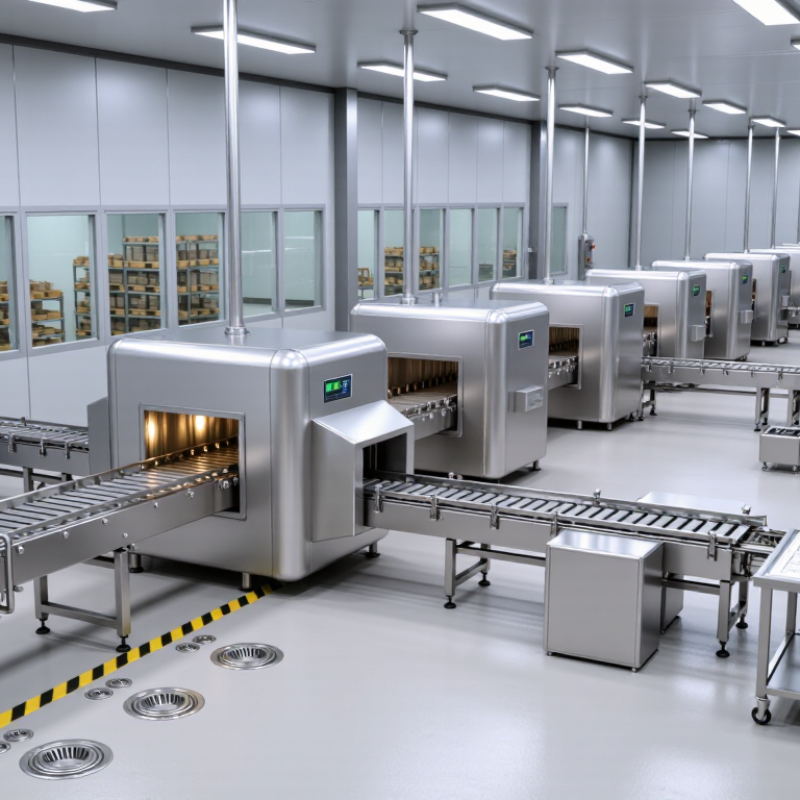
Reliable food industry equipment begins with precise requirements, not a supplier’s sales pitch. Define the product, hourly capacity, operating temperature, and acceptable loss rate. Record the available floor space, ceiling height, drainage points, electrical supply, and cleaning method. Small details matter.
I once reviewed a filling line that met its production target but blocked a maintenance walkway. The equipment worked, yet daily cleaning became slow and uncomfortable. That oversight taught me to measure access routes, not just machine dimensions. Specify food-contact materials, washdown resistance, noise limits, control preferences, and future expansion needs. Leave nothing vague.
Supplier criteria should be equally practical. Ask for documented experience with similar products and production volumes. Request installation procedures, training plans, spare-parts availability, warranty terms, and response times. Verify material certificates, testing records, and traceable quality documentation. References from comparable facilities are useful, but they need careful checking. A polished testimonial can hide difficult service.
During supplier evaluations, ask how the equipment performs after repeated cleaning cycles. Review factory testing details and define acceptance measurements before signing. A site visit may reveal poor housekeeping or weak technical support. Do not ignore those signals. I have learned that the lowest quotation can become expensive when parts arrive late or operators lack training. Allow time for questions, revisions, and uncomfortable doubts.
How to Find Reliable Food Industry Equipment Suppliers - Define Your Equipment Requirements and Supplier Criteria
| Evaluation Dimension | Equipment Requirement or Supplier Criterion | Recommended Target or Minimum | Verification Evidence | Suggested Weight |
|---|---|---|---|---|
| Process Capacity | Define required throughput, batch size, operating hours, and expected production growth. | Select equipment that meets peak demand with approximately 10–20% usable capacity headroom. | Validated capacity calculations, performance test results, production references, and factory acceptance test records. | 15% |
| Product Compatibility | Confirm compatibility with product viscosity, temperature, acidity, moisture, particle size, and allergen profile. | All product-contact materials and seals must be suitable for the intended food, temperature range, and cleaning chemicals. | Material certificates, seal specifications, chemical-resistance data, and documented product trials. | 12% |
| Hygienic Design | Assess cleanability, drainage, accessibility, weld quality, dead-leg control, and protection against product buildup. | Use sanitary construction with smooth product-contact surfaces; a surface roughness of Ra ≤ 0.8 µm is commonly specified for hygienic applications. | Hygienic-design drawings, surface-finish reports, weld inspection records, cleanability tests, and applicable compliance documents. | 15% |
| Construction Materials | Specify material grades for product-contact parts, frames, piping, fasteners, and protective covers. | Food-contact areas commonly use stainless steel; 316L is preferable where chloride exposure or aggressive cleaning conditions are expected. | Material certificates, traceability records, weld procedures, and corrosion-resistance documentation. | 8% |
| Cleaning and Sanitation | Determine whether the equipment requires manual cleaning, clean-in-place, or a combination of both. | Cleaning procedures should define chemical concentration, temperature, contact time, flow rate, and inspection method. | Sanitation standard operating procedures, cleaning validation reports, spray coverage tests, and rinse-water verification. | 12% |
| Food Safety Compliance | Require documentation supporting food-contact safety, hazard control, and hygienic manufacturing practices. | Supplier documentation should align with the destination market’s food-contact regulations and the facility’s food-safety management system. | Declarations of conformity, food-contact certificates, hazard-analysis documents, audit reports, and quality procedures. | 12% |
| Utilities and Installation | Confirm electrical supply, compressed air, water, steam, drainage, ventilation, floor loading, and available space. | Equipment utility demand should be documented before purchase and checked against site capacity with operational reserve. | Utility schedules, layout drawings, load calculations, installation manuals, and commissioning requirements. | 8% |
| Controls and Data | Define automation level, operator controls, alarm handling, recipe management, data collection, and integration needs. | Controls should provide user access management, clear alarms, critical-parameter recording, and secure data backup where required. | Control-system specifications, software documentation, cybersecurity measures, user manuals, and test protocols. | 6% |
| Reliability and Maintenance | Evaluate expected service life, preventive-maintenance intervals, access to wear parts, and ease of inspection. | Critical components should have defined maintenance intervals and replacement parts available throughout the planned service period. | Maintenance schedules, spare-parts lists, failure-history data, service procedures, and reference-site feedback. | 7% |
| Supplier Qualification | Review technical capability, quality controls, project experience, financial stability, and production capacity. | Prefer suppliers that can provide verifiable references for comparable food-processing applications and complete technical documentation. | Supplier questionnaire, quality audit, reference checks, production-site assessment, and documented project history. | 3% |
| Delivery and Acceptance | Set milestones for design approval, fabrication, testing, delivery, installation, training, and final acceptance. | Use measurable acceptance criteria covering capacity, product quality, safety, sanitation, documentation, and operator training. | Project schedule, inspection plans, factory and site acceptance test protocols, training records, and punch-list closure. | 5% |
| After-Sales Support | Assess response times, technical support, training, warranty terms, remote assistance, and spare-parts logistics. | Require clearly defined warranty coverage, service contacts, escalation procedures, and spare-parts lead times before contract signing. | Warranty document, service-level agreement, support organization chart, parts list, and customer-service references. | 5% |
| Total Evaluation Weight | 100% | |||
Related Posts
-

How to Choose Food Industry Equipment Suppliers?
-
How to Choose Food Factory Equipment for Your Business?
-
How to Choose Food Manufacturing Equipment?
-

What Are the Top 10 Food Production Machinery Suppliers?
-
What Are the Top Food Industry Machinery Suppliers?
-
How to Choose the Right Food Manufacturing Machinery for Your Business?