Why Is Food Bakery Equipment Essential for Your Business?
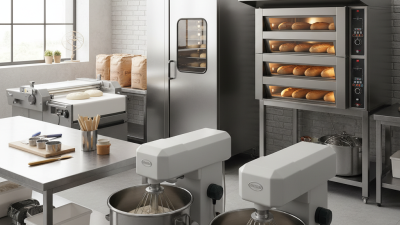
A bakery’s quality is shaped long before a customer takes the first bite. It begins with the mixer’s steady rhythm, the oven’s even heat, and dough proofed at a dependable temperature. Food bakery equipment helps turn skilled work into repeatable production. It can also reduce avoidable waste, support consistent portions, and keep busy service moving. The right setup is not necessarily the biggest one. It is the setup that fits the menu, available space, staffing, and expected volume.
As baking educator Peter Reinhart’s approach reminds us, process control matters as much as a recipe. A useful paraphrase of that principle is: “Consistent results depend on controlling the process, not just following the recipe.” Equipment choices make that control more practical. A well-sized mixer can handle daily dough batches without straining. A properly maintained oven can help prevent pale edges beside overbaked centers. Small details matter.
These benefits are not automatic. Poorly matched equipment can create bottlenecks, raise energy use, or make cleaning harder. A bakery owner should compare capacity, service support, ease of sanitation, and operator training before buying. The decision deserves a little doubt, too: a machine that looks efficient in a showroom may feel different during a crowded morning shift. Understanding why food bakery equipment matters means looking beyond the purchase price. It means asking how each tool will perform, day after day, in the real bakery.
Defining Bakery Equipment: From Mixing and Proofing to Packaging
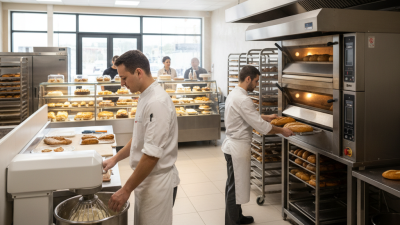
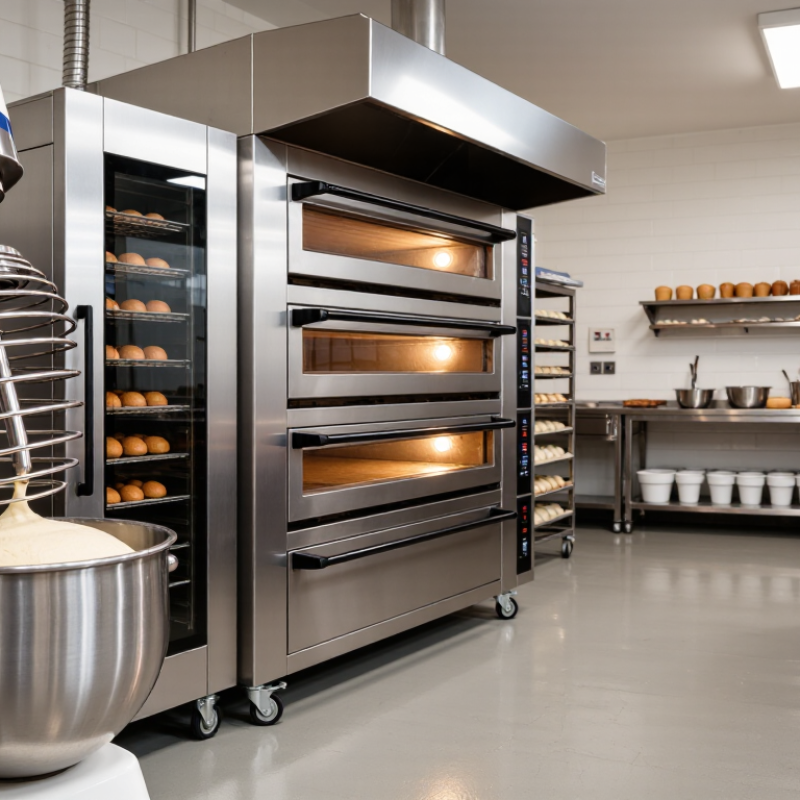
Bakery equipment is the connected set of tools that turns ingredients into sellable products. Mixers develop dough; dividers and moulders portion it; proofers control warmth and humidity before baking. Ovens set the crust and crumb. Cooling racks, slicers, and packaging machines protect the finished loaf. Each stage affects the next. A mixer that leaves uneven dough can create inconsistent portions, even with a skilled baker at the bench. Small details matter.
Grand View Research’s Bakery Processing Equipment Market report estimated the global market at about $12.1 billion in 2022 and projected 5.1% annual growth through 2030. That growth reflects demand for more consistent, efficient production, not a reason to buy every machine. Match equipment capacity to actual batch sizes, available floor space, and cleaning routines. A proofer’s humidity display is useful, but staff still need to check dough condition. Numbers do not replace judgment.
Tips: Map the product journey before choosing equipment. Measure doorways, power supply, and cleaning access. Test a representative dough batch, not just an empty machine. Keep simple temperature and yield records; they reveal drift early. And be honest: one oversized machine can slow a small bakery more than it helps.
Why Is Food Bakery Equipment Essential for Your Business?
Defining Bakery Equipment: From Mixing and Proofing to Packaging
This illustrative example shows the approximate time spent at each stage of one bread-production workflow. Actual times vary with the recipe, batch size, and production method. Equipment such as mixers, proofers, ovens, cooling systems, and packaging machines helps manage these stages consistently.
Production Capacity: Match Equipment Throughput to Orders and Labor
Production capacity should fit the orders you actually receive, not an optimistic peak-day estimate. A spiral mixer that handles 80 kilograms per batch may still bottleneck a bakery if the oven accepts only half that volume. Track hourly demand, recipe changeovers, cleaning time, and the number of trained workers available for each shift. Small batches matter. A 2024 U.S. Bureau of Labor Statistics Occupational Outlook Handbook projection expects baker employment to grow 5% between 2023 and 2033, with about 31,800 openings each year. That signals a labor pool worth planning around, not unlimited staffing.
Compare equipment throughput with the full production cycle. If a divider produces 1,200 pieces per hour but workers can shape and tray only 800, the faster machine creates queues, not sales. The BLS also projects 15% growth in industrial machinery mechanic employment from 2023 to 2033, suggesting maintenance skills may need deliberate coverage. Still, a neat spreadsheet can lie. Test a representative shift, including dough rest, loading, sanitation, and changeovers. Record actual output and stoppages for several days. Then size equipment to steady orders, with modest room for seasonal peaks, rather than buying capacity that sits idle or overwhelms the crew.
Why Is Food Bakery Equipment Essential for Your Business? — Production Capacity: Match Equipment Throughput to Orders and Labor
| Production stage |
Example order requirement |
Planning throughput |
Estimated capacity use |
Indicative labor |
Capacity planning takeaway |
| Dough mixing |
48 kg of dough per production hour |
60 kg per hour, based on two 30 kg batches completed each hour |
80% |
About 1 operator, with time also needed for loading and cleaning |
Check batch size and mixing time against the recipe; rated bowl capacity alone does not establish hourly output. |
| Dividing and rounding |
600 rolls per hour |
750 pieces per hour under the assumed dough weight and operating pace |
80% |
About 1 operator for feeding, checking weights, and handling dough |
Confirm that the equipment handles the required piece-weight range and that changeovers fit the schedule. |
| Proofing |
600 rolls per hour entering proof |
800 pieces per 80-minute cycle, equivalent to about 600 pieces per hour when continuously loaded |
100% |
Usually shared handling; labor depends on loading and unloading method |
This stage has no spare capacity in the example. A longer proof time or loading delay can constrain the whole line. |
| Baking |
600 rolls per hour |
700 rolls per hour averaged across planned batches and oven turns |
86% |
About 1 operator, depending on oven loading and unloading arrangements |
Allow for bake time, loading, unloading, temperature recovery, and product changeovers—not just oven space. |
| Cooling and staging |
600 rolls per hour through the packing area |
900 rolls held for a 90-minute cooling period, equivalent to 600 rolls per hour of flow |
100% |
Shared handling; additional staff may be needed for manual tray movement |
Provide enough rack or conveyor space for products to cool safely without blocking oven output or packing. |
| Illustrative planning basis |
Example order: 3,600 rolls across 6 net production hours (600 rolls per hour). Throughput figures are planning assumptions, not universal equipment ratings; actual output varies with recipe, product size, cycle time, operator pace, changeovers, and workflow. |
Loss Prevention: FAO Estimates 13.2% of Food Is Lost Before Retail
FAO estimates that 13.2% of food is lost globally between harvest and retail.
This figure is not specific to bakeries, but it shows how much food can disappear before reaching customers. In a bakery, loss may start with uneven dough portions, overproofed trays, burnt edges, or products that cool too slowly.
Food bakery equipment can help make each step more consistent. Accurate scales and portioning tools reduce excess dough. Reliable ovens help prevent uneven baking, while suitable cooling racks and storage equipment protect freshness after baking. These controls matter. A few extra grams in every roll can become a significant amount of wasted flour over a busy week.
Still, equipment is not magic. Poor scheduling can leave shelves full at closing, even when production is precise. Staff can track daily sales, adjust batch sizes, and check temperatures with simple records. A small bakery might compare the number of loaves baked with the number sold each day. The results may be imperfect at first. That is useful information, not failure. When equipment and careful routines work together, bakeries can reduce avoidable waste before products ever reach the retail shelf.
Waste Control: UNEP Reports 19% of Consumer-Stage Food Is Wasted
UNEP reports that 19% of food at the consumer stage is wasted. This is a broad estimate, not a bakery-specific figure, but it highlights a problem bakeries can influence. Unsold rolls at closing time and oversized batches both represent wasted ingredients, labor, and energy.
Suitable bakery equipment can make production more consistent. Calibrated scales and dough dividers help staff portion dough evenly, while programmable ovens support repeatable baking. Smaller mixers or flexible batch sizes can also help match output to demand. These tools do not predict tomorrow’s sales. They can, however, make it easier to produce the quantity a bakery actually needs.
The details matter. If a tray of buns regularly remains after the afternoon rush, staff can record the leftovers and adjust the next batch. A scale makes that adjustment measurable; a timer helps keep baking cycles consistent. Still, equipment is not a cure by itself. Forecasts can be wrong, and a new machine may even encourage higher output. Reviewing sales and waste records alongside equipment settings helps keep production grounded in what customers buy.
Business Value: Assess Food Safety, Consistency, Energy, and ROI
Why Is Food Bakery Equipment Essential for Your Business?
Business Value: Assess Food Safety, Consistency, Energy, and ROI
Bakery equipment affects more than output. It shapes food safety, product consistency, and daily operating costs. The World Health Organization’s 2015 estimates attribute 600 million illnesses and 420,000 deaths each year to contaminated food worldwide. These figures are not bakery-specific, but they show why hygienic design and controlled processes matter. Smooth, accessible surfaces, removable parts, and reliable temperature controls can make cleaning and monitoring easier. They do not replace staff training or careful handling. Small details matter.
Consistency is visible in the tray. A dependable oven helps keep color and bake time steadier across batches, while mixers with controlled speeds support repeatable dough texture. ENERGY STAR reports that certified commercial ovens are about 31% more energy efficient than standard models. Actual savings depend on the model, workload, and operating habits. An efficient oven left running through long idle periods may still waste energy.
For ROI, track energy use, maintenance, labor, and rejected products before and after installation. Compare those costs with purchase and service expenses over realistic production volumes. A faster mixer might free staff time, yet that benefit disappears if demand is too low. The spreadsheet can flatter a purchase. Check the numbers against actual shifts, utility bills, and batch records.